

Why Private Tours for Conferences Deliver Real ROI
TL;DR:
- Private tours for conferences enhance attendee satisfaction and networking by providing personalized local experiences. They offer operational control, segmentation options, and measurable KPIs that justify their higher cost. Integrating themed private excursions into the event program increases overall value, engagement, and long-term destination branding.
Private tours for conferences are defined as exclusively arranged excursions designed around a specific group’s interests, schedule, and professional goals. Unlike open group tours, they give event planners full control over timing, content, and attendee composition. The MICE industry, which covers meetings, incentives, conferences, and exhibitions, has long recognized that what happens outside the conference room shapes how attendees feel about the event as a whole. Well-designed tour programs reward attendees, deepen their connection to the host city, and create informal networking that structured sessions simply cannot replicate. For planners who need to justify every budget line, private tours are no longer a luxury add-on. They are a measurable investment.
Why private tours for conferences outperform standard sessions
The core value of private conference tour advantages lies in what they do to the human brain after hours of presentations. Excursions improve attendee satisfaction through cognitive refreshment and social interaction, two outcomes that structured sessions rarely deliver. When attendees step away from a ballroom and into a curated local experience, their concentration resets and their mood lifts. That psychological shift translates directly into better networking, sharper retention of conference content, and higher overall event ratings.
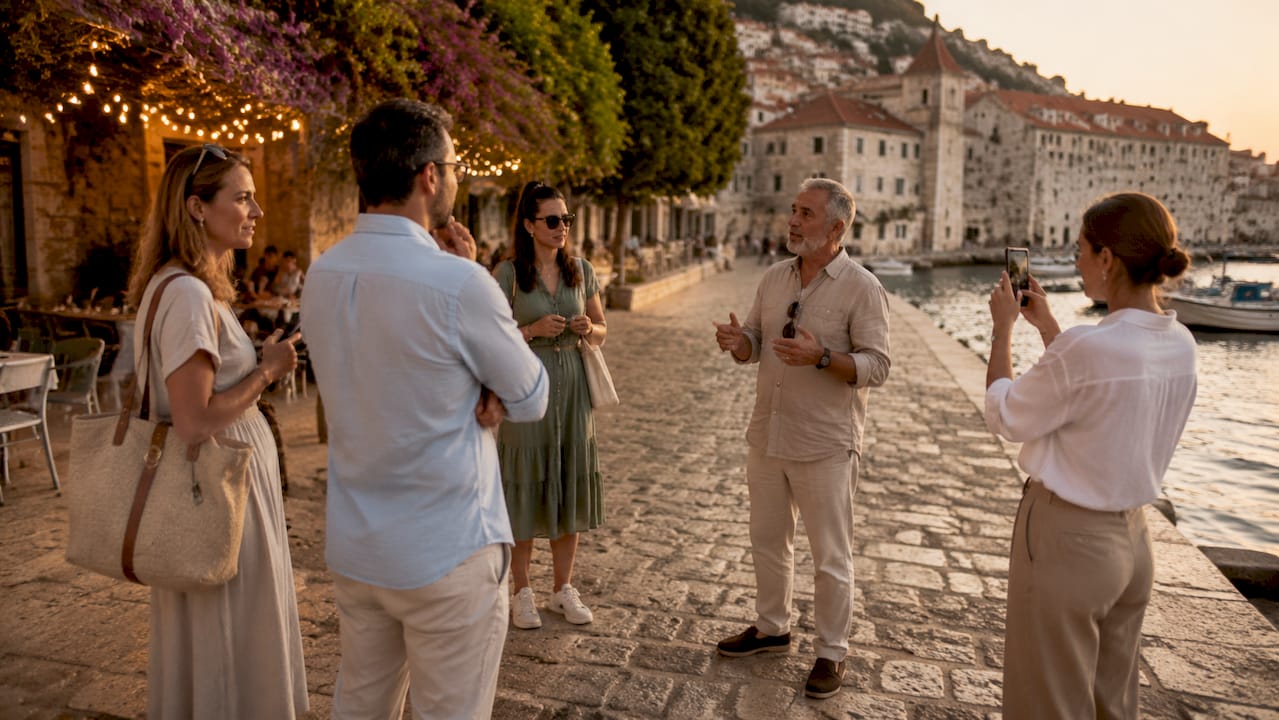
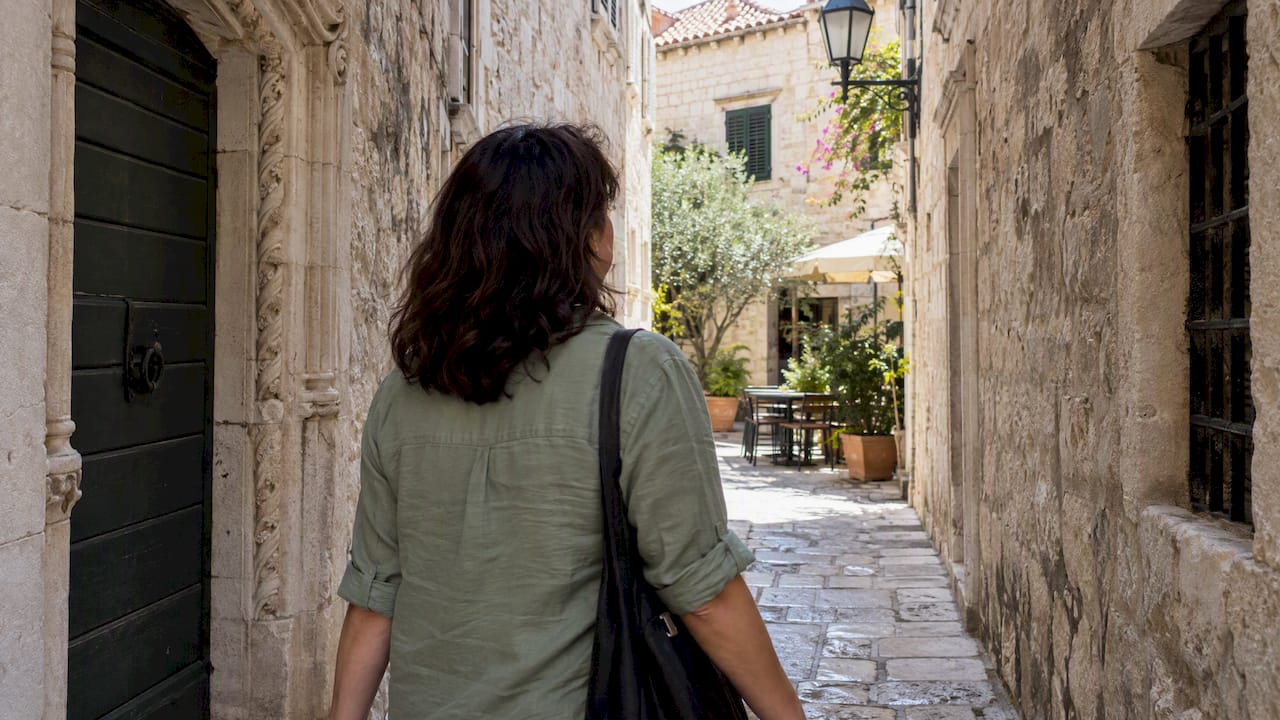
Private tours create interaction-rich environments that formal agendas cannot manufacture. A group of twelve executives exploring a walled medieval city together will exchange business cards, share stories, and build trust in ways that a cocktail reception never achieves. The setting removes hierarchy. The shared experience creates common ground. Those connections often outlast the conference itself and generate real business value for the organizations involved.
The KPIs that prove this are concrete and trackable:
- Participation rates show how many attendees chose the tour over free time, signaling perceived value.
- Satisfaction survey scores before and after excursions reveal the mood shift that planners can report upward.
- Business card exchanges and LinkedIn connection spikes in the 48 hours following a tour indicate genuine networking activity.
- Social media engagement from attendee posts during tours amplifies the event’s brand reach at zero additional cost.
Pro Tip: Survey attendees within two hours of returning from a private tour, not the next morning. Recall and emotional response are sharpest immediately after the experience, and that data is far more useful to stakeholders than end-of-conference averages.
Successful excursions also become part of the destination’s core message. When an attendee returns home and describes the conference, they describe the place. That emotional connection increases the perceived value of the entire event and strengthens the case for future editions.
What operational advantages do private tours give event planners?
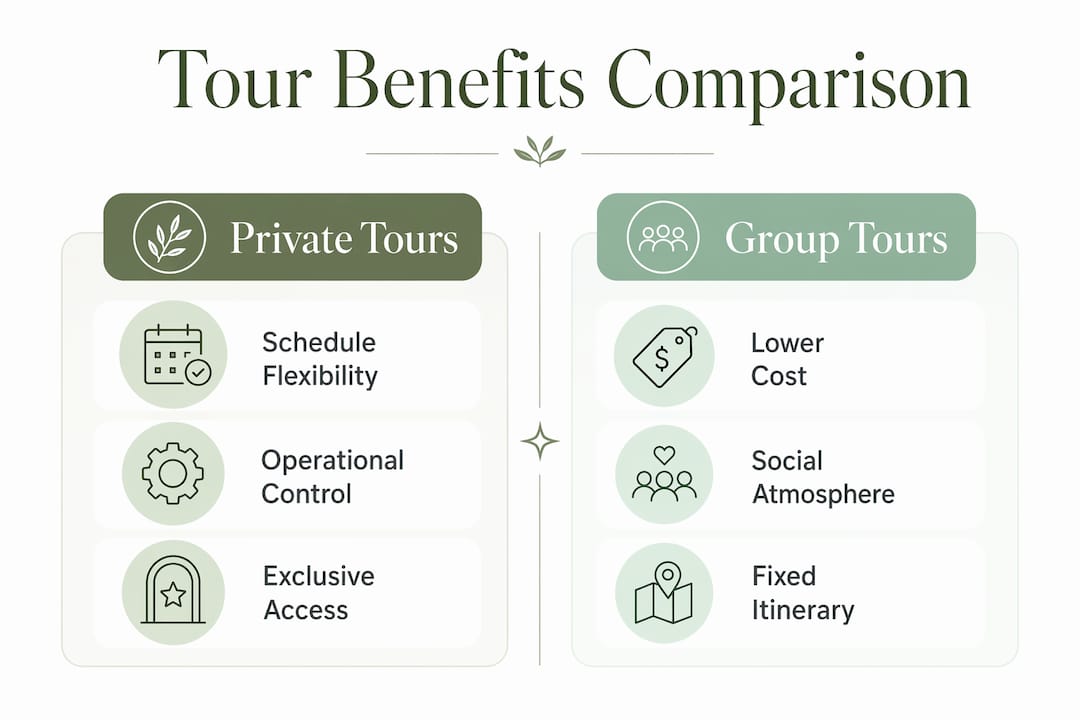
Operational control is the defining advantage that separates private tours from shared group excursions. Private tours provide segmented operational control that is often missing from group tours, which is critical when conference schedules run tight. A planner managing a 400-person pharmaceutical congress cannot afford a tour that runs 45 minutes over schedule and delays the afternoon keynote. Private tours allow precise departure windows, custom durations, and route adjustments that shared tours cannot offer.
Segmentation is the second major operational advantage. Not every attendee at a conference has the same physical ability, cultural interest, or available budget. Planners who offer two or three distinct private tour tracks, such as a culinary experience, a heritage walk, and an adventure excursion, serve their audience far better than a single group option. Segmenting by participant characteristics prevents dissatisfaction and keeps attendees engaged with content that genuinely appeals to them.
Here is a practical framework for integrating private tours into a conference program:
- Map the conference agenda first. Identify natural breaks of 90 minutes or more where tours can fit without competing with priority sessions.
- Define two or three attendee profiles. Use registration data to group attendees by interest, mobility, and seniority.
- Design one tour track per profile. Each track should connect thematically to the conference destination and, where possible, to the event’s core theme.
- Coordinate companion programs separately. Poorly designed companion programs negatively affect primary delegates’ focus. Companions need their own curated itinerary, not a leftover version of the delegate tour.
- Build buffer time into every departure. Allow 15 minutes beyond the stated start time for group assembly, and communicate this to your transport provider in advance.
Pro Tip: Align your private tour theme with the conference’s content pillars. A technology summit in a coastal city can frame a boat tour as an exploration of maritime innovation history. That thematic link makes the excursion feel integral, not decorative.
Planners who treat private tours as a logistics problem to solve, rather than a program element to design, consistently report smoother execution and higher attendee satisfaction scores.
Private tours vs. group tours: what conference planners need to know
The distinction between private and group tours matters more in a conference context than it does in leisure travel. The table below captures the key differences that affect planning decisions.
| Feature | Private Tours | Group Tours |
|---|---|---|
| Schedule flexibility | Fully customizable to conference agenda | Fixed departure times, no adjustment |
| Group composition | Controlled by planner, curated by profile | Open to public or mixed delegates |
| Content personalization | Tailored to attendee interests and event theme | Standardized itinerary for all participants |
| Privacy and confidentiality | Exclusive to your group | Shared with strangers |
| Cost per person | Higher, but justifiable through measurable outcomes | Lower unit cost, lower perceived value |
| Networking quality | Deep, focused interaction within known group | Diluted by unfamiliar participants |
| Reporting and KPIs | Fully trackable by planner | Limited data capture |
The cost difference is real, but it is rarely the deciding factor for corporate decision-makers who understand what they are buying. A group tour saves money per head and delivers a generic experience. A private tour costs more and delivers a story that attendees tell for years. For incentive programs and executive retreats, the perceived value of exclusivity alone justifies the premium. For larger conferences where budget is tighter, planners can offset costs by offering private tours as an optional upgrade, which also generates useful data about which attendee segments value personalization most.
Privacy is an underrated advantage. Senior executives and high-profile speakers are often reluctant to join open group tours where they may be recognized or approached by strangers. A private tour removes that friction entirely and makes participation far more likely among the attendees whose satisfaction matters most to sponsors.
How do you measure the ROI of private conference tours?
Only 30% of event planners use analytics to track ROI, even though 68% face pressure to prove the business impact of their meetings. That gap represents both a risk and an opportunity. Planners who build measurement into their private tour programs from the start are the ones who win budget approval year after year.
The most effective measurement approach combines pre-event preference capture with post-event KPI reporting. ITA Group’s incentive program in Tulum used preference quizzes before the trip to design personalized itineraries that motivated 85% of participants. That figure is not just a satisfaction score. It is a retention and motivation metric that a CFO can read and understand.
The KPIs worth tracking for private conference tours include:
- Pre-event preference data: Capture interests, dietary needs, mobility considerations, and language preferences at registration. This data shapes the tour design and demonstrates attendee-centered planning to stakeholders.
- Participation rate: The percentage of eligible attendees who join a tour is a direct proxy for perceived value. A rate above 70% signals strong program design.
- Net Promoter Score for the tour: Ask one question after the tour: “How likely are you to recommend this conference to a colleague?” Compare scores between attendees who joined a tour and those who did not.
- Local spend per attendee: Track spending at tour stops, including restaurants, shops, and cultural sites. This data supports destination marketing partnerships and can offset tour costs through co-sponsorship.
- Social media reach: Count organic posts tagged with the conference hashtag during and after tours. Reach generated by attendees costs nothing and builds event credibility.
Growing stakeholder pressure for business impact proof means subjective feedback is no longer sufficient. Build a one-page reporting template that maps each KPI to a business outcome, such as linking participation rate to attendee retention or social reach to brand awareness, and share it with executives within two weeks of the event.
Key takeaways
Private tours for conferences deliver measurable attendee satisfaction, operational control, and stakeholder-ready ROI that generic group excursions cannot match.
| Point | Details |
|---|---|
| Define tours as program elements | Treat private tours as core conference components, not optional extras, to maximize their strategic value. |
| Segment attendees by profile | Offer two or three tour tracks based on interest, mobility, and seniority to prevent dissatisfaction and improve participation. |
| Align tours with the event theme | Thematically connected excursions feel integral to the conference and increase perceived event value. |
| Measure with specific KPIs | Track participation rates, NPS, local spend, and social reach to build a credible ROI report for executives. |
| Capture preferences early | Pre-event preference data enables personalized itineraries that drive motivation and retention, as proven by ITA Group’s Tulum program. |
What experience has taught me about private tours and conference value
I have watched the same pattern repeat across dozens of conference programs. Planners spend months perfecting the speaker lineup and the catering, then treat the excursion as an afterthought booked two weeks before the event. The result is a generic group bus tour that attendees tolerate rather than remember.
The conferences that generate the most loyalty, the ones where attendees register again the following year without needing a discount, are almost always the ones where the excursion felt personal. Not expensive. Personal. There is a meaningful difference. A curated walk through Split’s Diocletian’s Palace with a local historian who knows the group’s industry context costs less than a gala dinner and generates more genuine conversation.
The trend I see accelerating in MICE planning is the integration of private tours directly into the conference narrative. The excursion is no longer a break from the program. It is part of the program. Planners who recognize this shift early will find that their events feel more cohesive, their attendees stay longer, and their sponsors see more value in the association. The measurement pressure is real, but it is also an invitation to prove what good planners have always known. The experience outside the room is what people remember.
— Croatia
Plan your conference excursions with Croatia-private-transfers
Croatia-private-transfers specializes in bespoke private tours and premium transfers designed for corporate groups and conference attendees who expect more than a standard itinerary. Every program is built around your event’s schedule, your attendees’ interests, and the destination’s finest experiences, from UNESCO-listed sites like Plitvice Lakes to the walled cities of the Dalmatian coast.
Whether you need private transfers across Croatia for a multi-day congress or a single curated afternoon excursion for a VIP group, Croatia-private-transfers provides licensed, English-speaking guides and modern Mercedes-class vehicles. Contact the team to discuss a program that fits your conference agenda and delivers the kind of experience your attendees will describe long after they return home.
FAQ
What are the main benefits of private tours for conferences?
Private tours deliver personalized experiences, operational flexibility, and deeper networking opportunities that standard group tours cannot provide. They also generate trackable KPIs that help planners justify the investment to executives and sponsors.
How do private tours differ from group tours at conferences?
Private tours are exclusive to your attendee group, fully customizable in timing and content, and designed around specific interests. Group tours follow fixed schedules and serve mixed audiences, which limits both personalization and networking quality.
How can planners measure the ROI of a private conference tour?
Track participation rates, post-tour Net Promoter Scores, social media reach, and local spend per attendee. ITA Group’s Tulum incentive program demonstrated that preference-based personalization can achieve 85% motivation success, a metric directly reportable to stakeholders.
When should companion programs be included in private tour planning?
Companion programs should be designed at the same time as delegate tours, not as an afterthought. The Tourism Institute notes that poorly planned companion itineraries negatively affect primary delegates’ focus and overall event satisfaction.
How early should attendee preferences be captured for tour personalization?
Capture preferences at registration, ideally four to six weeks before the event. Early data allows enough lead time to design tailored itineraries, coordinate specialist guides, and arrange transport that fits each attendee profile.