
Business Travel Transportation in Croatia: A Practical Guide
If you are planning business travel in Croatia, the most dependable way to move people is a pre-booked private transfer with a licensed professional driver: someone who tracks your flight, waits at arrivals, and keeps the schedule intact between Zagreb, the coast and everything in between. This guide explains how to choose and arrange that kind of transport, what to verify before you pay, how the main business routes work, and where a chauffeur service beats a rental car, a taxi or a coach.
TL;DR
- For executives, clients and small delegations, a pre-booked private transfer gives you a fixed pickup, a named driver and a vehicle suited to working on the road.
- Check the basics before booking: a licensed operator, a compliant vehicle, clear written costs and a plan for flight delays.
- Croatia’s airports and highways are busiest in summer, so buffer time and early booking matter far more than the map suggests.
- Distances between business hubs are long: Zagreb to Split, for example, is a full working half-day by road, which a chauffeur turns into productive time.
- We can combine transfers with meetings, site visits or a day of hospitality, all in one itinerary.
Table of Contents
- Why transportation deserves a line in your travel plan
- Choosing the right type of transport
- What to verify before you book
- Airport arrivals: the most important handover
- Intercity routes that matter to business travelers
- Planning around peak periods
- What to do when plans change
- Our perspective: why we build business transport around the driver
- Combining transport with hospitality
- Book your business transfer with us
- A short checklist for your travel manager
- FAQ
- Sources
Why transportation deserves a line in your travel plan
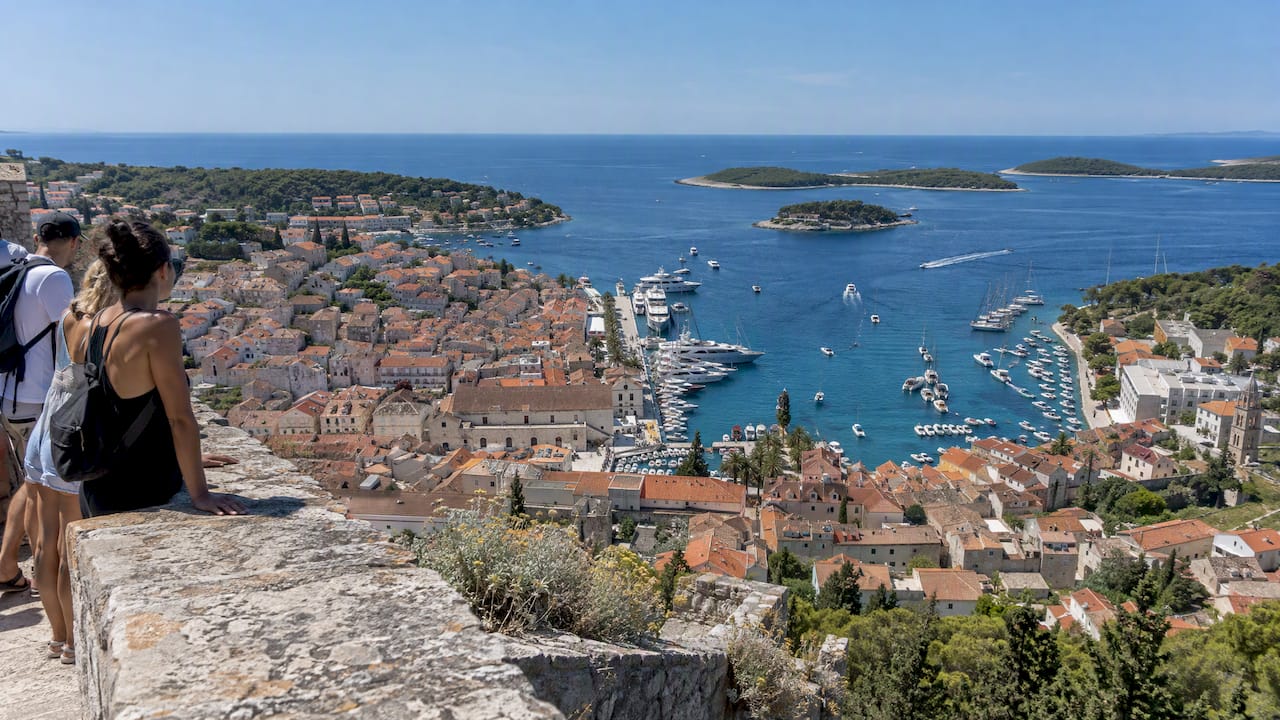
Croatia is a small country with a demanding geography. A long coastline, mountain ranges between the capital and the sea, and island ferries mean that a meeting in Zagreb and a site visit in Dalmatia are not a short hop apart. Add the seasonal pressure on roads and airports, and ground transport becomes a real part of the business plan rather than an afterthought.
The scale of that pressure is visible in the numbers. According to the Croatian National Tourist Board’s 2025 annual report, Croatia recorded 21.8 million tourist arrivals in 2025, 2% more than in 2024, and its airports handled 13.98 million passengers, a 6.8% increase. Zagreb alone, the country’s busiest airport, handled about 4.72 million passengers in 2025. Every one of those travelers needs a way to reach a hotel, a office or a conference venue, and in July and August the supply of reliable drivers tightens quickly.

Business travel is also less seasonal than it used to be. Croatia has been promoting itself as a year-round destination, and Travelweek reported that meetings, incentives, conferences and exhibitions contributed to a 15% uptick in off-season tourism. For companies, that means autumn, winter and spring events now compete for the same quality vehicles and drivers.
Choosing the right type of transport
Not every business trip needs the same solution. The honest comparison depends on the size of the group, the distance, and how much of the journey you want to spend working or resting.
| Option | Best for | Main limitation |
|---|---|---|
| Private chauffeur transfer | Executives, clients, small teams, long routes | Needs booking in advance for peak dates |
| Local taxi | Short in-city trips with no fixed schedule | Pricing and vehicle standard vary; not designed for intercity routes |
| Self-drive rental | Travelers who want to drive and know the roads | You lose working time, and parking in historic centers is difficult |
| Scheduled coach or train | Cost-sensitive solo trips between major cities | Fixed timetables, no door-to-door service, limited luggage and privacy |
| Large group coach | Delegations of many people | Less flexible, and unsuitable for executive guests |
For most decision-makers, the deciding factor is time. A driver lets you take calls, review documents or rest after a long-haul flight, and arrive at the meeting ready to speak. On a route like Zagreb to Split, the hours in the back seat are working hours.
What to verify before you book
Private transport in Croatia is regulated, and a few minutes of checking protects you and your guests. The Ministry of the Sea, Transport and Infrastructure explains that taxi transport may be performed only by a person holding a license for taxi transport and a permit for the relevant city or municipality. The same ministry page states that the carrier sets its own price, which must include at least the price per kilometer, and that drivers must display a price list or use an authorized electronic booking application.
In practice, ask any provider for the following:
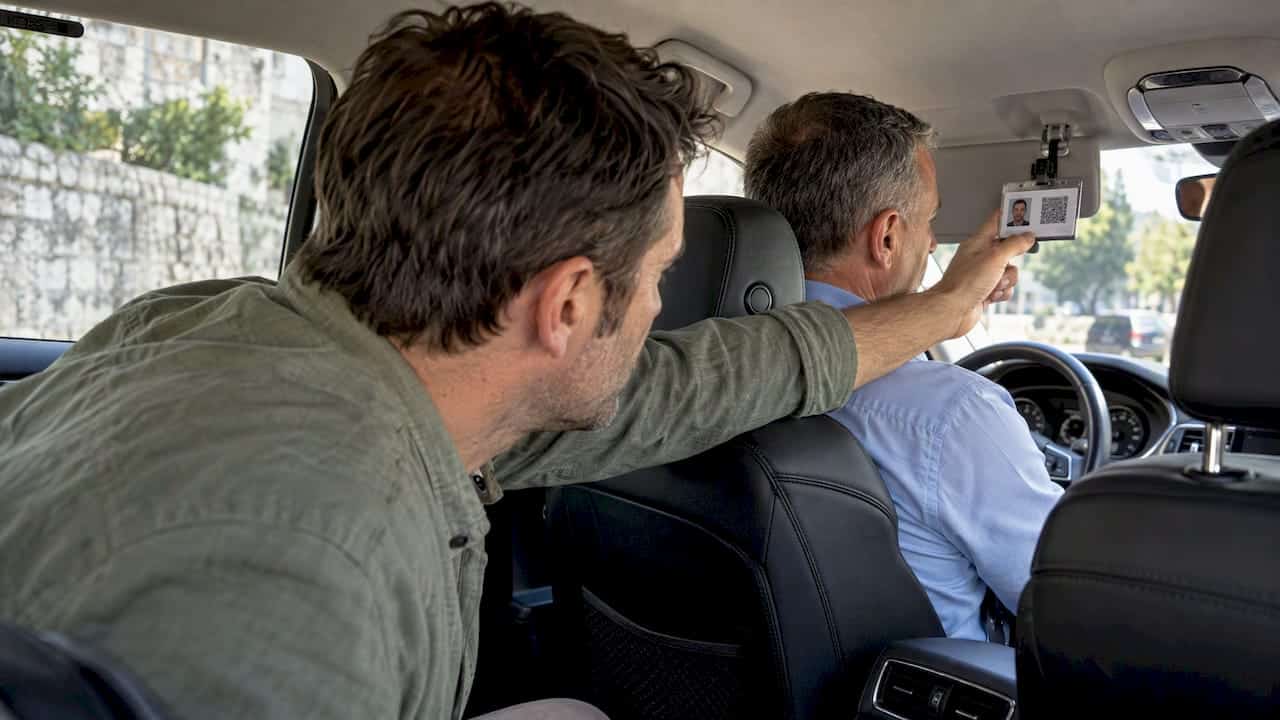
- Proof of licensing. The operator should be able to confirm its license and that the driver is authorized to carry passengers commercially. Our own explanation of why the operator’s license is the foundation of transfer safety goes through the questions worth asking.
- A compliant vehicle. Ministry guidance describes requirements for licensed vehicles, including ABS, air conditioning and Euro 6 emission standards. Ask to see the certificate issued at technical inspection that confirms the vehicle meets the special conditions (the potvrda o ispunjavanju posebnih uvjeta).
- A clear price in writing. The total for the route, with what is included: waiting time, tolls, extra stops, luggage. Transparency of costs matters more than the price itself.
- Flight tracking and a delay policy. Confirm that the driver monitors your flight and that a late landing does not cancel the booking.
- Language and invoicing. English-speaking drivers and a proper invoice addressed to your company make expense reporting simple.
An open question to settle early is who pays for the driver’s waiting time when meetings overrun. Agree it before the trip, not at the curb.
Airport arrivals: the most important handover
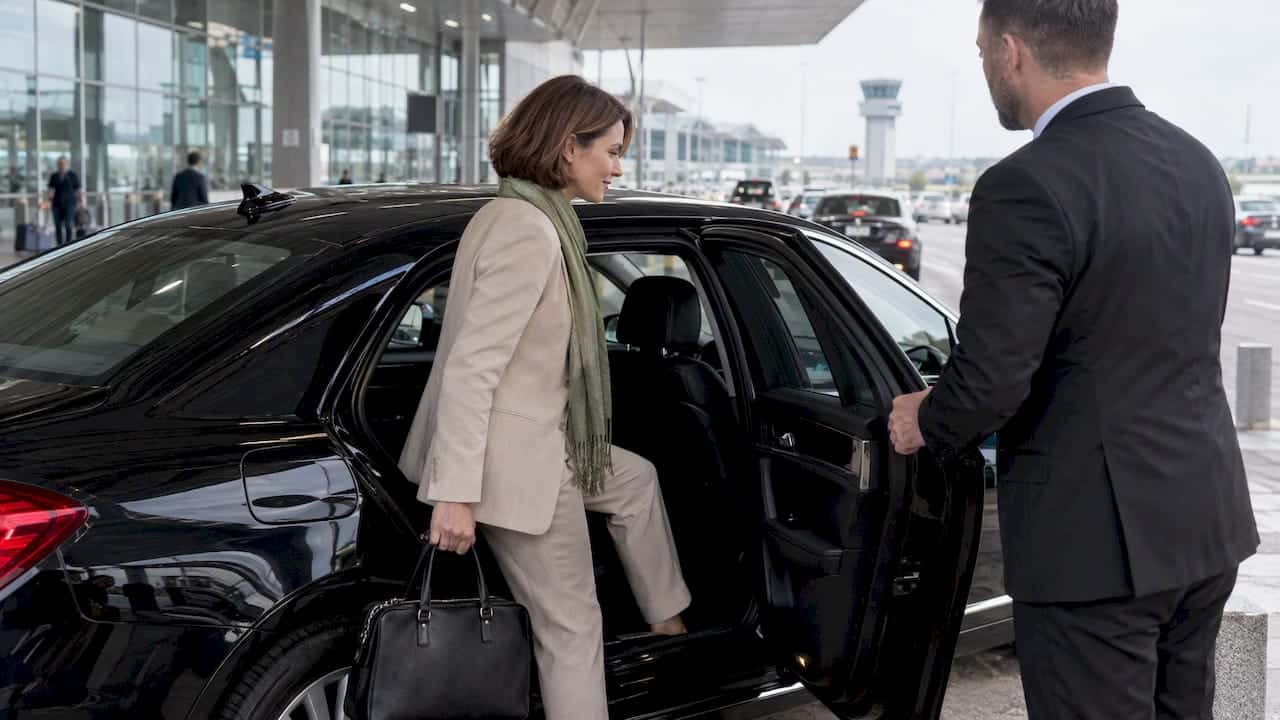
Most business trips start with a flight, and the airport pickup sets the tone for the rest of the visit. A driver waiting in the arrivals hall, with a name sign and a vehicle parked nearby, removes the uncertainty of taxi queues, unfamiliar apps and luggage trolleys after a long day. For executives arriving for a negotiation, it is the difference between arriving composed or arriving frazzled.
What a good airport arrangement looks like:
- The driver tracks your flight number, so an early or late arrival changes nothing.
- You are met in arrivals and taken directly to the vehicle.
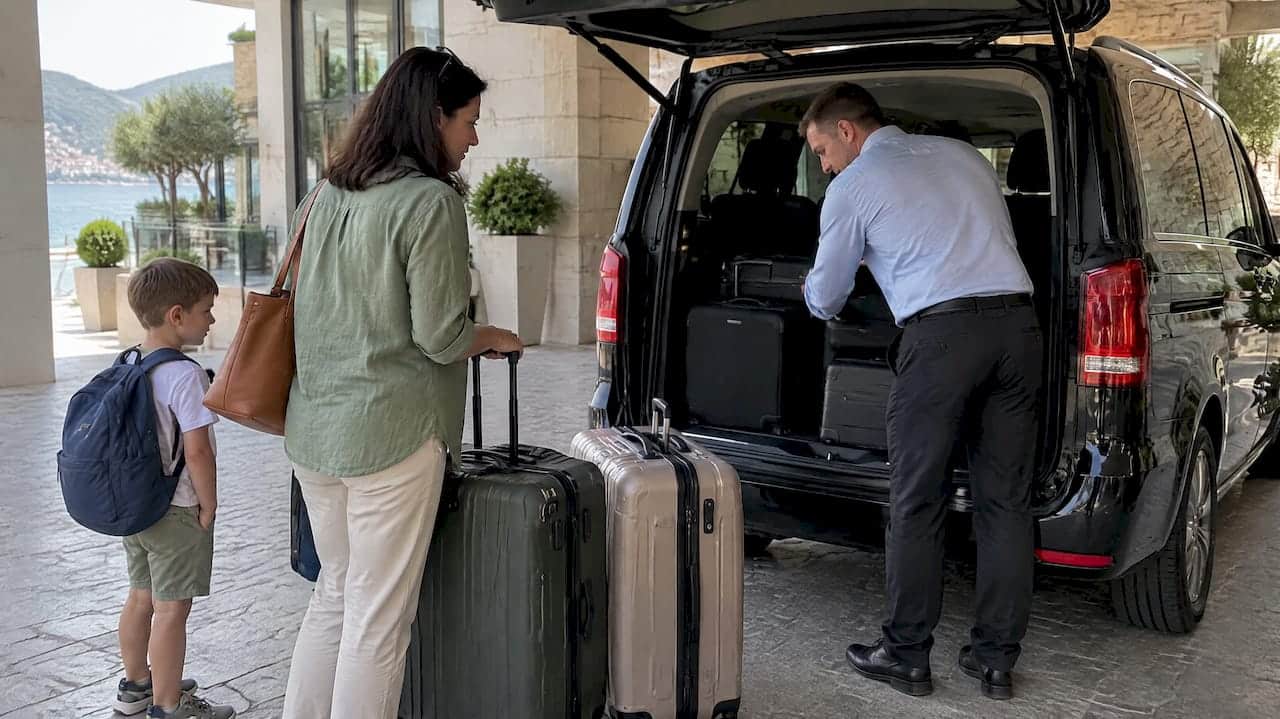
- Water, a phone charger and space for luggage and laptops are available on board.
- The return transfer is confirmed for the day of departure, with extra time built in for the airport.
We cover this in depth in our guide to corporate airport transfers for Croatia business travel, including how to set up recurring arrangements for visiting teams.
Intercity routes that matter to business travelers
Business in Croatia concentrates in a handful of cities: Zagreb for government, finance and corporate headquarters, Split and Dubrovnik for tourism, hospitality and investment, Rijeka and Istria for industry and logistics, and Zadar and Osijek as regional centers. The road network is good on the main corridors, but journeys are long enough that planning matters.
Zagreb and the interior
From Zagreb, the highways to the coast are the backbone of the country. Traffic incidents can stop them for hours: reports from the A1 in August 2025 described a long queue after an accident, with weather making conditions worse. An experienced driver knows the alternatives and the places to stop, and that local judgment is a good argument against driving yourself on a tight schedule.
The coast
Split to Dubrovnik and Split to Zadar are the most common coastal business transfers. They also pass some of the country’s best-known sights, which is useful when you are hosting clients. Our private transfer routes include options such as Split to Dubrovnik via Ston, Split to Zagreb via Plitvice Lakes, and Split to Zadar with a stop at Krka National Park. For a visiting board member or an important client, a 30-minute stop at a UNESCO site turns a long drive into a gesture of hospitality.

Cross-border trips
Croatia sits close to Slovenia, Italy, Bosnia and Herzegovina and Montenegro. Business visits to Ljubljana or a day in Mostar or Montenegro are realistic by road. Border waits vary by season, so tell your operator about passports and nationalities in advance so that nothing surprises the group at the crossing.
For detail on the options, see our overview of intercity and long-distance private transfers.
Planning around peak periods
Summer is the hardest time to secure good transport. The tourism figures above explain why: when the country welcomes tens of millions of overnight stays in a few months, drivers, premium vehicles and highway capacity are all stretched. A few habits help:
- Book early for June to September, and for any trade fair, congress or major event dates in your destination city.
- Leave a buffer of at least an hour between a planned arrival and a first meeting on long routes.
- Avoid Friday and Saturday afternoons for coastal departures where you can, as seasonal traffic builds on those days.
- Send the final passenger list and flight numbers at least a day before, with a mobile number for the lead traveler.
Off-season events are an advantage for business travelers. Quieter roads and more flexible schedules make winter and spring a good time for incentives and executive retreats, which is where Croatia’s growing MICE offer is aimed.
What to do when plans change
Disruptions happen, and it helps to know where your rights begin and end.
For flights, Regulation (EC) No 261/2004 sets common rules on compensation and assistance for denied boarding, cancellation and long delays, and the European Commission publishes the national bodies that enforce it. Your airline, not your chauffeur, is responsible for those obligations, so keep boarding passes and delay confirmations.
For scheduled coach services, Regulation (EU) No 181/2011 provides passenger rights, including assistance in case of long delays. The regulation limits hotel accommodation costs to €80 per night for up to two nights in certain cancellations or delays. These protections concern scheduled bus and coach carriers. A privately booked transfer is governed by the terms you agree with the operator, which is another reason to get those terms in writing. If a rights question arises, the ministry for road transport and the Croatian Civil Aviation Agency for air travel are the bodies to contact.
On the practical side, the best protection is a provider who tracks flights, can reassign a vehicle at short notice, and gives you a phone number answered by a person.
Our perspective: why we build business transport around the driver
We operate private transfers and tours across Croatia, and the lesson that repeats most is that business travelers rarely complain about the vehicle. They complain about uncertainty: not knowing who is meeting them, whether the car will be there after a delayed flight, or whether the price will change at the end of a long drive.
That is why our service rests on licensed, English-speaking drivers, modern air-conditioned Mercedes vehicles including sedans and minivans, and a door-to-door approach where the pickup point and the drop-off point are agreed in advance. We treat a business itinerary the way we treat a private tour: it is customized. A visiting executive may want a quiet ride and a stop for coffee. A team of four may need space for luggage and laptops. A client you are hosting may enjoy an hour at Plitvice Lakes between Zagreb and Split. We shape the route around those needs instead of selling a fixed product.
What we would tell any company planning ground transport: decide who the guest is and what the journey should feel like, then choose the operator who can describe, in plain terms, how they will deliver it. Ask about licensing, ask about delay handling, and ask who you will speak with if something changes at 6 a.m.
— Croatia
Combining transport with hospitality
Many of our corporate guests add a leisure element to a working trip. The reasons are practical: a client who has spent a day in meetings often appreciates a few hours of local culture, and a team that has traveled a long way is more productive after a relaxed afternoon.
Popular combinations include:
- A private day tour such as Krka National Park or Plitvice Lakes from Split, or a Korčula and Pelješac wine and oyster day from Dubrovnik.
- A multi-day itinerary with a private driver for incentive trips, including a 10-day Croatia and Slovenia route or a 9-day journey from Dubrovnik to Split.
- A transfer with a planned stop, so the journey itself becomes part of the program.
If you are comparing what a premium service covers, our article on what sets business-class travel in Croatia apart sets out the details.
Book your business transfer with us
We arrange private airport transfers, intercity journeys and tailored itineraries across Croatia, for individual executives and small groups. Tell us your route, dates, number of travelers and any special requirements, and we will propose a vehicle and a plan. You can start with our private transfers in Croatia page, or read our corporate guide to business travel transportation first.
A short checklist for your travel manager
- Confirm the full itinerary: airports, hotels, meeting addresses and expected times.
- Share passenger names, flight numbers and a mobile contact for the lead traveler.
- Ask the operator for license confirmation and the vehicle type.
- Agree the price in writing, including waiting time and extra stops.
- Arrange the return transfer at the same time as the arrival.
- Keep a back-up contact on both sides for the day of travel.
These six steps take little time and prevent nearly every avoidable problem we see.
FAQ
Is a private transfer better than a taxi for business travel in Croatia?
For airport arrivals and intercity routes, usually yes. A pre-booked transfer gives you a fixed pickup, a named driver and an agreed price, while taxi fares are set by each carrier and vary. Taxis remain sensible for short, unscheduled trips within a city.
How far in advance should I book?
For summer dates and event weeks, book as early as your plans are firm, as the best vehicles and drivers fill first. Outside peak season, a few days is often enough, but longer intercity routes and groups still benefit from earlier confirmation.
What should I check to make sure a driver is licensed?
Ask the operator to confirm its license and the driver’s authorization to carry passengers, and ask for the vehicle’s compliance certificate issued at technical inspection. The Ministry’s taxi transport information explains the licensing and permit framework in Croatian.
What happens if my flight is delayed?
With flight tracking, your driver adjusts to the new arrival time without a new booking. Confirm this policy in writing when you book. Compensation from the airline for a long delay is a separate matter under EU rules and goes through the carrier.
Can you arrange transport for a small team with luggage?
Yes. We operate Mercedes sedans and minivans, so we can match the vehicle to the number of travelers and the amount of luggage or equipment. Send us the group size and itinerary and we will suggest the right vehicle.
Sources
- Croatian National Tourist Board, annual report on the 2025 work program
- Zagreb Airport, traffic figures for 2025
- Travelweek, Croatia set for another record-breaking year
- Ministry of the Sea, Transport and Infrastructure, taxi transport information
- net.hr, traffic accident on the A1
- European Commission, Regulation (EC) No 261/2004 national enforcement bodies
- EUR-Lex, Regulation (EU) No 181/2011