
Trogir and Šibenik Day Trip: A Private Route Guide
Trogir and Šibenik fit comfortably into a single day, and they make a better pair than most people expect. Trogir is a compact island town of stone lanes and Venetian-era façades. Šibenik is a layered, hillside city of fortresses, a Renaissance cathedral and a working waterfront. The two are only about 46 to 56 km apart, so the real question is not whether you can see both, but how to pace the day so neither feels rushed. This guide shows how we would plan it for you.
TL;DR
- Trogir and Šibenik are roughly 46 to 56 km apart, about 45 to 60 minutes by car, so a relaxed day with a long lunch is realistic.
- Both towns hold UNESCO status, but they feel very different: Trogir is a compact medieval town, Šibenik a broader city with several fortresses.
- Start in Trogir early, before the day-trippers arrive, and give Šibenik the afternoon and early evening.
- A private driver lets you choose your own pace, add a stop on the coast, or swap the second half for Krka National Park.
Table of Contents
- Why these two towns work as a pair
- Trogir or Šibenik: which one if you only have half a day?
- A day plan that keeps its pace
- Trogir: what to see and how to enjoy it
- Šibenik: the city that rewards slow exploring
- Swapping or adding Krka National Park
- Practical details that make the day easier
- Our perspective: why we plan this as a private day
- Plan your Trogir and Šibenik day with us
- Combining this day with a longer trip
- FAQ
- Sources
Why these two towns work as a pair
The appeal is contrast. Trogir’s historic core sits on a small island, and UNESCO describes it as a remarkable example of urban continuity, with a street plan that goes back to the Hellenistic period and was embellished by successive rulers. It was inscribed in 1997.
Šibenik tells a different story. According to the regional tourist board, it is the oldest Croatian-founded town on the Adriatic coast, first mentioned in 1066, while Trogir has Greek roots and a long Venetian chapter. Seeing both in one day gives you two historical narratives on the same stretch of coast.
Shibenik also carries UNESCO recognition, in fact twice: the Cathedral of St. James was inscribed in 2000 and the Fortress of St. Nicholas in 2017. That is a lot of heritage for one itinerary, which is exactly why the order and timing of the day matter.

Trogir or Šibenik: which one if you only have half a day?
Travelers often ask which is the better choice. Our honest answer depends on what you enjoy.
| Trogir | Šibenik | |
|---|---|---|
| Character | Compact “museum town” on a small island | Larger city with a lived-in old town |
| Time needed | Two to three hours for the core | Three to four hours, more with a fortress |
| Best for | Architecture, waterfront strolls, cafés | Fortresses, views, history, access to Krka |
| Atmosphere | Polished, popular, busiest midday | Quieter, more local, more spread out |
The tourist board’s own guidance points the same way: Trogir is usually treated as a half-day visit centered on its medieval core and the Cathedral of St. Lawrence, while Šibenik works as a regional hub with several fortresses and easy access to national parks. If you can spare a full day, do both. If you have only a morning, choose Trogir for atmosphere or Šibenik for depth.
A day plan that keeps its pace
This is the rhythm we suggest for a private day trip starting from Split or the Split area. Adjust freely: a private vehicle exists precisely so the schedule can bend.
- 8:30, depart Split. Leave early. Trogir is at its most beautiful when the lanes are still quiet and the light is soft on the stone.
- 9:00 to 11:30, Trogir. Walk the old town without a rigid plan, and keep an hour for the cathedral and the waterfront promenade.
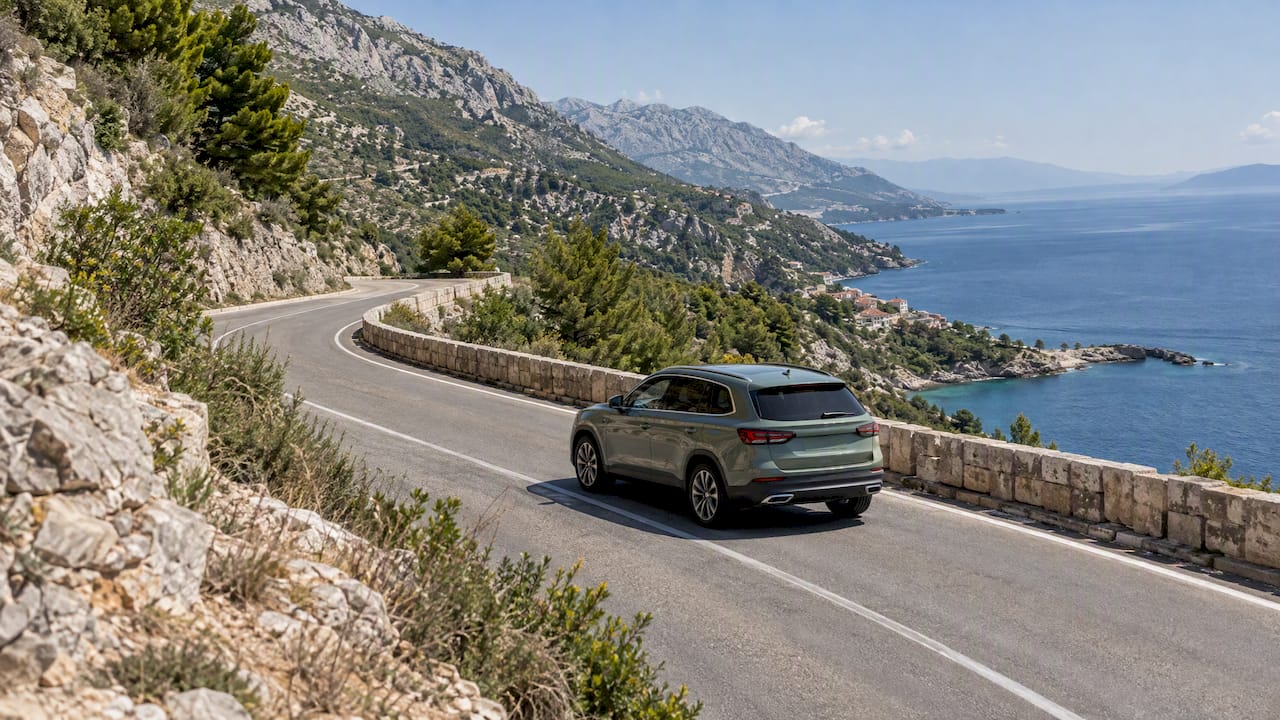
- 11:30 to 12:30, the coast road. Drive north toward Šibenik, with an optional pause at a viewpoint or in Primošten, a small peninsula town between the two.
- 12:30 to 14:00, lunch in Šibenik. Choose a konoba in the old town, and order something from the sea.
- 14:00 to 17:00, Šibenik. Visit the cathedral, climb through the lanes to a fortress, and finish with the waterfront as the afternoon cools.
- 17:00, return. Return to Split, or continue to Zadar if that is your next stop.
The drive between the towns takes about 45 to 60 minutes, though summer traffic can stretch it. That is why we place the drive in the late-morning window and not in the heavy afternoon return.
Trogir: what to see and how to enjoy it
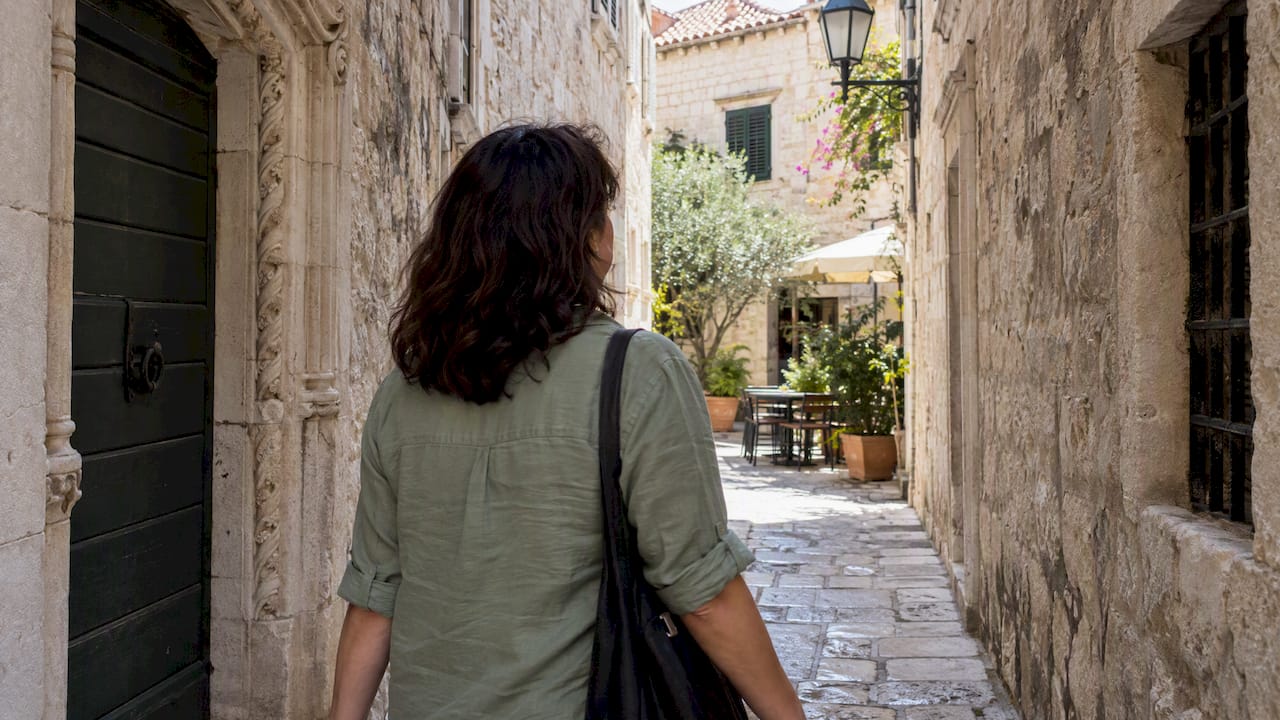
The old town is small enough to cover on foot in a morning, which is its great charm. Give yourself permission to wander. The best moments are rarely listed: a doorway with a carved coat of arms, a stairway opening onto the sea, a courtyard with laundry lines and geraniums.
The cathedral and the main square
The Cathedral of St. Lawrence anchors the town and is the one sight we would not skip. Visit early, when the square is calm, and take time to look at the stonework before you go inside. If you enjoy views, the bell tower rewards the climb, though it can be busy later in the day.
The waterfront
The seafront promenade is where Trogir shows its easy side. A coffee at the water’s edge, with yachts moored alongside centuries-old walls, is a better use of twenty minutes than adding another monument. By midday this stretch fills with day visitors, which is the signal to be on the road.
A note on crowds
Trogir is popular, and in high summer the narrow lanes feel it. Several travelers describe it as more touristy than Šibenik, so arriving early is the single best decision you can make. Our drivers know the drop-off points closest to the old town gate, which saves you a long walk in the heat.
Šibenik: the city that rewards slow exploring
Šibenik sits where the Krka River meets the sea, in a naturally protected bay. The city’s own tourism office describes a city of 42,599 residents guarded by four fortresses, which gives you a sense of the scale: lived-in, layered and much less staged than its better-known neighbors.
We have a fuller local overview on our page about Šibenik and what to do there, but here are the essentials.
The Cathedral of St. James
The cathedral is the city’s masterpiece and the reason Šibenik appears on the UNESCO list. It is worth taking your time with the exterior details before stepping inside. The cooler interior is also a welcome pause in the afternoon heat.

Fortresses and views
The fortresses are the best way to understand how Šibenik is laid out: the old town below, the channel to the sea, the islands beyond. Climb the one that suits your energy, and keep the others for a longer stay. The Fortress of St. Nicholas, at the entrance to the channel, carries its own UNESCO inscription from 2017.
For Game of Thrones fans
If someone in your group follows the series, Šibenik is a fun detour. The city stood in for Braavos in season five, with the cathedral appearing as the Iron Bank and St. John’s Fortress used for the fighting pit scenes. It is a pleasant way to bring teenagers into a day of heritage.
Lunch and the old town lanes
The old town is a network of stone stairways and small squares. Leave room in the schedule for an unhurried lunch, and allow yourself to get slightly lost. The lanes are the best part of the city.
Swapping or adding Krka National Park
Because Šibenik is the gateway to Krka, many guests ask whether they can add the waterfalls. You can, but be realistic: a full Krka visit is a day in its own right. A good compromise is to see Trogir in the morning and spend the afternoon at the park instead of in Šibenik, or to give Krka its own day later in your stay.
The park’s main attraction here is Skradinski Buk, which the park describes as the seventh and longest tufa barrier on the Krka River and the longest in Europe. The park also notes that the Skradin entrance includes a boat transfer to the falls, while the Lozovac entrance is typically faster for those arriving by car. Swimming rules and access routes change seasonally, so check the park’s page before your date.

If Krka is high on your list, see our Krka National Park day trip from Split or read how the transfer from Split to Krka works in practice. Traveling on to Zadar afterwards? A Split to Zadar transfer with a stop at Krka can fold the park into your move between cities.
Practical details that make the day easier
Timing and season
The coastal road between the towns is scenic, but it can get congested in July and August, so a defensive, unhurried driver matters. In peak months, we recommend leaving even earlier and keeping lunch flexible. In spring and autumn the day relaxes considerably, and you can add a second viewpoint stop without worrying about the clock.
What to wear and bring
- Comfortable flat shoes: the old towns are paved in polished stone that is slippery when wet.
- A hat, sunscreen and water, even in shoulder season.
- A light layer for the cathedral interiors.
- Some cash for small cafés and market stalls.
Luggage and onward travel
If you are changing bases that day, say moving from Split toward Zadar, your luggage can travel in the vehicle with you, so you never have to leave bags in a locker. That is one of the quiet advantages of doing this day by private car and not by public bus.
Accessibility
Both old towns involve cobbles, steps and some steep lanes. If anyone in your party finds walking difficult, tell us when you book. We can shape the route so the car waits close to the main sights and the longer climbs stay optional.
Our perspective: why we plan this as a private day
We have seen guests try this itinerary by public bus and by organized group tour, and the difference is mostly about time. A bus timetable decides when you leave Trogir, and a group schedule decides how long you stand in the cathedral. With a private driver, the day follows you.
Our approach is simple. We start early so Trogir feels like a small town and not a queue. We put the drive in the quiet part of the day. We let lunch run as long as it should. And we keep one flexible hour, because the best moment of the day is rarely the one on the plan: a viewpoint you did not expect, a bakery the driver recommends, or an extra hour on the Šibenik waterfront.
Our drivers are licensed, English-speaking and local, and our vehicles are modern, air-conditioned Mercedes sedans and minivans, so a family or a small group travels together in comfort. We would also say plainly that two towns and a full lunch are plenty for one day. If you want fortresses, Krka and Trogir all at once, we would rather suggest two days than rush any of them.
— Croatia
Plan your Trogir and Šibenik day with us
We arrange private day trips across Dalmatia, including our Split, Trogir and Salona private tour, and we can tailor a Trogir and Šibenik route around your hotel, your group and your pace. If you are arriving by air, you can pair the day with a private airport transfer. Tell us your dates, the number of travelers and your interests, and we will propose a route.
Combining this day with a longer trip
Trogir and Šibenik fit naturally into a larger Dalmatian journey. If you are moving between Split and Zadar, the coast road passes right through this region, which makes the day a natural stop between two bases instead of a separate excursion. For a longer stay, our multi-day private tours link the coast, the national parks and the islands with the same driver throughout.
If you are choosing a base, Split gives you the widest range of restaurants and day trips, while Šibenik is calmer and closer to Krka. Either works for this route. The only real mistake is trying to cover everything in one day.
FAQ
Can you see Trogir and Šibenik in one day?
Yes. The towns are about 46 to 56 km apart, with a drive of roughly 45 to 60 minutes, so the travel itself is short. Plan about two and a half hours in Trogir and three to four in Šibenik, with a long lunch, and the day stays comfortable.
Which is better to visit, Trogir or Šibenik?
It depends on your taste. Trogir is more compact and polished, ideal for a half-day of architecture and waterfront. Šibenik is larger, quieter and richer in fortresses and views, and it is the better base if you want to continue to Krka.
Is it worth visiting Šibenik?
We think so. It is the oldest Croatian-founded town on the Adriatic coast, and it has two UNESCO-listed sites: the Cathedral of St. James and the Fortress of St. Nicholas. It also feels less staged than many better-known coastal towns.
Was Game of Thrones filmed in Šibenik?
Yes. Šibenik appeared as Braavos in season five, and the cathedral and St. John’s Fortress were used for scenes. It makes a fun addition for fans, though the city is well worth visiting without it.
Can I add Krka National Park to this trip?
You can, but it works best as a replacement for one of the two towns, or as a separate day. Krka needs several hours for the walkways and the falls, so adding it on top of both towns would make the day rushed.
Sources
- Distance from Grad Trogir to Grad Šibenik, DashDistance
- Historic City of Trogir, UNESCO World Heritage Centre
- Šibenik, Tourist Board of Šibenik-Knin County
- Questions, Visit Trogir Tourist Board
- Why Visit Šibenik, Visit Šibenik
- Game of Thrones locations, Visit Šibenik
- Skradinski buk, Krka National Park