
What Are Luxury Travel Vehicles? Your 2026 Guide
TL;DR:
- Luxury travel vehicles encompass premium cars, SUVs, limousines, and executive vans designed to provide maximum comfort, exclusivity, and advanced amenities. They are categorized based on capacity, purpose, and interior features, with technology like wellness seats and high-end sound systems enhancing passenger wellbeing. Choosing the right vehicle depends on group size and trip needs, emphasizing interior quality and customization over mere brand prestige for truly luxurious experiences.
Luxury travel vehicles are defined as premium transportation options engineered to deliver superior comfort, exclusivity, and advanced amenities that transform travel from a necessity into an experience. The luxury tourism vehicle market encompasses cars, SUVs, limousines, and custom vans tailored specifically for discerning travelers who prioritize quality over convenience. Whether you are planning a private airport transfer, a multi-day tour, or a group excursion, understanding what are luxury travel vehicles means knowing which combination of space, technology, and personalization genuinely serves your needs. This guide covers every major category, the features that matter most, and how to choose the right vehicle for your trip.
What are luxury travel vehicles and how are they categorized?
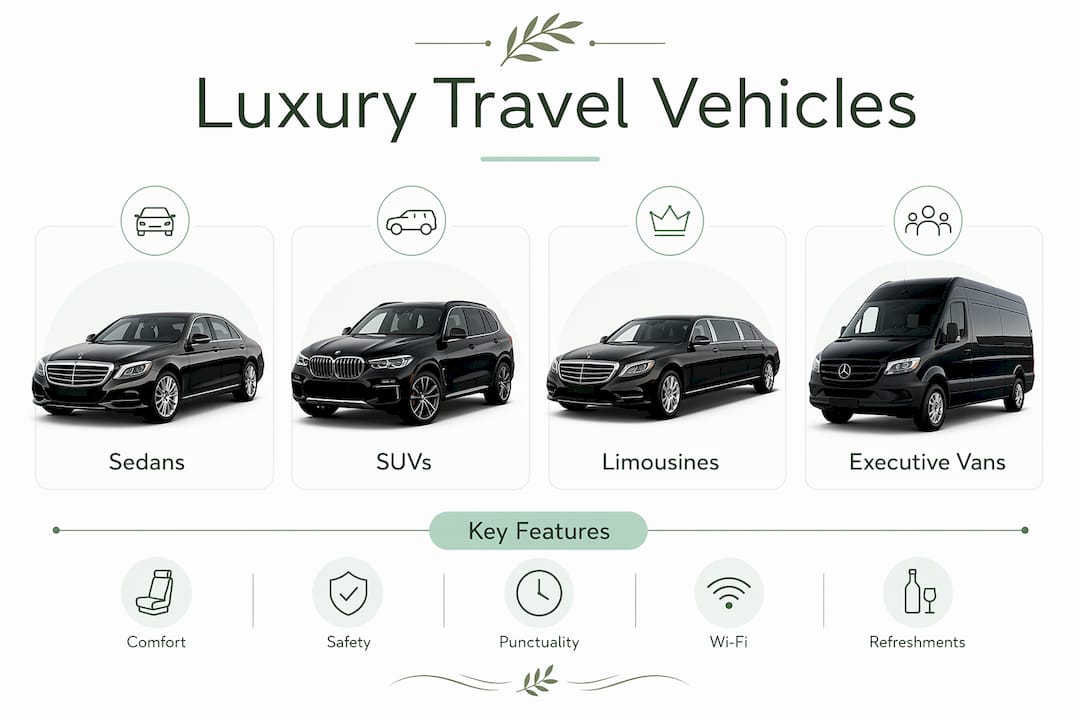
Luxury travel vehicles, known in the industry as premium travel vehicles or executive transport, span four primary categories: luxury sedans, high-end SUVs, limousines, and executive van conversions. Each category serves a distinct traveler profile, and the differences go well beyond badge prestige. The vehicle categories cater to leisure travelers, business travelers, and groups through short-term and long-term rental services, reflecting how varied the demand truly is.
Here is how the main types compare at a glance:
| Vehicle type | Best for | Typical capacity | Defining feature |
|---|---|---|---|
| Luxury sedan (e.g., Mercedes S-Class) | Solo or couple travel | 1 to 3 passengers | Refined ride quality and prestige |
| High-end SUV (e.g., Range Rover SV Ultra) | Small groups, families | 4 to 5 passengers | All-terrain capability with premium interiors |
| Limousine | VIP events, short transfers | 6 to 10 passengers | Ceremonial presence and privacy |
| Executive van conversion (e.g., Mercedes-Benz Sprinter) | Groups, business travel | 6 to 14 passengers | Configurable cabin for work, rest, or socializing |
The most important distinction between these categories is how they handle space and purpose. A limousine excels at short, high-profile transfers where visual impact matters. An executive van conversion built on a Mercedes-Benz Sprinter or Ford Transit chassis offers heated massage seats, integrated worktables, high-end AV systems, and optional restroom facilities, making it the most versatile option for groups who need productivity on the move. The Range Rover SV Ultra sits at the pinnacle of the SUV category, offering a level of interior refinement that rivals private aviation lounges.
One comparison worth noting: luxury travel vehicles and recreational vehicles (RVs) are often confused, but they serve entirely different purposes. RVs are designed for living on the road, with cooking and sleeping facilities. Luxury travel vehicles prioritize comfort, discretion, and the quality of the journey itself, not self-sufficiency.
What features and technologies distinguish luxury travel vehicles today?
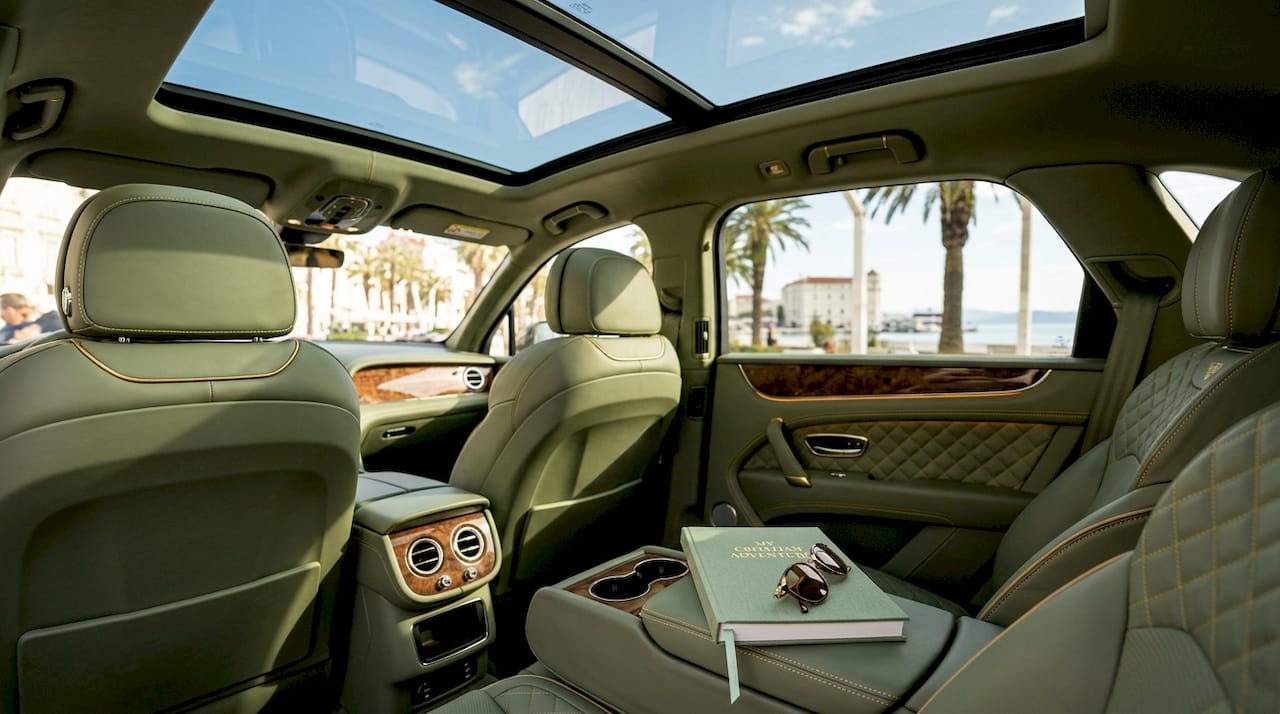
The interior of a high-end travel vehicle is where the real differentiation happens. Premium materials form the foundation: full-grain leather, exotic wood veneers, hand-stitched headliners, and custom carpeting are standard in vehicles positioned at the top of the market. These materials are not decorative choices alone. They contribute to acoustic dampening, tactile comfort, and the overall sensory atmosphere of the cabin.
Technology has become the most rapidly evolving dimension of luxury transport. The Range Rover SV Ultra introduces the SV Electrostatic Sound system, which delivers concert hall quality audio through a speaker configuration tuned specifically for the vehicle’s interior geometry. This is a meaningful distinction from generic “premium audio” claims. The same model pairs this with Body and Soul Seats, which offer multiple wellness modes designed to support relaxation or invigoration during travel. These are proprietary, therapeutically defined features, not marketing language.
Executive van conversions bring a different set of technologies to the table:
- Smart ambient lighting with programmable color zones to reduce eye fatigue on long transfers
- Integrated worktables that fold flat or convert to dining surfaces depending on the group’s needs
- Multi-zone climate control allowing each passenger to set their own temperature independently
- High-definition entertainment screens with HDMI and wireless connectivity
- Noise-insulated cabin walls that reduce road and engine noise to near-silent levels
Pro Tip: When evaluating any luxury vehicle, ask the operator for the specific technology terms used by the manufacturer, such as “SV Electrostatic Sound” or “Body and Soul Seats.” Authentic luxury tech claims require reading manufacturers’ exact terminology to assess real benefits, since marketing language often generalizes what are genuinely distinct, proprietary wellness features.
How to choose the right luxury travel vehicle for your trip
Selecting the right vehicle starts with two questions: how many people are traveling, and what does the journey need to accomplish? The answers narrow the field quickly and prevent overpaying for features you will not use.
-
Solo travelers and couples are best served by a luxury sedan such as the Mercedes S-Class or a compact SUV. These vehicles offer refined ride quality, a quiet cabin, and the prestige that suits business arrivals or romantic getaways. They are also the most practical choice for urban transfers where parking and maneuverability matter.
-
Small groups of three to five should consider a high-end SUV like the Range Rover SV Ultra or a Mercedes GLS. These vehicles provide genuine rear-seat comfort, not just adequate legroom, along with the flexibility to handle both city streets and scenic coastal roads.
-
Groups of six or more benefit most from an executive van conversion. Executive van owners consistently prefer these conversions over limousines or SUVs for their usable space, privacy, and versatile configurations. A single vehicle can serve as a lounge, a meeting room, a family retreat, or a shuttle depending on how the interior is arranged.
-
Business travelers should prioritize cabin acoustics, workspace design, and connectivity over exterior styling. A van conversion with a fold-out worktable and noise-insulated walls delivers more productive travel than a prestige sedan with a cramped rear seat.
-
Families with children need to factor in storage for luggage and equipment, ease of boarding, and climate flexibility. Executive vans and large SUVs both address these needs, though the van offers considerably more floor space.
The deeper principle here is that ergonomic seating, cabin acoustics, climate zonation, and workspace design have more impact on the actual experience than exterior branding. A well-converted Sprinter will outperform a poorly configured luxury sedan on every comfort metric that matters during a three-hour transfer.
Pro Tip: For groups traveling between Croatian cities, private group transport in an executive van allows the journey itself to become part of the experience, with flexible stops, local commentary, and a cabin configured for your group’s specific needs.
How luxury travel vehicles enhance exclusivity and wellness on the move
The most significant shift in the premium travel vehicle segment over the past three years is the integration of active wellness features into the cabin experience. Luxury no longer means passive comfort. It means a vehicle that actively supports your physical and mental state during the journey.
The Range Rover SV Ultra exemplifies this shift. Its Body and Soul Seats offer wellness modes that pair with the immersive audio system to create defined therapeutic effects, from calming relaxation settings to energizing configurations for travelers arriving at a destination ready to work. This pairing of immersive audio and seat-based relaxation modes reflects a broader industry trend toward vehicles that improve passenger wellbeing, not just passenger comfort.
“Luxury now includes active wellness features pairing immersive audio and seat-based relaxation modes which improve passenger wellbeing during travel.” — Range Rover SV Ultra technical documentation, 2026
Privacy and space configuration are equally central to the exclusivity equation. An executive van conversion with a fully enclosed rear cabin, tinted windows, and a partition between the driver and passenger areas creates an environment where sensitive conversations, focused work, or genuine rest are all possible. This level of privacy is simply not available in a standard sedan or even most high-end SUVs. The versatile duty cycle of a well-configured executive van, serving as lounge, meeting space, family retreat, or shuttle within a single trip, makes it the most complete expression of what exclusive travel experiences can offer on the road.
Sensory design is another frontier. Some bespoke van conversions now incorporate haptic flooring that subtly responds to road vibrations, reducing fatigue on long transfers. Fragrance diffusion systems, curated lighting sequences tied to time of day, and acoustically tuned speaker placement all contribute to an environment where the vehicle itself becomes a destination.
Key takeaways
Luxury travel vehicles deliver genuine value when the interior systems, technology, and vehicle category are matched precisely to the traveler’s group size, purpose, and comfort priorities.
| Point | Details |
|---|---|
| Category matters more than brand | Sedans, SUVs, limousines, and executive vans each serve distinct traveler profiles and group sizes. |
| Interior systems define luxury | Ergonomic seating, acoustic insulation, and climate control outperform badge prestige for real comfort. |
| Wellness tech is now standard | Features like Body and Soul Seats and SV Electrostatic Sound actively support passenger wellbeing. |
| Groups need executive vans | Van conversions on Sprinter or Transit chassis offer space, privacy, and productivity that SUVs cannot match. |
| Book with specificity | Ask operators for exact technology terms and interior configurations before confirming any luxury transfer. |
Why the vehicle and its interior must be treated as one system
After years of arranging private transfers across Croatia, the most consistent mistake I see travelers make is choosing a vehicle based on the brand name on the hood rather than the quality of what is inside. A Mercedes badge on the exterior means very little if the rear cabin has not been properly fitted out for the journey ahead.
The truth is that the chassis and the bespoke interior fit-out together determine whether a vehicle qualifies as genuinely luxurious. I have seen executive van conversions that outperform six-figure SUVs in every measurable comfort category, simply because the interior was designed with intention. Noise reduction, seat ergonomics, lighting, and usable space were treated as a system, not as afterthoughts. The private transfer experience in Croatia reinforces this point constantly. Travelers who ask about the vehicle’s interior configuration before booking consistently report higher satisfaction than those who simply request “a luxury car.”
I am also skeptical of the wellness technology trend when it is applied superficially. The Range Rover SV Ultra’s Body and Soul Seats represent genuine engineering with defined therapeutic properties. But many operators use terms like “wellness seating” to describe a heated seat with a basic massage function. The difference matters, and travelers deserve to know it. Read the manufacturer’s exact specifications, not the operator’s marketing copy.
Personalization is where the real luxury lies. A vehicle configured for your group’s specific needs, with the right cabin layout, the right temperature, and the right level of privacy, will always outperform a generic “luxury” option that was not designed with your journey in mind.
— Croatia
Experience luxury private transfers across Croatia
Croatia-private-transfers offers a curated selection of private transfers and bespoke tours across Croatia’s most breathtaking destinations, from the walled city of Dubrovnik to the crystalline waters of Plitvice Lakes. Every transfer is operated in modern, air-conditioned Mercedes-class vehicles with licensed, English-speaking drivers who bring genuine local knowledge to every route.
Whether you are traveling solo, as a couple, or as a group of twelve, Croatia-private-transfers matches the right vehicle to your specific itinerary. Book your private transfer early to access the widest selection of premium vehicles and secure your preferred departure times. For groups and families, bespoke multi-day tours with fully configured executive transport are available on request, turning every kilometer of Croatia’s coastline and countryside into part of the experience.
FAQ
What are luxury travel vehicles, exactly?
Luxury travel vehicles are premium transportation options including cars, SUVs, limousines, and executive van conversions that offer advanced technology, high-quality interiors, and personalized amenities designed to enhance the travel experience beyond standard transport.
How do executive van conversions differ from limousines?
Executive van conversions built on chassis like the Mercedes-Benz Sprinter offer more usable cabin space, configurable interiors for work or relaxation, and greater privacy than traditional limousines, making them the preferred choice for groups and business travelers.
What technology features should I look for in a luxury travel vehicle?
Look for proprietary features with defined functions, such as the Range Rover SV Ultra’s SV Electrostatic Sound system and Body and Soul Seats, along with multi-zone climate control, noise-insulated cabin walls, and integrated connectivity for work or entertainment.
How many passengers can a luxury travel vehicle accommodate?
Luxury sedans typically seat one to three passengers comfortably, high-end SUVs seat four to five, and executive van conversions can accommodate six to fourteen passengers depending on the interior configuration chosen.
Is a luxury SUV or an executive van better for group travel?
For groups of six or more, an executive van conversion delivers more usable space, better privacy, and a more versatile cabin than even the largest luxury SUVs, making it the stronger choice for both leisure and business group travel.