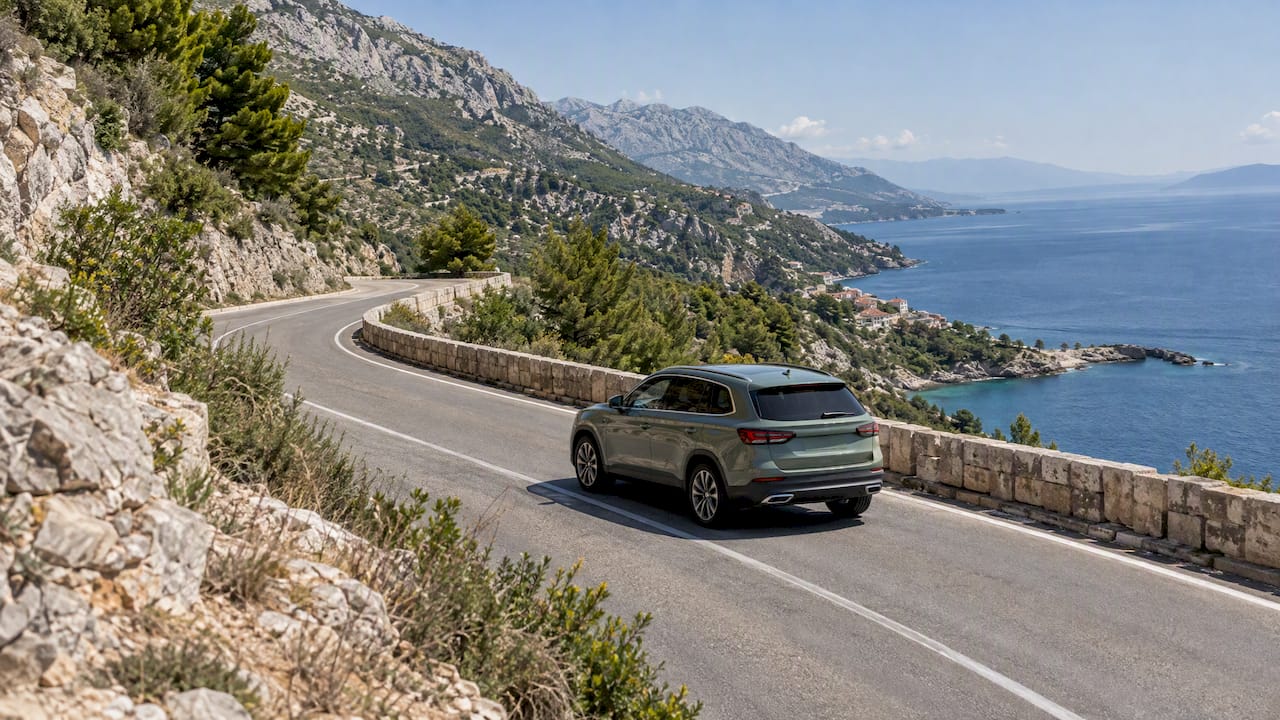


Your Guide to Customizing Tour Itineraries in 2026
TL;DR:
- Generic tours often feel rushed and impersonal, while customized itineraries significantly increase traveler satisfaction. Proper preparation involving self-assessment, clear communication, geographic mapping, and flexible blocks ensures a personalized, well-organized experience. Collaborating effectively with guides and verifying details before travel helps avoid pitfalls and enhances the overall journey.
Generic tours promise everything and deliver something closer to a crowded bus, a rushed lunch, and a gift shop you didn’t ask for. This guide to customizing tour itineraries gives you a practical, step-by-step path from frustration to fulfillment. Whether you’re drawn to the sun-bleached walls of a Dalmatian coastal town, the emerald pools of a national park, or a quiet vineyard far from the tourist trail, the experience you actually want is within reach. Custom itineraries deliver 40% higher satisfaction than standard packages. That alone is reason enough to start planning differently.
Table of Contents
- Key takeaways
- What you need before customizing tour itineraries
- Step-by-step: building your personalized itinerary
- Working with local guides effectively
- Common pitfalls to avoid and how to verify your plan
- Tools that make itinerary customization easier
- My honest take on planning vs. spontaneity
- Plan your Croatian adventure with Croatia-private-transfers
- FAQ
Key takeaways
| Point | Details |
|---|---|
| Preparation is non-negotiable | Know your travel style, budget, and group needs before building any itinerary. |
| Build in daily buffer time | Experts recommend 2-3 hours of unscheduled time each day to prevent burnout and allow spontaneity. |
| Use hybrid planning tools | Combine AI-generated drafts with personal judgment for the most accurate and personalized result. |
| Communicate clearly with guides | Distinguish must-haves from nice-to-haves before negotiating with any local expert or service provider. |
| Verify before you travel | Confirm opening hours, seasonal closures, and route logic before finalizing any plan. |
What you need before customizing tour itineraries
The strongest itineraries start long before you open a planning app. They start with honest self-assessment. Before you research a single attraction, you need to answer a handful of questions that will shape every decision that follows.
Know your travel style and limits. Are you energized by full days of exploration, or do you recharge best with slow mornings and unhurried afternoons? Do you have mobility considerations, dietary needs, or children in tow? If accessibility matters, be specific: note whether step-free access, seating availability, and reduced walking distances are genuine requirements.
Set a real budget. Most travelers set a total number and forget to allocate it. A more useful approach is to rank your priorities, cultural experiences, food, accommodation, transport, and decide where you’re willing to spend more and where you’re happy to save. That order of priorities should drive your planning, not the other way around.
Here’s a quick overview of the most useful tools for getting started:
| Tool | Best for | Limitation |
|---|---|---|
| AI itinerary planners | Fast drafts, broad suggestions | May produce outdated or inaccurate information |
| Google My Maps | Route visualization, geographic grouping | Requires manual input and updating |
| Travel blogs and forums | Local gems, recent firsthand accounts | Variable quality; needs cross-referencing |
| Professional planners | Complex, multi-destination or group tours | Higher cost; requires clear communication |
Pro Tip: If you’re traveling with a group, collect everyone’s preferences before you begin any research. Even a simple shared document with three columns: “must-see,” “interested in,” and “happy to skip,” saves hours of back-and-forth later.
For groups in particular, planning complex customized tours requires extra lead time. Expect professional planners to take about 5 days to produce a sample itinerary, with 2 to 4 weeks needed to finalize larger group arrangements.
Step-by-step: building your personalized itinerary
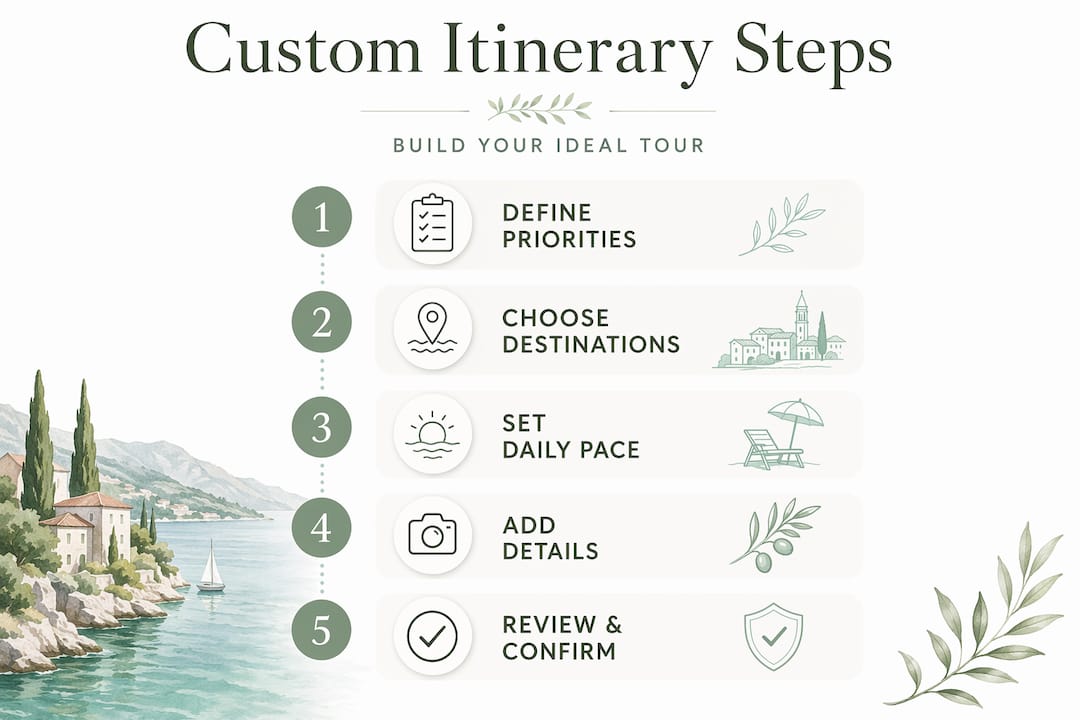
Once your foundation is in place, the actual process of creating personalized travel plans becomes far more intuitive. Follow this sequence and you’ll avoid the most common planning mistakes.
- List your non-negotiables. Write down the two or three experiences that define the trip for you. These are protected. Everything else is negotiable.
- Research with local depth. Go beyond the obvious attractions. Check regional event calendars, local food markets, and traveler forums for the destination you’re visiting. Hidden gems rarely appear in the first page of search results.
- Map your activities geographically. Group everything by location before assigning it to a day. Itinerary feasibility improves significantly when you minimize backtracking and cluster same-area activities together.
- Build modular blocks. Instead of scheduling minute by minute, think in blocks: morning, midday, and afternoon. Modular itinerary blocks allow you to swap activities easily when energy levels shift or weather changes.
- Add wild card time daily. Leave at least one block per day intentionally unscheduled. This is where the best travel memories often come from.
- Draft with AI, then refine manually. Hybrid planning combining AI tools with personal judgment consistently yields better results than either approach alone. Use the AI output as a starting skeleton, not a final answer.
Pro Tip: When mapping routes, mentally walk through each day in sequence: where you start, how you travel, how long that takes, and where you end up. This mental simulation catches timing issues that look fine on paper but create real frustration on the ground.
A well-structured day might look like this:
- Morning block: anchor experience (a UNESCO site, a food market, a guided walk)
- Midday block: lunch in the area, rest, or a shorter secondary visit
- Afternoon block: scheduled activity or open wild card time
- Evening: flexible dining, local experience, or rest
For those looking at customized day tours in Croatia specifically, this block structure adapts beautifully to both coastal and inland routes.
Working with local guides effectively
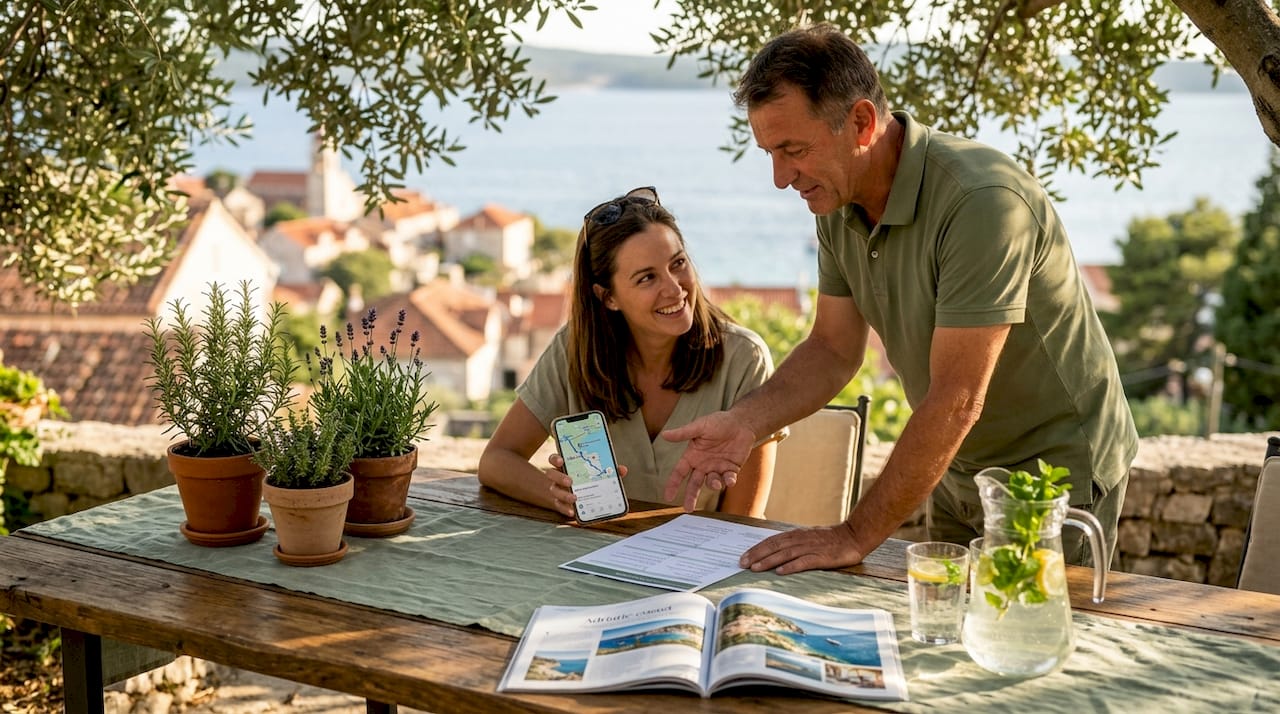
A great local guide can take a good itinerary and make it exceptional. But that only happens when you communicate well from the start. The dynamic between traveler and guide works best when it’s collaborative rather than transactional.
Before your first conversation with a guide or operator, prepare the following:
- A clear list of must-have experiences (non-negotiable)
- A secondary list of nice-to-haves (can be dropped if needed)
- Specific accessibility requirements, described functionally rather than vaguely. For example: “needs seating every 20 minutes” is more useful than “has mobility issues.” Functional accessibility descriptions allow guides to plan far more accurately.
- Your preferred pacing (fast-paced and information-dense, or relaxed and immersive)
When it comes to negotiation, the mindset matters. You’re not trying to extract the lowest price. You’re trying to find the best alignment between what the guide can deliver and what you actually want.
“Categorize your requests into fixed and flexible parts before the conversation begins. This makes it much easier for guides to propose alternatives and reach a workable compromise.” Local guide customization principles
Questions worth asking any guide or operator before confirming:
- What is included in the quoted price, and what costs extra?
- Can the timing or sequence of stops be adjusted on the day?
- What happens if weather or closures affect the plan?
- Is the vehicle accessible for the specific needs of your group?
Pro Tip: Always request a written summary of your final itinerary, including agreed inclusions and any confirmed customizations, before you make any payment. A short email confirmation protects both parties and eliminates misunderstandings.
For travelers who value luxury private experiences, having these details confirmed in writing is especially important when booking exclusive or hard-to-reschedule experiences.
Common pitfalls to avoid and how to verify your plan
Even the most thoughtfully designed itinerary can unravel without a proper review before departure. Here are the verification steps that separate polished travel plans from costly improvisation.
- Check all opening hours and seasonal closures. Many attractions have limited winter hours, annual maintenance closures, or peak-season reservation requirements. AI tools and travel blogs frequently cite outdated information, so always verify directly with the venue or a recent source.
- Add a 20 to 30 percent time buffer to every activity. Underestimating hidden time costs like transit, parking, queues, and check-ins is one of the most common planning errors. If a museum visit is listed as two hours, plan for at least two and a half.
- Review your geographic route one final time. Map it visually. If Day 3 has you traveling north in the morning and south in the afternoon to reach a place you passed on Day 2, something needs to move.
- Confirm booking requirements. Some destinations require advance reservations weeks or even months ahead. Plitvice Lakes National Park in Croatia, for example, typically requires timed entry tickets booked well in advance during peak season.
- Seek recent local feedback. A quick post in a destination-specific travel forum can surface insights that no planning tool provides: current road conditions, a newly opened local restaurant, or a festival happening that week.
Pro Tip: Compare your itinerary against a simple checklist: Does each day start and end in a logical location? Does every attraction have confirmed hours? Is there at least one flexible block per day? If you can check all three, your plan is in good shape.
Here’s a quick comparison of common pitfalls and the better approach:
| Pitfall | Better approach |
|---|---|
| Trusting AI for current opening times | Verify directly with venue websites |
| Scheduling back-to-back activities all day | Include at least one open block per day |
| Ignoring geographic sequence | Group nearby attractions on the same day |
| Skipping booking requirements | Check reservation policies at least 4-6 weeks out |
Tools that make itinerary customization easier
The range of tools available to today’s traveler is genuinely impressive. Knowing which tool does what, and where each one falls short, saves you from the frustration of building on a flawed foundation.
| Tool | Strength | Best use case |
|---|---|---|
| AI itinerary assistants | Speed, broad coverage | First draft generation |
| Google My Maps | Visual route planning | Grouping by geography |
| Travel forums (Reddit, TripAdvisor) | Recent, firsthand knowledge | Discovering local tips |
| Shared Google Docs or Notion | Group collaboration | Multi-traveler coordination |
| Professional tour operators | Deep local expertise | Complex or luxury customization |
Beyond the tools themselves, a few practices make a real difference:
- Update your itinerary document regularly as you confirm bookings. A living document beats a static PDF every time.
- Use color coding in shared documents to indicate confirmed vs. tentative plans.
- Save offline versions of maps and itinerary docs before traveling to areas with limited connectivity.
Pro Tip: For route planning in Croatia specifically, Google My Maps lets you drop pins on every planned stop and then visualize whether your daily routes make geographic sense. It takes about 20 minutes and often reveals a full day worth of backtracking you can eliminate before you ever leave home.
The personalized tour experience ultimately comes down to matching the right tools with the right intentions, then layering in local knowledge to fill the gaps no app can cover.
My honest take on planning vs. spontaneity
I’ve helped coordinate enough custom travel experiences to know that the biggest mistake isn’t under-planning. It’s over-planning with the wrong things. People spend hours researching famous restaurants and zero minutes leaving space to wander down a side street they didn’t know existed.
The itinerary is a framework, not a contract. When I work through a custom plan, I protect the two or three moments the traveler genuinely cannot miss, and then I keep everything else loosely held. Clear communication with a knowledgeable local guide is worth more than any planning app. A good guide who understands your pace and priorities can make a simple afternoon unforgettable. A rigid schedule, no matter how beautifully designed, can make even a breathtaking location feel like a task to complete.
Technology has genuinely improved the speed of drafting plans. But it hasn’t replaced the human judgment required to know that a certain coastal road at sunset is worth being late for dinner, or that a quiet village market on a Wednesday morning will outlast any museum in memory. Treat the planning process itself as part of the experience. The anticipation, the research, the small discoveries you make before you ever board a flight: these are part of the journey too.
— Croatia
Plan your Croatian adventure with Croatia-private-transfers
Croatia-private-transfers brings the principles of this guide to life across one of Europe’s most rewarding destinations. The team offers fully private transfers and tailor-made tours with a private driver designed around your schedule, your interests, and your pace. Whether you’re coordinating a small family group, an anniversary trip, or a multi-day coastal route, the service adapts to your plan rather than the other way around. Licensed, English-speaking drivers and modern vehicles mean the journey between your chosen stops is as comfortable as the destinations themselves. Explore private transfers across Croatia or curated boat tours to discover how your customized itinerary can become a reality, without the logistics standing between you and the experience.
FAQ
What makes a custom itinerary better than a standard tour?
Travelers using custom itineraries report 40% higher satisfaction than those on standard packages, largely because the pace, content, and priorities reflect their actual interests rather than a one-size-fits-all program.
How much buffer time should I include each day?
Experts recommend building in 2 to 3 hours of unscheduled time each day to accommodate transit delays, spontaneous discoveries, and the kind of rest that prevents burnout mid-trip.
How far in advance should I start planning a custom itinerary?
For individual or small group travel, starting 4 to 8 weeks out is generally sufficient. For complex group tours, a professional operator typically needs 2 to 4 weeks to finalize arrangements, with 1 year of advance notice recommended for large groups with specific requirements.
How do I communicate accessibility needs to a local guide?
Describe your needs in functional terms rather than general ones. Saying “needs a seat every 20 minutes and avoids stairs” gives a guide far more to work with than a vague reference to limited mobility. Specific functional descriptions lead directly to better-designed routes.
Can AI tools replace manual itinerary planning?
Not fully. Hybrid planning that combines AI-generated drafts with personal refinement consistently outperforms either method alone. AI handles speed and broad coverage well; human judgment handles accuracy, local nuance, and genuine personalization.