

Checklist for Croatia travelers: luxury trip essentials
TL;DR:
- Preparing thoroughly for a luxury trip to Croatia ensures access to its fairy-tale cities and protected landscapes by securing essential documents, insurance, and bookings. Planning your visit during shoulder seasons like late May or September offers exclusivity, better availability, and a more authentic experience. Working with expert private transfers and guided services maximizes comfort and personalization, transforming a good vacation into a curated journey.
Preparing for a luxury trip to Croatia demands far more than assembling a polished packing list. A thorough checklist for Croatia travelers covers entry compliance, health and emergency protocols, seasonal timing, and the kind of exclusive logistics that transform a good vacation into a genuinely curated experience. Croatia rewards the prepared traveler with fairy-tale walled cities, impossibly blue Adriatic waters, and UNESCO-protected landscapes that feel almost otherworldly. But arriving without the right documents, the right insurance, or reservations for the experiences that matter most means leaving those rewards to chance. This guide ensures you leave nothing to chance.
Table of Contents
- Essential travel documents and compliance
- Health, insurance, and emergency preparation
- Seasonality and luxury logistics essentials
- Luxury travel checklist: personalized tours and private transfers
- Comparing checklist essentials for seamless luxury travel to Croatia
- The luxury traveler’s mindset: checklist as your itinerary insurance
- Enhance your luxury Croatia trip with bespoke private transfers and tours
- Frequently asked questions
Essential travel documents and compliance
Having your documents in order is the first critical step to a smooth arrival and departure from Croatia. Croatia joined the Schengen Area in January 2023, which changed the entry landscape considerably. While movement within the Schengen zone is now frictionless, Croatia shares land borders with non-Schengen countries including Serbia, Bosnia and Herzegovina, and Montenegro. If your itinerary includes a multi-destination Balkan route, you may cross in and out of Schengen territory more than once, and border officers will check your documents each time.
Your passport must have 3 months validity beyond your planned departure date and at least one blank page per entry stamp. This is a firm requirement, not a suggestion. Arriving with a passport that expires too soon will result in denial of entry regardless of your itinerary or accommodation reservations.
Here are the key document essentials to have prepared before departure:
- Passport validity: Minimum three months beyond your departure date from Croatia, with at least one blank page
- Minors traveling alone or with one parent: Carry notarized consent letters from the absent parent or legal guardian
- Military personnel: Additional documentation may be required; confirm with the U.S. Embassy in Zagreb before travel
- Registration requirement: Foreign visitors must register with local police within three days of arrival; hotels, villas, and licensed rentals handle this automatically, but if you are staying privately, you are responsible
- Land border crossings: Carry all documents in an easily accessible location; expect checks when entering from Bosnia and Herzegovina, Serbia, or Montenegro even during leisure detours
Pro Tip: Create a digital folder with scanned copies of every document, including insurance cards and hotel confirmations, stored in a cloud service you can access offline. When planning arrival and departure logistics, having digital backups available on your phone can save hours of stress at border crossings.
Health, insurance, and emergency preparation
Once your documents are secured, preparing your health and safety plans protects your wellbeing while you enjoy Croatia’s many pleasures. This step is frequently underestimated by luxury travelers who assume premium accommodation handles everything. It does not.

Enrolling in STEP and buying travel insurance before departure are two of the most impactful steps you can take. STEP, the U.S. Smart Traveler Enrollment Program, registers your trip with the nearest U.S. Embassy, enabling them to reach you during natural disasters, civil unrest, or family emergencies. It takes less than ten minutes to set up and the value in an actual emergency is immeasurable.
Your health and safety checklist should include:
- STEP enrollment: Register at step.state.gov before departure
- Travel insurance: Purchase a policy that covers medical evacuation, hospitalization, trip cancellations, and lost luggage; standard credit card coverage rarely meets these thresholds
- Prescription documentation: Carry a letter from your physician for any prescription medications, especially controlled substances, which may require customs declaration
- CDC travel health review: Check current vaccination recommendations and local healthcare facility information for Croatia
- EU emergency number: Memorize or save 112 for urgent situations; this number functions across all EU member states and connects you to police, fire, and medical services
Know before you go: Croatia’s healthcare system is competent in major cities like Zagreb, Split, and Dubrovnik, but medical facilities in smaller coastal towns and islands can be limited. Evacuation coverage in your travel insurance policy is not optional for remote destinations.
Pro Tip: Pack a small laminated card in your wallet listing emergency contacts, your insurance policy number, and the address of your nearest U.S. Embassy. If your phone is lost or damaged, that card becomes your lifeline.
Seasonality and luxury logistics essentials
Scheduling your trip with seasonality in mind ensures your luxury experience remains both comfortable and genuinely exclusive. Croatia’s popularity has surged dramatically over the past decade, and peak season now places significant pressure on the country’s most celebrated destinations.
The best time to visit Croatia is late May through June or September, when temperatures are warm, the Adriatic is swimmable, and the crowds at places like Dubrovnik’s Old City walls or Plitvice Lakes are far more manageable. July and August bring the highest prices and the densest crowds, with popular sites feeling more like theme parks than timeless Mediterranean treasures.
For the discerning traveler, here is how seasonality reshapes your planning:
- Late May to June: Lush green landscapes, moderate temperatures in the mid-70s°F, fewer tourists, and greater availability of private guides and exclusive venues
- July to August: Peak demand for private transfers and tours requires booking weeks or months in advance; higher vehicle and guide rates apply
- September: Arguably the finest month for luxury travel. The sea remains warm, harvest season opens world-class wine and truffle experiences, and coastal towns rediscover their authentic character
- October: Cooler, ideal for cultural touring and inland destinations like Plitvice Lakes, with exceptional foliage
| Season | Crowds | Pricing | Best for |
|---|---|---|---|
| Late May to June | Low to moderate | Mid-range | Beach, sailing, city touring |
| July to August | Very high | Premium | Events, nightlife, island access |
| September | Moderate | Mid-range | Wine, culture, warm sea |
| October to November | Low | Budget friendly | Waterfalls, nature, city breaks |
Understanding the benefits of private transfers becomes especially clear during high season, when public transport is overcrowded and taxis are unreliable. Booking luxury transport early secures both the vehicle class you want and a dedicated driver who knows the routes well. For coastal routes, planning excursions in advance allows access to experiences that simply disappear once capacity fills.
Luxury travel checklist: personalized tours and private transfers
With timing and essentials planned, the next step is arranging luxury services that give your Croatian journey its distinct character. A luxury Croatia experience is not defined by the hotel you choose. It is shaped by the quality of every transition between one extraordinary moment and the next.
Bespoke private tours let you move through Croatia on your terms, whether that means a private boat to a secluded island, an after-hours visit to a heritage site, or a curated tasting at a family-owned Dalmatian winery with no other guests present. These experiences exist outside the standard tour catalog and require a specialist to arrange.
For private transfers, your checklist should cover:
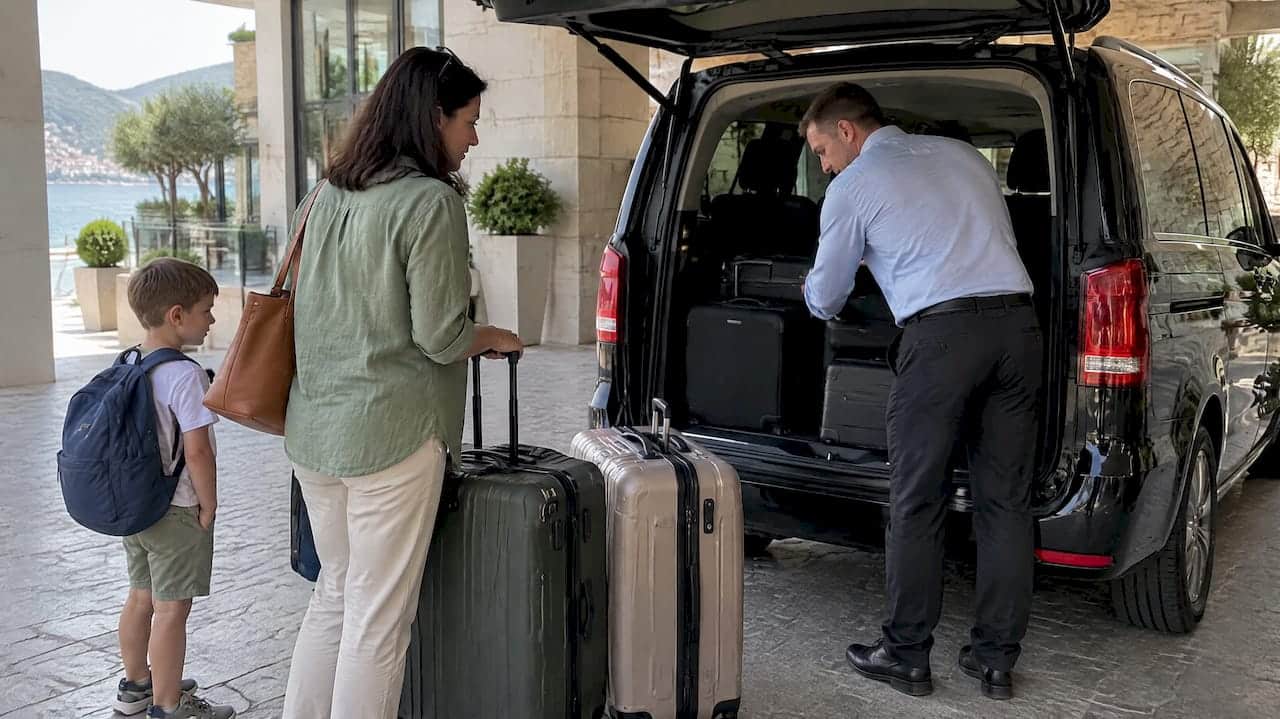
- Confirmation of vehicle type (Mercedes V-Class, E-Class, or equivalent) and passenger capacity
- Verified pickup time aligned with flight arrivals, including buffer time for immigration and baggage
- Concierge contact number active before and during your trip
- Door-to-door routing confirmed with the driver, not just the booking platform
- Child seats or accessibility features if required
For personalized tours, prioritize:
- Define your interests before booking: history and architecture, natural landscapes, culinary experiences, or a curated blend
- Confirm that your guide holds an official Croatian tour guide license, which requires formal regional training
- Request itinerary flexibility in writing so your pace can adjust on the day
- Ask about exclusive access arrangements, particularly for sites like Diocletian’s Palace in Split or the walls of Dubrovnik during off-peak hours
- Confirm language proficiency and local specialization of your guide, since Croatia’s regions differ significantly in culture and history
Private transfers in Croatia connect the major airports with Dubrovnik, Split, Zadar, Zagreb, and smaller coastal towns with a level of comfort that public shuttles cannot approach. What sets luxury tour guides apart is not just knowledge but access, the ability to open doors that remain closed to the general traveler.
Comparing checklist essentials for seamless luxury travel to Croatia
To wrap up the checklist details, this structured comparison helps you ensure no critical element is overlooked. Organizing your Croatia travel checklist by travel phase makes preparation feel manageable rather than overwhelming.
| Checklist category | Pre-trip (at home) | En route | In-country |
|---|---|---|---|
| Documents | Renew passport, prepare consent letters, scan all documents | Keep originals accessible, digital backups ready | Register within 3 days, carry ID at land borders |
| Health and safety | STEP enrollment, travel insurance, physician letters | Confirm insurance policy number is accessible | Save 112, locate nearest hospital or clinic |
| Timing and logistics | Choose shoulder season, book transfers and tours | Confirm pickup details 24 hours ahead | Adjust itinerary based on weather or crowd conditions |
| Luxury services | Book private transfers and tours, confirm vehicle types | Communicate arrival details with concierge | Request itinerary modifications through guide or transfer provider |
| Packing essentials | Light layers, sun protection, comfortable walking shoes | Keep valuables in carry-on | Use hotel safe for passport and valuables |
The Croatia travel checklist above is deliberately structured to reflect the reality that luxury travel preparation is not a single event but a rolling process. Items like STEP enrollment and passport renewal need attention weeks or months out. Confirming pickup times and tour details happen in the 48 hours before each leg. Flexibility within that structure is what defines a truly polished trip.
The luxury traveler’s mindset: checklist as your itinerary insurance
Most travelers treat a checklist as a packing aide. That framing undersells it considerably. For a complex luxury trip to Croatia spanning multiple cities, private islands, and curated experiences, a well-constructed checklist functions as itinerary insurance: the document that protects your investment of time, money, and anticipation.
Consider what happens when something goes wrong without preparation. A passport flagged at the border, a medical incident without insurance coverage, a missed private transfer because the booking confirmation was never confirmed by phone. Each of these scenarios is recoverable with preparation and nearly catastrophic without it. STEP enrollment and travel insurance directly determine how quickly help reaches you in a genuine emergency, not just whether help is theoretically available.
The seasonal dimension of your checklist carries equal weight. Choosing September over August for a coastal villa itinerary is not merely a cost decision. It is a choice to preserve the quality of the experience itself. Shoulder season travel keeps exclusivity intact, ensures your private guide is fully present rather than stretched across multiple groups, and lets the destination breathe around you rather than compete with thousands of other visitors for the same view.
What is often absent from standard Croatia travel guides is the acknowledgment that luxury travel generates more variables, not fewer. More modes of transport, more curated venues, more providers to coordinate. The checklist does not constrain that experience. It creates the conditions under which the experience can actually deliver. For expert luxury travel advice, local knowledge transforms a good itinerary into one that feels personally authored for you.
Enhance your luxury Croatia trip with bespoke private transfers and tours
Now that you know how to prepare, the next step is working with a team that can bring every element of your Croatia travel checklist to life with genuine expertise and care.
Croatia Private Transfers & Tours specializes in exactly the kind of travel this checklist is designed to support. From private transfers across Croatia in modern, air-conditioned Mercedes vehicles to fully bespoke tours and private services that take you beyond the tourist trail, every element is built around your itinerary, your pace, and your preferences. Licensed, English-speaking luxury tour guides bring regional expertise to every destination. Reach out early, especially for July and August travel, when availability fills quickly and the finest experiences reward those who plan ahead.
Frequently asked questions
What is the minimum passport validity required for Croatia travelers?
Your passport must be valid for at least three months beyond your planned departure date from Croatia, with at least one blank page available for entry stamps.
Should I enroll in any program before traveling to Croatia?
Yes, enrolling in STEP is strongly recommended, as it registers your trip with the U.S. Embassy and ensures you receive timely alerts and assistance in emergencies.
When should I book private transfers and tours for a trip in July or August?
Early reservations are essential for peak season travel; booking several weeks or even months in advance ensures access to the best vehicles, guides, and experiences before availability closes.
What number do I call in case of an emergency while in Croatia?
Dial 112 for all urgent emergencies, including medical, fire, and police situations; this number operates throughout the EU, including Croatia.
Are there specific seasons recommended for luxury travelers to Croatia?
Late May through June and September are ideal for luxury travel, offering warm weather, manageable crowds, and full availability of private guides and exclusive experiences, while July and August bring peak prices and significantly larger crowds.