

Croatia wine touring tips for luxury travelers
TL;DR:
- Careful planning and advance bookings unlock access to Croatia’s family-run wineries, ensuring a luxury experience.
- Timing the visit during harvest season and pacing visits with palate resets enhance comprehension and enjoyment.
- Private drivers and structured tastings elevate luxury, fostering genuine connections and deeper wine understanding.
Croatia’s wine country rewards those who arrive prepared. The country’s extraordinary diversity of indigenous grape varieties, family-owned cellars, and dramatically different terroirs makes thoughtful planning the difference between a pleasant afternoon and a genuinely transformative experience. These croatia wine touring tips are written for travelers who expect more than a pour and a view. Expect specific guidance on regions, etiquette, timing, and the kind of insider knowledge that shapes itineraries worth remembering.
Table of Contents
- Essential criteria for luxury wine touring in Croatia
- Top Croatian wine regions and signature grapes to tailor your itinerary
- Harvest season and wine events: timing your luxury visit right
- Wine tasting etiquette and techniques for luxury travelers
- Starting your journey: premium tasting venues for palate calibration
- Comparing Croatian wine touring options for your luxury itinerary
- Why personalized, paced wine touring is the ultimate luxury experience in Croatia
- Arrange seamless luxury travel for your Croatian wine tour
- Frequently asked questions
Key Takeaways
| Point | Details |
|---|---|
| Advance booking | Reserve tastings early, especially with smaller wineries, for exclusive, personalized experiences. |
| Regional focus | Choose wine regions based on your preferred grape varieties to tailor your luxury itinerary. |
| Harvest timing | Plan visits during September to October and book harvest experiences well in advance. |
| Tasting etiquette | Use professional tasting techniques and embrace spitting to preserve your palate for multiple stops. |
| Luxury logistics | Arrange private transfers and bespoke tours to maximize comfort and ease during your wine journey. |
Essential criteria for luxury wine touring in Croatia
The foundation of any exceptional wine tour is not the wine itself. It is the access. Croatia’s most celebrated producers are small operations, often family-run across generations, where a knock on the door without warning yields little more than a polite refusal. Booking tastings in advance at these intimate cellars is what separates a curated luxury experience from a tourist detour.
Pacing matters just as much as planning. Visiting two or three wineries per day rather than five or six allows you to linger, ask questions, and truly absorb the character of each estate. When visiting multiple wineries, spitting is expected and considered a mark of professionalism, not waste. Palate fatigue is real, and it dulls your ability to distinguish the mineral depth of a great Plavac Mali from an ordinary one.
A few foundational principles to carry into every tasting:
- Book early. Contact family producers directly at least four to six weeks ahead, especially during harvest season.
- Eat and hydrate between stops. Neutral foods like plain bread and water reset your palate without overwhelming it.
- Limit yourself to three wineries per day to sustain the quality of engagement at each visit.
- Avoid strong perfumes or colognes. Aromatic interference is one of the most common courtesies overlooked by visiting guests.
- Ask for luxury transport booking solutions early so your schedule between estates is never rushed.
Pro Tip: When booking directly with a small producer, mention a specific wine or vintage you are curious about. It signals genuine interest and often results in the winemaker pulling something special from the private reserve.
Having established why preparation matters, next we examine the top Croatian wine regions and how matching them to your taste preferences can shape your itinerary.
Top Croatian wine regions and signature grapes to tailor your itinerary
Croatia has two wine worlds that feel almost like separate countries. The coastal regions, defined by the Adriatic climate and thin limestone soils, produce intense reds and aromatic whites. The continental interior, shaped by cold winters and fertile plains, favors crisp, lighter whites.
Build your itinerary around these three core areas to avoid the scattershot approach that leaves travelers feeling like they sampled everything and understood nothing:
- Istria is Croatia’s most recognized wine region internationally. Its flagship white, Malvazija Istarska, carries fresh citrus and herbal notes with a stony mineral finish. The red grape Teran, grown on Istria’s iron-rich terra rossa soil, delivers earthy, almost rustic intensity. This region suits travelers who enjoy nuance and want to explore Istrian wine region tours alongside food pairings with truffles and olive oil.
- Pelješac Peninsula in Dalmatia is the spiritual home of Plavac Mali, Croatia’s most celebrated red grape. These wines are bold, high in alcohol, and often aged in oak to develop rich dark fruit and spice. Producers like Dingač and Postup are the names to know on this peninsula.
- Slavonia and Zagreb’s continental belt produces the approachable white Graševina (a local cousin of Welschriesling), often overlooked but excellent for those who prefer elegant, food-friendly whites over powerhouse reds.
| Region | Signature grapes | Style profile | Best for |
|---|---|---|---|
| Istria | Malvazija Istarska, Teran | Aromatic whites, earthy reds | Food pairing, nuanced tasting |
| Pelješac, Dalmatia | Plavac Mali | Bold, full-bodied reds | Red wine lovers, cellar depth |
| Slavonia, continental | Graševina, Frankovka | Crisp whites, light reds | Diverse palate, casual touring |
Understanding these distinctions lets you prioritize wineries by style rather than simply by geography, which is the single most useful insight for crafting a genuinely tailored Croatia wine travel guide.
After choosing your wine regions, it is essential to consider timing your visit to capture harvest activities and exclusive events that elevate the experience.
Harvest season and wine events: timing your luxury visit right
Timing your Croatian wine tour well is not a minor detail. It determines whether you witness cellar work in full motion or arrive to quiet, dormant vines. The best harvest window across European wine regions falls between September and October, and Croatia follows this rhythm closely.
Here is how to structure your timing for maximum access and experience:
- Target late September for Istria where Malvazija harvest typically completes before Dalmatia’s Plavac Mali, giving you the opportunity to sequence both regions across a ten-day trip.
- Book winery packages four to eight weeks ahead of your harvest visit. Cellar tours during active fermentation are limited in capacity and fill quickly with enthusiast groups and industry buyers.
- Attend the Vinistra wine fair in Poreč. Vinistra’s guided masterclasses offer structured tastings led by sommeliers focusing on Istrian wines, a calibration experience that sharpens your palate before estate visits.
- Use wine events as an itinerary anchor. Schedule your vineyard visits in the days following a festival to apply what you tasted and discussed in a more controlled educational setting.
Pro Tip: When you contact producers during harvest, ask if you can participate in picking for a morning. Many small family estates welcome engaged visitors into the harvest for an hour or two, and it is the kind of experience that no tour catalog can replicate.
Pairing your visit with luxury wine events and cultural day trips ensures the journey feels layered rather than simply logistical.
Wine tasting etiquette and techniques for luxury travelers
Great tasting is a practiced skill, not a natural talent. The good news is that a few structured habits transform how much you absorb at each estate. These croatia wine tasting tips apply whether you are at a grand Dalmatian cellar or a two-room family operation in the Istrian hills.
“The luxury approach to tasting is unhurried. Look at the wine first, assess its color and clarity. Then nose it with short sniffs rather than a single long inhale. Then take a small sip and hold it briefly for two to three seconds before swallowing or spitting.” Adapted from Wine Tasting Etiquette: Do’s, Don’ts & What to Expect.
Key etiquette principles for exploring Croatian vineyards:
- Hold the glass by the stem to avoid warming the wine with your hand and smudging the bowl, which the host uses to assess your glass too.
- Spit without apology. On any day involving more than two wineries, spitting is encouraged to protect both your palate and your judgment.
- Ask structured questions. Instead of “Is this a good year?” try “How does the limestone here affect the acidity in the Malvazija?” Specific questions generate specific, fascinating answers.
- Avoid rushing through the lineup. A host who sees you lingering with genuine curiosity will often open bottles not originally on the tasting menu.
- Skip the heavy fragrance. Your perfume competes directly with the wine’s aromatics, and hosts notice.
Developing this discipline connects directly to bespoke luxury travel, where your itinerary is built around who you are as a traveler, including the sensory habits that define your enjoyment.
Starting your journey: premium tasting venues for palate calibration
Before you commit to a multi-day vineyard circuit, consider spending your first day in Zagreb. Not for the city’s sake alone, but for the remarkable opportunity to calibrate your palate in a structured, comfortable environment before driving into the countryside.
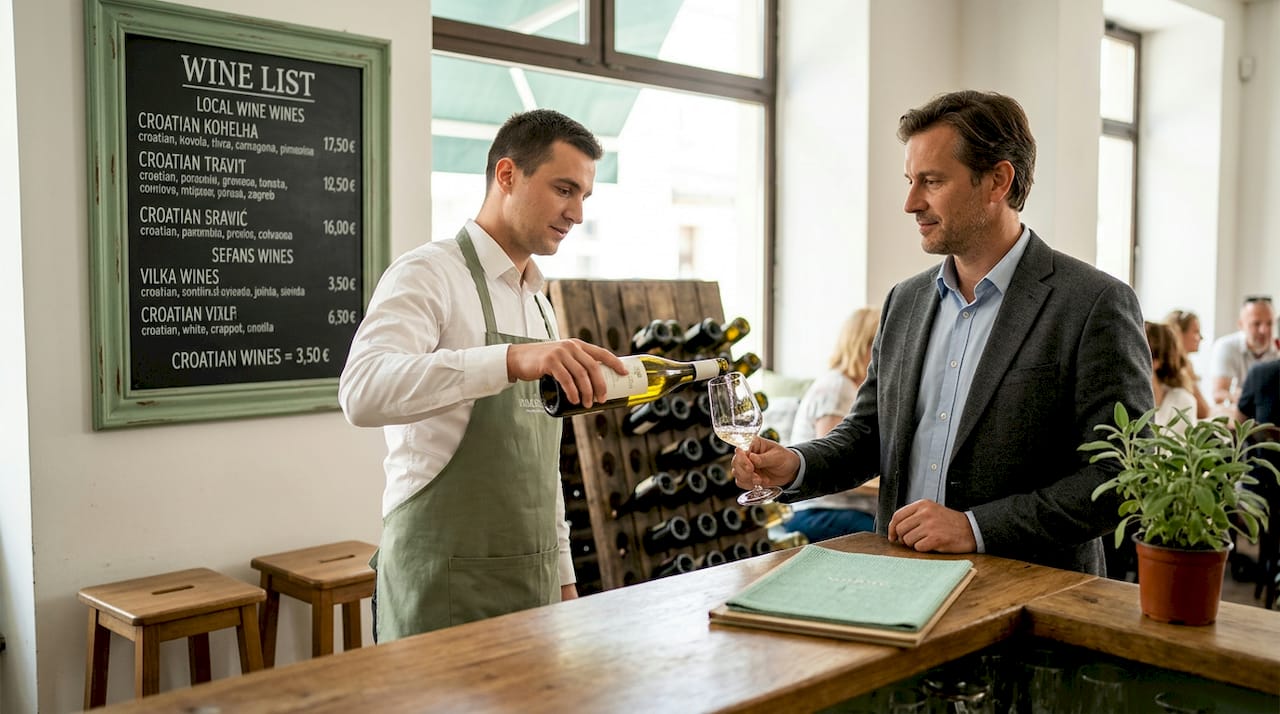
Pupitres wine bar in Zagreb offers boutique wine tastings with an educational framework and private session options, making it ideal for travelers who want to understand Croatian wine vocabulary and regional differences before they visit actual estates. Think of it as a map before a hike.
The benefits of this approach are practical:
- You identify your preferred style early. After tasting a lineup of Malvazija, Plavac Mali, and Graševina in one sitting, you know which region to prioritize and which producers to seek out.
- Small group tastings at urban venues allow deeper conversation with knowledgeable staff who can recommend specific producers aligned with your palate, often sharing contacts and introductions.
- Urban tasting bars provide a consistent, controlled setting that strips away travel fatigue, letting your palate function at its best before the vineyard visits begin.
Once you know what you love, every estate visit on your itinerary becomes intentional rather than exploratory, which is exactly the mindset luxury travel tips for Croatia are built around.
Comparing Croatian wine touring options for your luxury itinerary
Not all wine touring formats serve the same purpose. The richest itineraries weave together several approaches rather than committing entirely to one format. Understanding each option allows you to construct a wine tour itinerary for Croatia that genuinely reflects your interests.
Smaller producers with quieter cellars consistently deliver the most memorable access for luxury travelers, but they require advance planning and cannot be improvised.
| Format | Access level | Planning required | Best strength |
|---|---|---|---|
| Tailored estate visit | Very high, personal | High, book weeks ahead | Winemaker connection, rare wines |
| Wine festival (Vinistra) | Broad, curated | Moderate, register early | Palate calibration, education |
| Urban wine bar tasting | Moderate, guided | Low, flexible schedule | Style discovery, comfort |
| Multi-day private tour | High, fully curated | High, book far in advance | Full experience, no logistics |
Here is how to sequence these formats across a week-long trip:
- Day one and two: Urban tasting in Zagreb at a venue like Pupitres to calibrate your palate.
- Day three: Travel to Istria and attend Vinistra if timing permits, or visit an Istrian wine bar in Rovinj or Poreč for context.
- Days four and five: Two to three pre-booked estate visits across Istria, prioritizing producers whose styles matched your preferences from the calibration tasting.
- Days six and seven: Travel south to Pelješac with a private driver, visiting Dingač producers for Plavac Mali immersion.
Booking multi-day private tours with a driver ensures this kind of sequencing is executed without the stress of coordinating vehicles, road navigation, and winery arrival times independently.
Why personalized, paced wine touring is the ultimate luxury experience in Croatia
Most wine tour advice still optimizes for quantity, compiling lists of the top ten producers to visit in a weekend and mapping the most efficient route between them. That approach treats wine tourism the same way a bus tour treats sightseeing: volume with minimal depth.
The most rewarding Croatia wine touring experiences we have witnessed are built on the opposite philosophy. A traveler who visits two Istrian estates over two full afternoons, spending time with the winemaker, walking the vineyard rows, and asking genuine questions, leaves with knowledge and memories that a ten-winery sprint simply cannot produce. The wine is almost secondary. The story behind it is what lingers.
Sensory pacing is also far more than a comfort preference. When you spit thoughtfully, eat well between stops, and limit your daily visits, you preserve the sharpness of your palate well into the evening. That acuity lets you genuinely distinguish the saline edge of an Istrian Malvazija aged on its lees from one that was not, a nuance invisible to a fatigued palate.
Personal connections with small producers also unlock access that money alone cannot buy. A winemaker who senses genuine curiosity may invite you into the cellar to taste directly from barrel, or share a vintage not officially released. These are the moments that define a bespoke travel itinerary and remain permanently vivid. The number of wineries you visited becomes irrelevant. The depth of what you understood becomes everything.
Luxury, in this context, is not about the price of the wine in your glass. It is about having the time, the access, and the knowledge to truly appreciate it.
Arrange seamless luxury travel for your Croatian wine tour
The logistical side of wine touring deserves as much care as the tasting itself. Driving between Istrian estates on narrow limestone roads, or navigating the Pelješac Peninsula after a long afternoon of Plavac Mali, is neither safe nor relaxing without a dedicated driver.
Croatia Private Transfers & Tours provides private transfers across Croatia tailored to wine touring schedules, with professional, English-speaking drivers who understand the flexibility that winery visits require. Whether you need private transport through Istria to reach boutique estates or a multi-day private tour that connects Zagreb, Istria, and Dalmatia with curated winery stops, the itinerary is built around your preferences. Booking early ensures the best vehicle availability and allows your driver to coordinate directly with producers on your behalf, adding a layer of personal service that elevates every tasting day.
Frequently asked questions
Is advance booking necessary for wine tastings in Croatia?
Yes, especially at smaller family wineries where capacity is limited and visits are personally hosted. Advance booking is essential for the kind of intimate, winemaker-led experience that defines luxury wine touring.
What is the standard etiquette regarding spitting during wine tastings?
Spitting is both expected and respected at professional tastings, particularly when visiting multiple wineries in a single day. Spitting preserves palate clarity and is considered a sign of experience, not disrespect.
When is the best time to experience the wine harvest season in Croatia?
The optimal harvest window falls between September and October, with precise timing needed to witness active picking and fermentation rather than arriving too early or too late in the season.
How can luxury travelers calibrate their wine preferences before vineyard visits?
Attending structured tastings at urban venues or wine events helps identify preferred styles before committing to estate visits. Vinistra in Poreč offers exactly this kind of guided calibration experience, focused on Istrian wines with sommelier-led sessions.
What travel arrangements enhance the luxury wine touring experience in Croatia?
Private transfers with professional drivers remove every logistical friction from your touring day, allowing you to focus entirely on the tasting experience. Multi-day tours with a dedicated driver also allow for flexible scheduling if a winery visit runs longer than planned.