
Miss Winter Gear Rule and Pay €130: Croatia’s Driving Laws
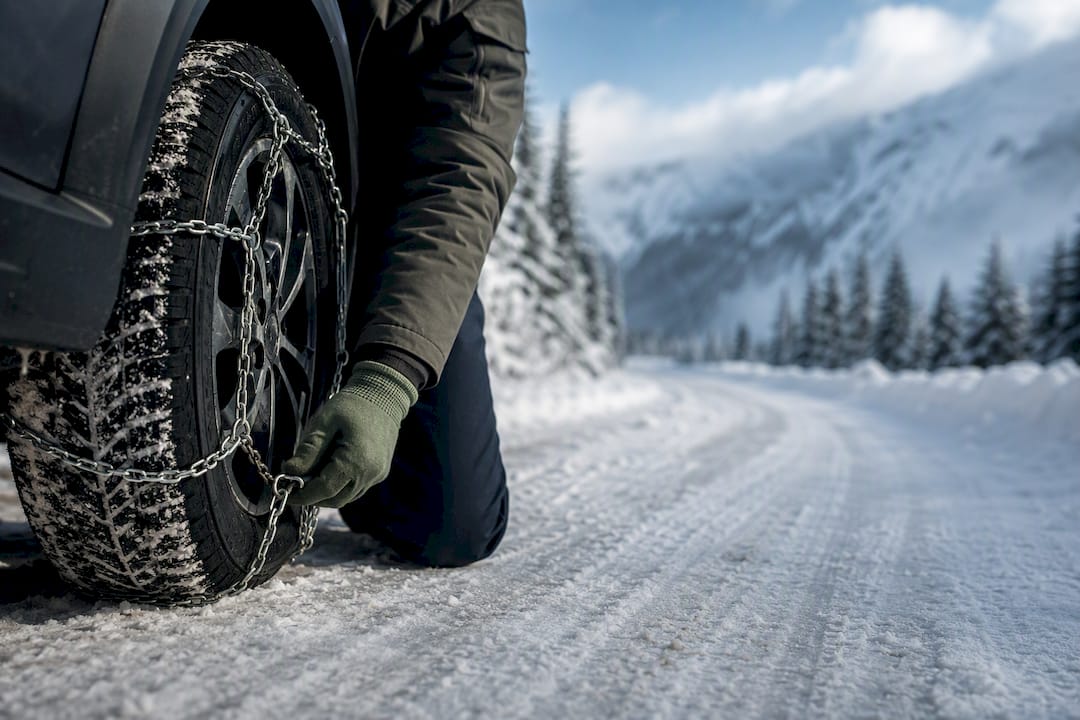
Winter equipment is legally required on designated winter road sections across Croatia, and the rule is not optional once conditions turn. Before any trip between mid-November and mid-April, clear every window, mirror and light of snow and ice, confirm your tyres or chains meet the legal standard, and check MUP guidance, Narodne novine and HAK before you leave. Skipping this step risks fines, roadside delays and, in poor conditions, your safety.
TL;DR:
- Winter equipment is mandatory on specific roads from November 15 to April 15, and it becomes required immediately if conditions worsen due to snow or ice.
- The law allows winter tyres marked M+S or 3PMSF on all four wheels or summer tyres with a minimum of 4mm tread paired with approved chains for passenger vehicles up to 3.5 tonnes.
- Police can stop vehicles, issue €130 fines, and prevent continued travel until equipment compliance is met, with higher fines for companies.
- Drivers should check live road reports and ferry statuses before departure for closures or warnings, especially during bura winds or snowfalls.
- Booking a private transfer with experienced drivers can be safer and more convenient than self-driving in harsh winter conditions.
Table of Contents
- The legal framework: mandatory dates, winter road sections and lighting rules
- What legally counts as winter equipment in Croatia
- Penalties and roadside enforcement: what police can do
- Pre-trip checklist: preparing your vehicle and what to pack
- How to drive safely on snow, ice and in low visibility
- Real-time checks and route planning before you leave
- Recommended tire pressure adjustments for winter conditions
- Preparing your vehicle’s mechanics for cold weather
- Key winter hazards on Croatian roads and how to spot them
- What to do in a winter accident or if you get stuck
- Tips for mountain passes and roads prone to winter weather
- When we tell travelers not to drive themselves in winter
- Another option: book a private transfer instead of driving yourself
- Sources
- FAQ
The legal framework: mandatory dates, winter road sections and lighting rules
Croatia’s winter equipment obligation runs from November 15 to April 15 and applies to designated winter road sections that cover most continental motorways and state roads, according to the official decision published in Narodne novine. The rule is tied to specific stretches of road rather than the whole network, so a car legal on the coast in November might still need chains or winter tyres the moment it crosses into a marked mountain or inland section.
The Ministry of the Interior can also declare “winter conditions” on any road once snow or ice covers the surface, regardless of the calendar date, and at that point winter equipment becomes mandatory immediately, as MUP’s guidance explains. A separate rule requires daytime running lights or dipped headlights from November 1 through March 31 for all vehicles, with limited exceptions for vehicles already fitted with daytime running lights as standard equipment. Both rules are simple to follow but easy to forget after a summer of driving with lights off.
What legally counts as winter equipment in Croatia
The law gives you two acceptable setups for passenger vehicles up to 3.5 tonnes. You can fit winter tyres marked M+S or 3PMSF on all four wheels, or run summer tyres with at least 4 millimeters of tread on all wheels paired with type-approved chains carried and fitted to the drive wheels when conditions require it, as regional police guidance confirms. Studded tyres are prohibited outright, and any tyre or chain you fit must match your vehicle manufacturer’s approved size, speed rating and load index.
Buses, trucks and other vehicles over 3.5 tonnes face a stricter version of the same rule: winter tyres on the drive axle or chains carried and ready to fit are mandatory on winter sections. Fitting winter tyres to all four wheels rather than just the drive axle is not legally required for passenger cars, but it gives far more balanced grip under braking and in corners, which matters more than most drivers expect once a road turns icy.
Penalties and roadside enforcement: what police can do
Police can stop any vehicle on a winter road section and check for compliant equipment, and if you are caught without it, the consequences go beyond a simple fine. National news coverage reports driver fines of around €130 for missing winter equipment, with higher administrative fines applied to companies whose vehicles are found noncompliant.
Beyond the fine, officers have the authority to exclude a vehicle from traffic on the spot, meaning you cannot continue until you fit chains or otherwise meet the standard, and in more serious cases they can order temporary removal of plates. Refusing to comply or continuing to drive an excluded vehicle brings further penalties. The practical lesson is straightforward: equipment checks take a few minutes at home, while roadside noncompliance can cost you hours and money.
Pre-trip checklist: preparing your vehicle and what to pack
A few minutes of preparation before you start the engine prevents most winter problems on Croatian roads.
- Clear snow and ice from every window, mirror, light and the roof, since a snow slab sliding off your roof at speed is both a hazard and, per MUP guidance, a legal duty before you drive.
- Confirm your tyres meet the legal standard, check tread depth and adjust tyre pressure for the cold.
- Pack approved snow chains even if you already run winter tyres, and practice fitting them once in the driveway so you are not learning at the roadside in the dark.
- Carry a small shovel, an ice scraper and brush, a high visibility vest, a warm blanket or spare clothing, a torch, jump leads, water and some food.
- Keep the fuel tank at least half full on longer winter trips, and let someone know your planned route if you are heading into remote or mountain areas.
Pro Tip: Practice fitting your chains at home in daylight; doing it for the first time on a dark, icy shoulder wastes precious time and patience.
Local driving advice consistently repeats this same point: chains belong in the trunk even on a car with good winter tyres, because mountain passes can shift from wet to solid ice within a single climb.
How to drive safely on snow, ice and in low visibility
Winter driving in Croatia rewards patience over overconfidence. Slow down well below the posted limit whenever the surface looks wet, gray or reflective, since those are often the first signs of ice, and increase your following distance to several times what feels necessary on dry pavement. Every input, steering, braking and acceleration, should be smooth and gradual. Sudden braking or an aggressive lane change is what turns a manageable skid into a loss of control.
If the back of the car starts to slide, ease off the accelerator and steer gently in the direction you want the front of the car to go, resisting the instinct to correct hard. Modern cars with ABS and stability control will manage most of the braking work for you, but that only helps if you keep your inputs steady rather than stabbing at the pedal. On mountain passes or roads that appear fully iced, the safest decision is often to stop in a safe pull off and wait for road crews rather than push through, particularly after dark when black ice is hardest to spot.
Real-time checks and route planning before you leave
Legal compliance covers half the picture. The other half is knowing what the road actually looks like today, which is where live sources matter more than the calendar.
- Check HAK’s live road reports the morning of travel for closures, ongoing snow clearing and general traffic conditions on winter sections.
- Check Jadrolinija’s ferry timetables and notices before any island crossing, since winter schedules run reduced and cancellations happen with little warning.
- Watch for bura wind warnings along the Adriatic coast, since strong bura gusts can close exposed bridges and coastal roads and force ferry cancellations even on otherwise clear days.
- Build extra time into your plan and have an alternative inland or lower route ready in case your first choice closes.
HAK and Jadrolinija are typically the first to post updated statuses when conditions change, so checking again just before you depart is worth the extra minute.
Recommended tire pressure adjustments for winter conditions
Cold air shrinks the volume of gas inside a tire, which means pressure drops as temperatures fall, roughly by a small amount for every 10 degree Celsius drop. A tire set correctly in a warm garage in October can read noticeably low by the time a Croatian winter cold snap arrives, and a low tire loses contact patch consistency exactly when you need predictable grip most.
Check pressure when tyres are cold, meaning before you have driven more than a mile or two, and set them to the figure printed on your vehicle’s door jamb sticker or in the owner’s manual rather than the number stamped on the tyre sidewall, which is a maximum rating rather than a recommendation. Resist the temptation to run pressures lower than specified in hopes of a bigger contact patch on snow. Underinflated tyres flex more, build heat unevenly and wear faster, and on ice they do not grip meaningfully better than a correctly inflated tyre with the right tread pattern.
Recheck pressure at least monthly through the winter, since temperature swings between a mild coastal day and an inland cold front can shift readings by several psi within the same week. If you are driving a rental or an unfamiliar vehicle, check the sticker before you leave the lot rather than relying on memory from another car. Winter tyres in particular are engineered to perform at their stated pressure, and running them soft undermines the tread compound’s advantage over summer rubber in cold, wet or icy conditions.

Preparing your vehicle’s mechanics for cold weather
Winter punishes weak components that a mild Croatian autumn lets you ignore. A car battery loses a meaningful share of its cranking power as temperatures drop, so a battery that started reluctantly in October can fail outright on a frosty January morning. Have it tested before the season starts, particularly if it is more than three or four years old, since replacing one at home is far easier than arranging a jump start on a mountain road.
Check your coolant’s antifreeze concentration, since a mix that is too weak can freeze inside the engine block on a cold night and cause damage that is expensive to fix. Most manufacturers recommend a 50/50 antifreeze to water ratio for typical winter lows, though a specialist can test the exact freeze point in minutes.
Switch to a winter grade windshield washer fluid rated for sub freezing temperatures well before the cold arrives. Summer fluid can freeze on contact with a cold windshield, smearing your view exactly when you need it clear. Top up the reservoir generously before any mountain or inland trip, since road spray mixed with salt and slush burns through fluid faster than in summer. A quick check of wiper blades for cracking and headlights for clarity rounds out a sensible pre winter service, alongside the tyre and battery checks above. A supplementary resource worth a look for general cold weather car care tips covers similar pre trip mechanical checks in more depth.

Key winter hazards on Croatian roads and how to spot them
Black ice is the hazard drivers underestimate most. It forms when a thin film of water freezes into a nearly transparent layer, often on bridges, shaded curves and mountain passes where the road surface cools faster than the air around it. A patch of road that looks merely wet or slightly darker than the surrounding asphalt is often your only warning, so treat any section like this with caution, particularly after sunset when temperatures drop fastest.
Snowdrifts build up on exposed mountain roads and passes where wind pushes loose snow across the lane, sometimes burying the white line entirely and disguising the true width of the road. These are most common on the inland routes through Gorski Kotar and Lika, where open terrain gives the wind room to move snow freely.
Fog is a coastal and valley problem as much as a mountain one, often forming in low lying areas near rivers or the sea where temperature differences condense moisture overnight. It can drop visibility to a few car lengths with almost no warning, which is exactly why the daytime lights rule matters as much in fog as it does in snow.
What to do in a winter accident or if you get stuck
If you are involved in an accident, move your vehicle out of the traffic lane where possible, switch on hazard lights, and set out a warning triangle well back from the vehicle, further than you would on a dry road, since stopping distances for other drivers are longer in winter. Call the unified emergency number 112 for police, ambulance or fire assistance, since it connects you regardless of which service you actually need.
If your car becomes stuck in snow rather than damaged, stay with the vehicle unless help is clearly visible nearby, since a car is easier for rescuers to find than a person on foot in a storm. Run the engine only in short bursts for warmth, and make sure the exhaust pipe is clear of snow before doing so to avoid carbon monoxide building up inside the cabin. Keep your hazard lights on and, if you packed one, place your high visibility vest on before stepping outside the vehicle for any reason. Having told someone your planned route before setting out, as recommended earlier, becomes valuable here since it narrows down where rescuers should look if you lose signal.
Tips for mountain passes and roads prone to winter weather
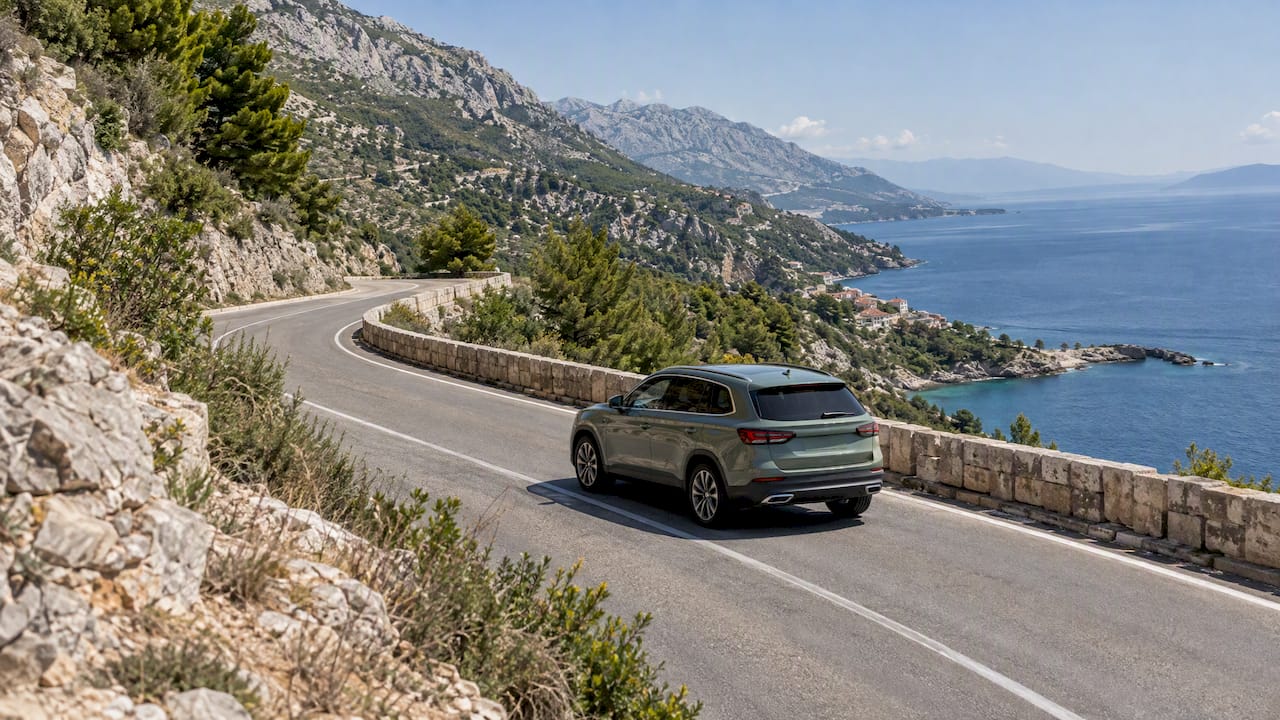
Croatia’s inland mountain routes, including passes through Gorski Kotar and the roads connecting the coast to the interior, see the harshest winter conditions in the country and the fastest changing ones. A pass that is clear at the base can be fully snow covered within a few hundred meters of climbing, so treat any elevation gain as a reason to slow down and reassess rather than assume the conditions at the bottom will hold.
Downshift before a descent rather than relying on your brakes the whole way down, since engine braking gives you steadier control on a long icy grade and reduces the risk of brake fade. Give trucks and buses extra room on these roads, since heavier vehicles need far longer to stop and their trailers can swing wide on switchbacks. If you see a road crew clearing or salting ahead, hold well back rather than overtaking, both for your safety and theirs.
When a pass looks marginal, and especially when HAK reports snow clearing in progress, the safer choice is often to wait at the base for an update rather than test the climb yourself.
When we tell travelers not to drive themselves in winter
Some winter days in Croatia are simply not worth the risk of a rental car and an unfamiliar mountain pass. A sudden bura warning that grounds ferries, an overnight snowfall on Gorski Kotar, or a tight airport connection with no room for a roadside delay all shift the calculation toward letting someone else drive.
Our honest view is that official checks and good judgment cover most winter trips fine. But when the forecast turns and the schedule is tight, a driver who knows the roads and checks conditions daily is worth more than any checklist.
— Croatia
Another option: book a private transfer instead of driving yourself
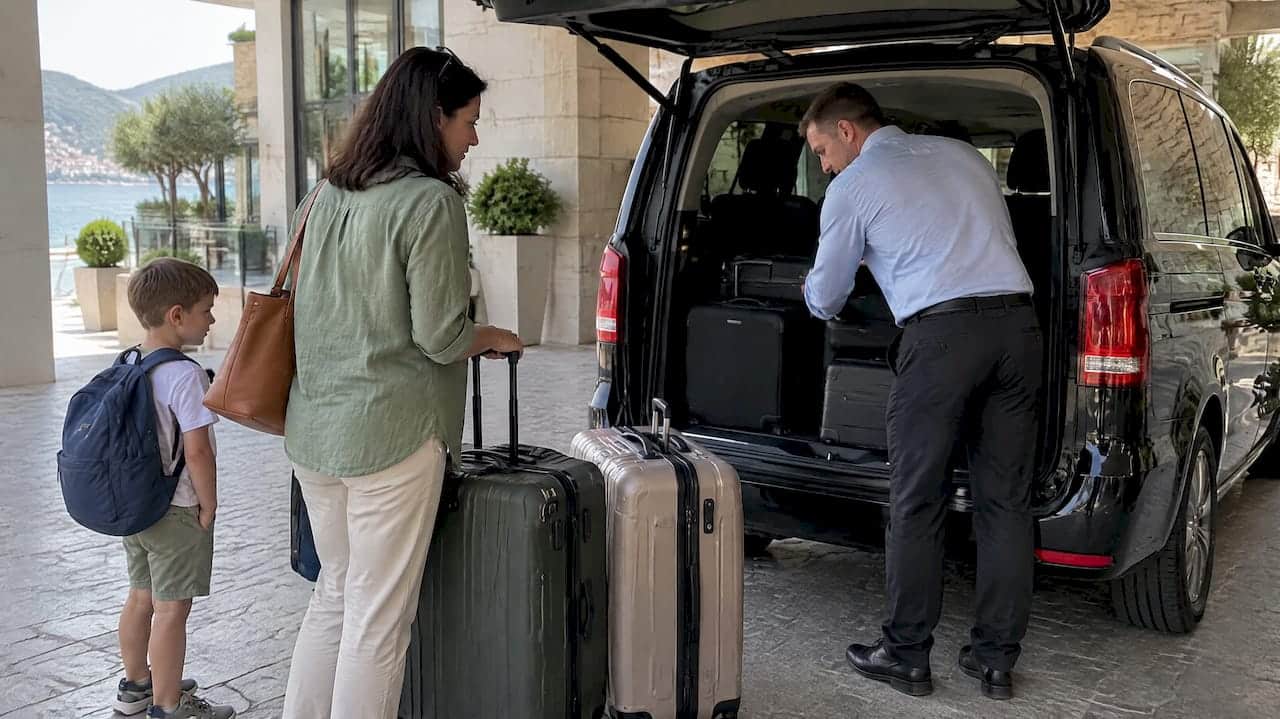
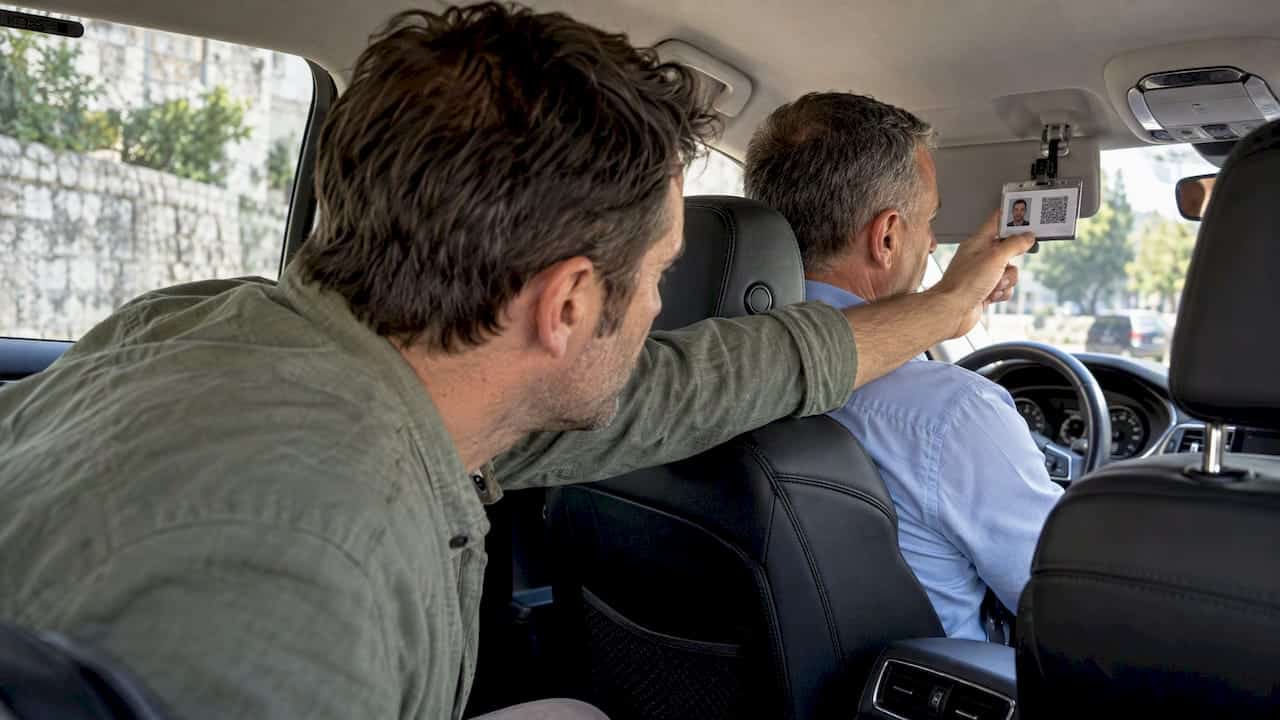
If the forecast, your schedule or your comfort with winter roads makes self-driving feel like the wrong call, a private transfer removes the decision entirely. Private transfer services provide English-speaking drivers in modern, air-conditioned vehicles who handle the winter equipment, the route planning and the real-time checks on your behalf, so a bura warning or a closed pass becomes their problem to solve rather than yours.
When booking a transfer for winter travel, a few questions are worth asking directly.
- Confirm the vehicle carries compliant winter tyres or chains for the route you are taking.
- Ask about the driver’s experience with the specific road, particularly for mountain or inland legs.
- Check the operator’s cancellation or rescheduling policy in case of severe weather.
| What you check | Why it matters in winter |
|---|---|
| Winter equipment on the vehicle | Confirms legal compliance and grip on the route |
| Driver’s route familiarity | Local knowledge helps navigate passes and closures |
| Weather cancellation policy | Protects your plans if a bura warning grounds ferries |
For intercity travel between cities or a private airport transfer, booking ahead lets you check availability now rather than deciding at the last minute whether to drive.
Sources
- Odluka o izmjeni Odluke o obveznoj uporabi zimske opreme na zimskim dionicama javnih cesta u Republici Hrvatskoj
- Ministarstvo unutarnjih poslova Republike Hrvatske – Zimski uvjeti na cesti – Savjet vozačima
- Članak upozorava na obvezu korištenja zimske opreme na prometnicama Republike Hrvatske
- Vozači oprez! Od danas na snazi velika promjena na cestama, pogledajte što vas može skupo koštati
FAQ
When is winter equipment mandatory in Croatia?
Winter equipment is required from November 15 to April 15 on designated winter road sections, and it can also become mandatory outside those dates whenever snow or ice covers a road. Always check current conditions before a trip rather than relying on the calendar alone.
What tyres or chains are legally required?
You need winter tyres marked M+S or 3PMSF on all four wheels, or summer tyres with at least 4 millimeters of tread paired with type-approved chains fitted to the drive wheels. Studded tyres are not permitted under any circumstances.
What is the fine for driving without winter equipment?
Driver fines for missing winter equipment run around €130, with higher fines applied to noncompliant company vehicles. Police can also exclude your vehicle from traffic until it meets the standard.
How do I check live road and ferry conditions in winter?
Check HAK’s live road reports for closures and snow clearing status, and check Jadrolinija’s timetables for ferry cancellations, especially during bura wind warnings. Recheck both the morning of travel and again shortly before you depart.
Is it safer to book a private transfer instead of driving in winter?
For unfamiliar mountain passes, tight schedules or sudden weather warnings, a private transfer with an experienced local driver removes much of the uncertainty of self-driving. Croatia Private Transfers & Tours offers winter-ready vehicles and drivers who track conditions daily as part of their private transfer services.