

Your Complete Travel Planning Guide for 2026
Book now, align your dates to major events, and use AI to draft your itinerary — that is the core of smart travel planning in 2026. Two forces are reshaping the calendar this year: a packed global event schedule (FIFA World Cup across North America, the Milan-Cortina Winter Olympics, and the U.S. 250th anniversary) and a surge in milestone-driven travel. According to a 2026 AAA and Bread Financial survey, 76% of travelers are planning milestone trips this year, with birthdays and family reunions leading the list. Event zones are already booking many months out, and prices in affected areas can run significantly above baseline. Your three immediate moves:
- Check event and visa windows today. Confirm whether your target destination overlaps with a major 2026 event and verify passport validity plus any pre-travel authorization (ETIAS, eTA) on official government sites.
- Set your booking timeline. Lock flights first, then primary hotels, then activities and transfers. For event zones, that clock starts now.
- Run an AI itinerary draft. Tools like Google Gemini, ChatGPT, or Perplexity can sketch a multi-city loop in minutes. Use the draft to spot visa gaps and pricing pressure points before you commit.
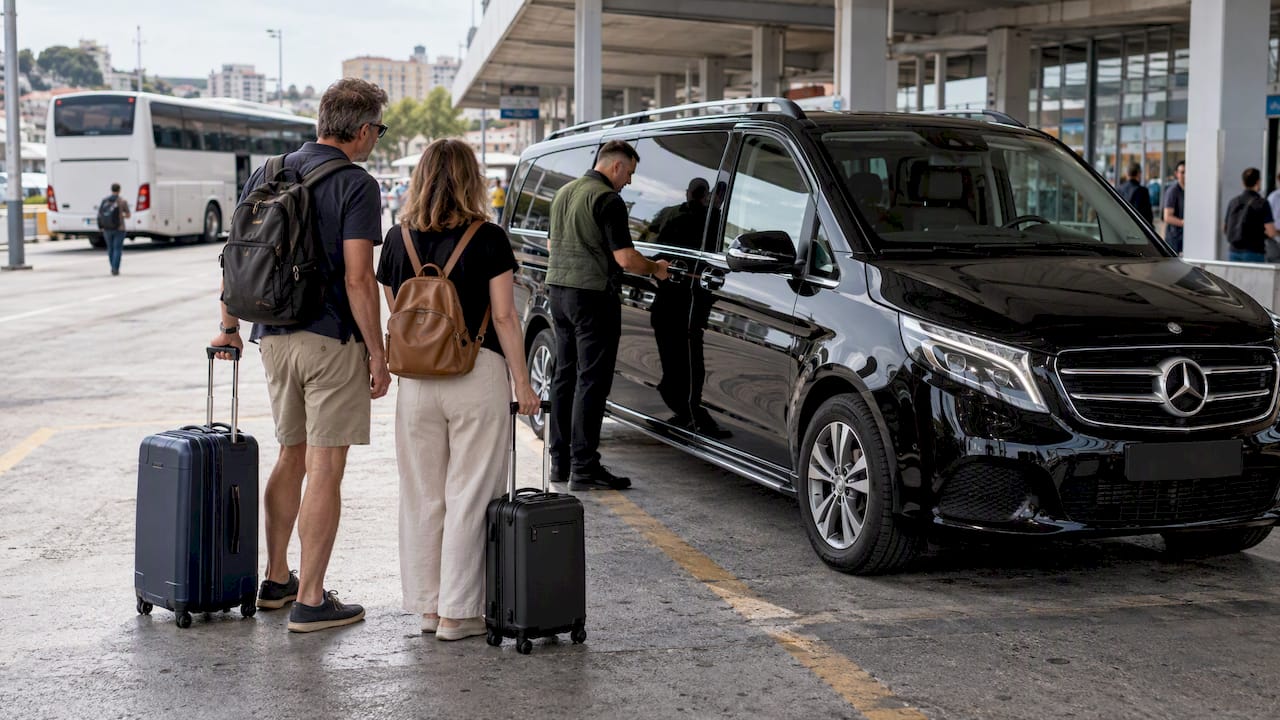
Pro Tip: For event-driven trips where timing is non-negotiable, a private door-to-door transfer removes the single biggest variable: getting from the airport to your hotel on time, without shared-shuttle delays or surge-priced taxis.
Key Takeaways
Travel planning in 2026 rewards travelers who act early, align bookings to the event calendar, and concentrate spending on the experiences that define the trip rather than spreading budgets thin.
| Point | Details |
|---|---|
| Book event zones 8–12 months out | FIFA World Cup cities and Winter Olympics regions are already under pressure; delay costs money. |
| 76% of travelers plan milestone trips | AAA and Bread Financial data confirms milestone travel is the dominant motivation — book premium experiences first. |
| AI drafts itineraries, not visas | Use AI tools to sketch routes and spot gaps, then verify all entry requirements on official government sites. |
| Flights first, then hotels, then transfers | This booking order locks your dates and protects every downstream reservation from calendar drift. |
| Private transfers pay off at high-stakes moments | For milestone groups, event arrivals, and multi-city loops, door-to-door service removes the most common friction points. |
Table of Contents
- Top travel trends shaping 2026 and what each means for your plans
- Destinations and major 2026 events worth planning your calendar around
- A practical booking timeline and checklist for 2026 trips
- How flying and airport logistics have changed in 2026
- Which 2026 trip type fits you, and fast tips for each
- When private transfers and bespoke tours make your 2026 trip materially better
- What Croatia-private-transfers would book for a landmark 2026 trip
- Sources
Top travel trends shaping 2026 and what each means for your plans
The forces driving travel decisions this year are more specific and more consequential than the usual “people want experiences” narrative. Each trend below carries a direct planning implication.
- Milestone and celebration travel. The AAA survey’s finding that 76% of travelers are planning milestone trips — with birthdays being a leading motivation — means premium properties and curated experiences are booking faster than ever. Budget more for the experience itself and less for generic accommodation.
- Multigenerational travel. Families spanning three generations are traveling together in growing numbers, which changes logistics considerably. Larger vehicles, accessible itineraries, and flexible cancellation policies matter more than price per night.
- Microvacations and bleisure. Short, high-quality escapes of two to four days are filling the gaps between longer trips. These book closer in (four to eight weeks out) but reward early activity reservations, since popular restaurants and tours fill quickly.
- AI-first itinerary planning. Specialist planning guides now describe AI agents as splitting into planning-only and planning-plus-booking categories, and the distinction matters. A planning-only tool gives you a draft you must still book manually; a booking-capable agent can hold reservations but requires careful verification of visa and legal requirements on official government sites.
- Multi-city and hub-and-spoke itineraries. Rather than hopping between five cities in seven days, travelers are choosing one or two base cities and taking day trips outward. This shape reduces per-day cost and transit friction — and it is where private transfers genuinely earn their place, connecting hubs to day-trip destinations on your schedule.
- Visa-free corridor optimization. Pre-travel authorization systems and visa-free corridors are shaping routing decisions more than destination marketing alone. Before you fall in love with a destination, confirm the entry requirements. A visa-free route to a slightly less famous city often delivers a richer, less crowded experience.
- Sustainability and conservation-minded travel. Travelers are choosing certified eco-lodges, wildlife conservation reserves, and operators with transparent carbon practices. This is no longer a niche preference; it is affecting which properties sell out first in certain regions.
- Wellness and digital detox travel. Dedicated wellness retreats and itineraries built around thermal baths, hiking, and screen-free time are commanding premium pricing. Book these six or more months out — capacity is deliberately limited.
- Economic caution shaping premium choices. Deloitte’s 2026 travel industry outlook flags financial caution among higher-income groups as a factor that could affect demand and pricing. The practical read: travelers are not canceling trips, but they are scrutinizing value more carefully and concentrating spending on the experiences that matter most rather than spreading budgets thin.
Statistic to anchor your planning: 76% of U.S. travelers are planning milestone trips in 2026, per AAA and Bread Financial — the highest share in recent memory and a direct driver of early sell-outs at premium properties.
Pro Tip: When prompting an AI planning tool, include your passport nationality, travel dates, and the phrase “flag any visa or pre-authorization requirements” in your first message. Most tools will surface ETIAS or eTA needs immediately, saving you from discovering them at the gate.
Destinations and major 2026 events worth planning your calendar around
2026 is genuinely unusual in how many high-demand events are concentrated in a single year. Understanding which events affect your destination — and when — is the difference between a well-priced trip and a scramble.
The headline events driving demand
- FIFA World Cup 2026 (June–July, North America). Matches span 16 host cities across the United States, Canada, and Mexico. Cities like New York/New Jersey, Los Angeles, Dallas, Miami, and Chicago will see hotel rates spike sharply during match weeks. If you are visiting any of these cities between June and mid-July, book accommodation now if you plan to visit during matches.
- Milan-Cortina Winter Olympics (February–March 2026). Northern Italy is already under significant booking pressure. National Geographic’s Best of the World 2026 list highlights the Winter Olympics highlight on this region and flags new conservation-focused destination openings that will attract visitors beyond the Games themselves.
- U.S. Semiquincentennial (throughout 2026). America’s 250th anniversary is generating a wave of heritage events, exhibitions, and commemorative experiences across Philadelphia, Washington D.C., Boston, and beyond. The New York Times’ 52 Places to Go in 2026 coverage specifically highlights how these U.S. anniversary events will concentrate demand and change booking behavior in specific regions.
Editorial “best of 2026” picks that affect booking windows
Tripadvisor’s 2026 Travelers’ Choice awards, drawn from millions of reviews through September 30, 2025, named Bali as the No. 1 global destination, with strong showings from destinations across Southeast Asia, southern Europe, and Latin America. When a destination earns this kind of visibility, capacity at well-reviewed properties tightens within weeks of publication.
Lonely Planet’s Best in Travel 2026 and the National Geographic list both emphasize destinations where conservation initiatives are limiting visitor numbers — meaning the experience is exceptional but the window to book is narrow.
Quieter alternatives worth considering
| Event / Destination | Peak window | Why it matters | When to book |
|---|---|---|---|
| FIFA World Cup host cities (U.S.) | June–July 2026 | Hotel prices spike 40% during match weeks | Now (8–12 months out) |
| Milan-Cortina Winter Olympics | February–March 2026 | Northern Italy at capacity; new openings nearby | Already urgent |
| U.S. Semiquincentennial cities | Year-round, peaks in July | Heritage events draw domestic and international visitors | 6+ months ahead |
| Bali (Tripadvisor No. 1) | July–August peak | Global attention accelerates sell-outs at top properties | 5–6 months ahead |
If the World Cup host cities feel too crowded, consider the days immediately before or after match weeks in those cities, or pivot to nearby secondary cities that offer the same cultural richness without the event premium. For the Winter Olympics, the Dolomites and Lake Como offer comparable alpine beauty with more available inventory if you book the shoulder weeks around the Games.

A practical booking timeline and checklist for 2026 trips
The most common planning mistake is treating all trip types as interchangeable. A microvacation to a nearby city and a milestone trip to a World Cup host city require completely different lead times.
Budgeting expectations for 2026
Flight prices have not returned to pre-pandemic baselines in most international corridors, and experience-led travel commands a premium over standard accommodation-and-transport packages.
Booking windows by trip type
- Event zones (World Cup cities, Olympics region): 8–12 months ahead for flights and hotels; activities and transfers as soon as they open.
- Standard international trips: 4–6 months for flights; 3–4 months for hotels.
- Regional domestic trips: 6–8 weeks for most destinations; earlier for peak summer or holiday weekends.
- Microvacations: 2–4 weeks out is workable, but book restaurants and popular experiences earlier.
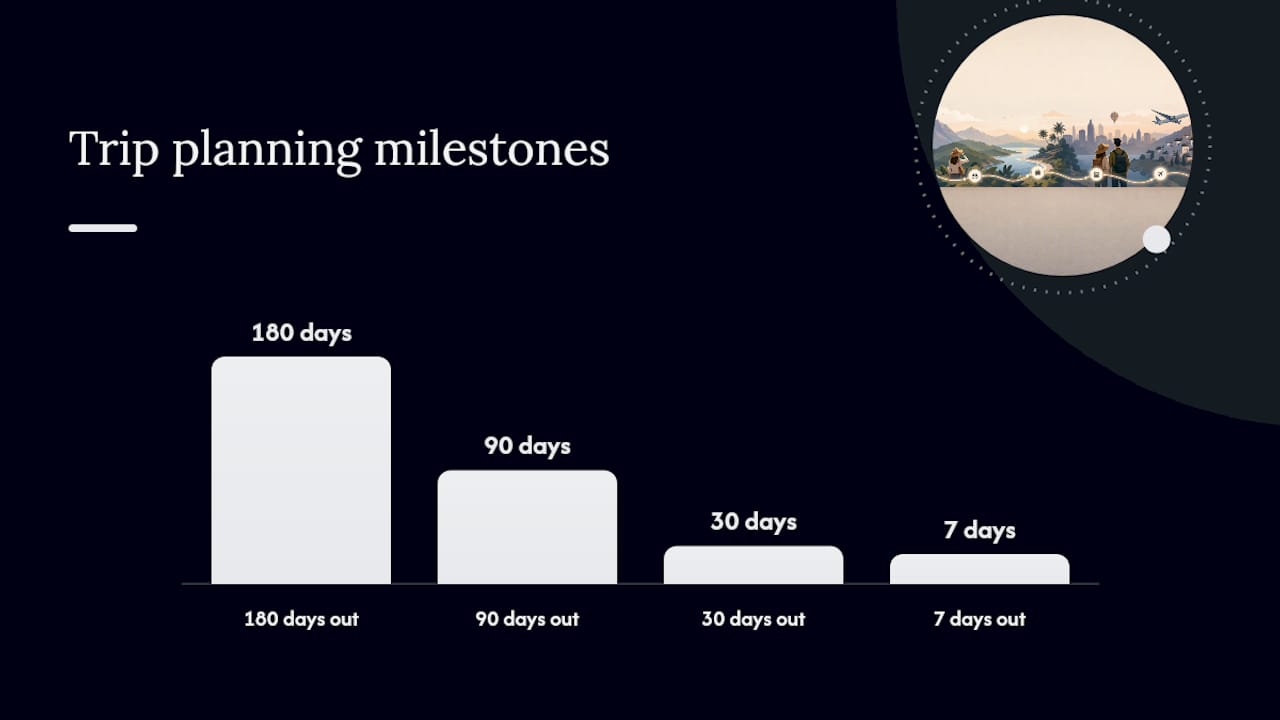
Your 180/90/30/7-day milestone checklist
180 days out
- Confirm travel dates and align with event calendars.
- Check passport validity (most countries require six months beyond your return date).
- Research visa and pre-authorization requirements on official government sites.
- Set a total trip budget and allocate across flights, hotels, experiences, and transfers.
90 days out
- Book international flights.
- Reserve primary hotels or rental properties.
- Purchase travel insurance (do this before booking non-refundable items).
- Begin researching tours, activities, and private transfer providers.
30 days out
- Book all tours, timed-entry tickets, and restaurant reservations.
- Confirm transfer arrangements, including airport pickups and intercity legs.
- Verify entry requirements have not changed (visa rules can shift).
- Set up an eSIM or international data plan.
7 days out
- Reconfirm all bookings and save confirmation numbers offline.
- Check travel advisories on the U.S. State Department website.
- Download offline maps and translation apps.
- Confirm transfer pickup times and driver contact details.
Pro Tip: Book in this order: flights first, then primary hotels, then activities and tours, then transfers. Locking flights sets your dates in stone; everything else flows from that anchor. Failing to check visas early is the most common trip-derailing mistake for international travelers — do it at the 180-day mark, not the 30-day mark.
How flying and airport logistics have changed in 2026
The airport experience in 2026 is faster in some ways and more document-dependent in others. Knowing what has changed saves time and prevents surprises.
Biometrics and identity verification
Biometric face-scan boarding is now standard at most major U.S. airports and is expanding rapidly at international hubs. The process is faster than manual document checks, but it requires that your passport photo matches your current appearance — a practical concern for travelers whose documents are several years old. REAL ID enforcement is fully in effect for domestic U.S. flights; a standard state driver’s license without the REAL ID star is no longer accepted at TSA checkpoints.
Pre-travel authorizations
The EU’s ETIAS (European Travel Information and Authorization System) is the most consequential new entry requirement for U.S. travelers visiting Europe. Verify the current launch status and application process on the official EU immigration portal before booking any European trip. Canada’s eTA remains in effect for U.S. citizens flying into Canadian airports, and several other countries have introduced similar electronic authorization systems. Visa-free corridors and pre-travel authorization systems are now shaping practical routing decisions more than destination marketing — always confirm entry requirements on the destination country’s official government site, not a third-party travel blog.
Airport arrival checklist
- Arrive at least three hours early for international departures from major U.S. hubs.
- Enroll in TSA PreCheck or Global Entry if you have not already; both programs reduce security friction significantly.
- Activate your eSIM before departure so you have data connectivity the moment you land abroad.
- Confirm your transfer pickup arrangement in writing and save the driver’s contact number offline.
- Use airline apps for real-time gate and delay notifications rather than relying on airport monitors.
Passenger demand context: Global air travel demand has continued its post-pandemic recovery trajectory, with major carriers adding new routes to underserved international destinations in 2026. This means more direct routing options — but also fuller aircraft and less flexibility on last-minute bookings.
Which 2026 trip type fits you, and fast tips for each
Choosing the right trip shape before you start booking saves money, reduces friction, and produces a more satisfying experience. Here are the five trip types trending most strongly this year.
Milestone trips (birthdays, anniversaries, reunions)
These trips justify a higher per-day spend because the occasion itself is the point. Prioritize the experience over the logistics: book the best available accommodation in your target destination, invest in a curated day tour rather than a generic group excursion, and arrange private transfers so the group arrives together and on time.
- Book many months out for international destinations.
- Allocate 30–40% of the budget to experiences rather than accommodation.
- Pre-book every timed activity; milestone trips have zero tolerance for sold-out disappointment.
- Consider a bespoke itinerary service for groups of four or more — the per-person cost is often comparable to booking separately.
Pro Tip: For milestone trips, the transfer from the airport sets the emotional tone. A private vehicle with a knowledgeable driver who greets the group by name costs marginally more than a shared shuttle and delivers a completely different arrival experience.
Multigenerational family vacations
Planning family vacations across three generations requires accessible itineraries, flexible timing, and vehicles that accommodate everyone comfortably. The biggest planning mistake is underestimating how much transit time affects older and younger travelers.
- Choose a hub-and-spoke itinerary over a multi-city hop to minimize transit days.
- Book accommodation with kitchen facilities or in-suite dining options to manage meal logistics.
- Verify accessibility features at every attraction before booking.
- Use a private minivan or larger vehicle for airport transfers and day trips — shared shuttles rarely accommodate strollers, mobility aids, and luggage simultaneously.
Microvacations (2–4 days)
Short trips reward spontaneity but punish poor logistics. The goal is maximum experience density per hour, which means pre-booking everything that has a time slot.
- Book flights and accommodation 3–5 weeks out for domestic destinations.
- Reserve restaurants and popular experiences the moment you confirm dates.
- Pack light enough to avoid checked baggage; it adds an hour each way.
- A private airport transfer pays for itself in time saved when your trip is only 48–72 hours long.
Solo travel
Solo travel in 2026 is growing across all age groups, driven partly by the flexibility it offers and partly by the rise of solo-friendly tour operators. The planning priority is safety and connectivity.
- Choose destinations with strong traveler infrastructure and reliable public transport.
- Share your itinerary with someone at home and check in at each new location.
- Book accommodation in central, well-reviewed neighborhoods.
- For remote day trips or late-night arrivals, a private transfer is a practical safety choice, not a luxury one.
Wellness and digital detox retreats
These trips require the most lead time of any category because capacity is deliberately capped. Six months is the minimum planning window for well-regarded wellness properties.
- Research certification credentials for any wellness retreat before booking.
- Confirm what “digital detox” means in practice — some properties restrict devices entirely, others only in common areas.
- Budget for the full program cost upfront; add-ons at wellness retreats accumulate quickly.
- Arrange private transfers to and from remote retreat locations; rideshare availability near rural wellness properties is often unreliable.
When private transfers and bespoke tours make your 2026 trip materially better
Private transfers are not the right choice for every traveler or every leg of a trip. They are the right choice when timing, group logistics, or the quality of arrival genuinely matters.
Traveler profiles that benefit most
- Milestone and celebration groups where a shared, on-time arrival is part of the experience.
- Multigenerational families with mixed mobility needs, large amounts of luggage, or young children.
- Travelers arriving at unfamiliar airports during major events, when taxi queues and rideshare surge pricing can add an hour and significant cost to a journey.
- Bleisure travelers on tight schedules where a missed connection has real consequences.
- Anyone combining multiple cities in a single trip, where a private intercity transfer eliminates the coordination overhead of public transit with luggage.
Questions to ask any private transfer provider before booking
- What vehicle class is included, and what is the maximum passenger and luggage capacity?
- What is the cancellation and amendment policy, and what happens if a flight is delayed?
- Does the driver speak English, and will they meet you at arrivals with a name sign?
- Is there a waiting-time allowance for flight delays, and how long is it?
- Is the operator fully licensed and insured for passenger transport in the destination country?
- Are child seats available, and must they be requested in advance?
- What is the payment method, and is the price fixed or subject to surcharges?
- Can the transfer be combined with a stop or a short tour en route?
Booking private transfers earlier preserves access to the best vehicles and most experienced drivers — a practical concern during event periods when premium vehicles are claimed months in advance.
Pro Tip: Combining a private transfer with a bespoke day itinerary on the same booking reduces friction considerably for multi-city loops. Your driver becomes a local guide for the day, and the vehicle doubles as your touring base — no separate rental car, no parking, no navigation stress.
For travelers planning a multi-destination itinerary, understanding how to choose airport transfer services before you arrive saves time and removes the guesswork from one of the most logistically sensitive moments of any trip.
What Croatia-private-transfers would book for a landmark 2026 trip
If the brief were a milestone trip for a group of four to six people — say, a significant anniversary or a landmark birthday — the approach would look something like this.
Lock transatlantic flights to a European hub city by early spring, targeting shoulder-season dates that sit just outside the peak summer window. From there, build a hub-and-spoke itinerary: two or three nights in a central city, then private day transfers to the surrounding region’s most compelling sites. Croatia fits this shape beautifully — Split or Dubrovnik as the base, with private transfers reaching Plitvice Lakes, the Dalmatian coast, or a Montenegro day trip depending on the group’s interests.
The specific choices Croatia-private-transfers would prioritize:
- A Mercedes sedan or minivan (depending on group size) for all airport and intercity transfers, booked at the same time as flights.
- Door-to-door service from the arrival airport to the first hotel, with a driver who knows the local area and can answer questions on the way in.
- A bespoke day tour for at least one leg of the trip — a curated route through a UNESCO site or a coastal drive with local context that a generic group tour cannot replicate.
- Flexible cancellation terms on all bookings, given the economic uncertainty Deloitte flags for 2026.
Explore Croatia-private-transfers’ full range of private transfers and bespoke tour options to see how a curated itinerary comes together for your specific dates and group size. For travelers who want to understand the full value of private transportation before committing, this guide to why private transportation makes a difference lays out the practical case clearly.
Sources
These are the primary references worth bookmarking as you finalize your 2026 travel plans.
- 76% of Travelers Planning Milestone Trips in 2026 – AAA Newsroom
- 2026 Travel industry outlook | Deloitte Insights
- 2026 Travel Destinations: 52 Places to Go This Year – The New York Times
- The best places in the world to travel to in 2026 – National Geographic