

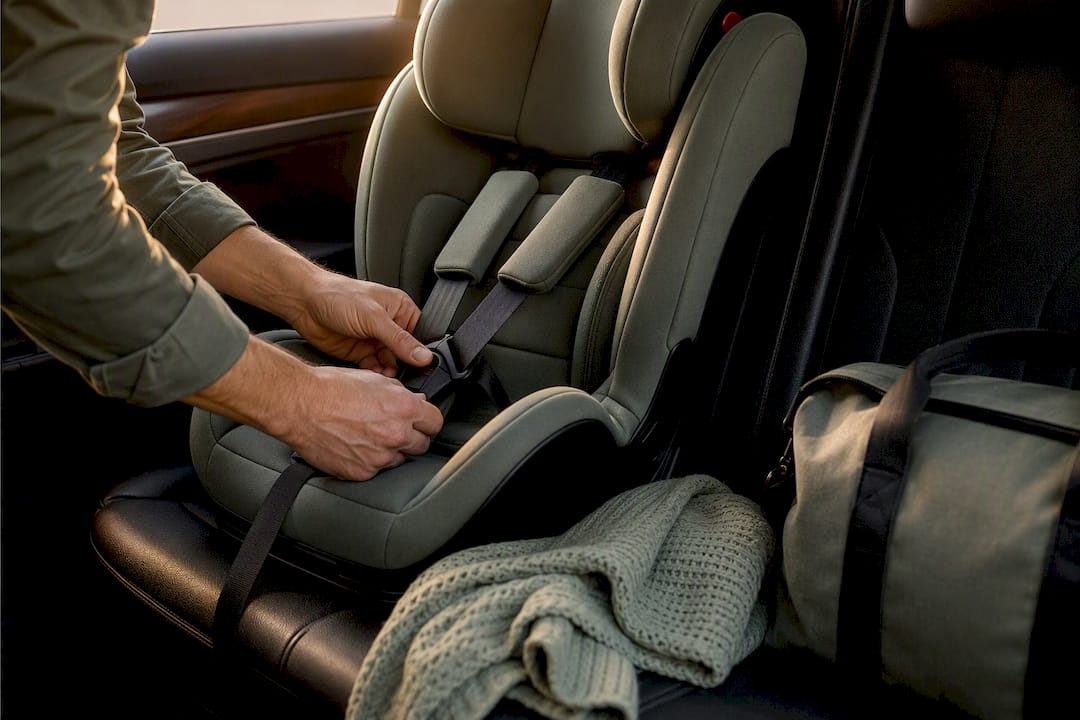
Book 24–72 Hours Ahead to Secure a Certified Child Seat in Croatia
The fastest, most reliable way to secure a child car seat for a transfer in Croatia is to prebook a licensed private transfer and request the seat in writing. Croatian law requires an appropriate child restraint for anyone under 150 centimeters tall, so this isn’t a comfort preference. Book now, name your child’s age, height, and weight in the reservation notes, and get written confirmation before your driver arrives.
TL;DR:
- Prebook a licensed private transfer with written confirmation specifying the child’s height, weight, and the seat standard to ensure reliable child seat provision.
- Confirm the booking early, especially during peak months, and verify the seat’s certification labels such as UN ECE R44/04 or R129 i-Size upon vehicle arrival.
- The most dependable transfer option involves professional drivers who install or pre-fit the seat, making it ideal for airport pickups and intercity trips.
- Reliability drops with taxis and ride-hailing apps, as seat confirmation is often informal or dependent on driver availability, increasing risk for time-sensitive trips.
- Ensure parents or guardians inspect the seat’s condition, proper installation, and confirm the driver can demonstrate correct mounting before departing.
Table of Contents
- Choosing the Right Transfer s Dječjom Sjedalicom
- How Do You Confirm a Child Seat When Booking?
- What Does Croatian Law Require for Child Car Seats?
- Pre-Trip and Arrival Checklist for Parents
- Family Transfers With Croatia Private Transfers & Tours
- Book Your Transfer With a Child Seat Today
- Why Prebooking Beats Improvising
- Sources
- FAQ
Choosing the Right Transfer s Dječjom Sjedalicom
Not every transportation option in Croatia handles a transfer s dječjom sjedalicom the same way, and the differences matter more than most parents expect. Four main choices exist, and each carries its own level of certainty about whether a proper seat will actually show up.
A private prebooked transfer is the most dependable route. You arrange the vehicle and the child restraint days in advance, the operator confirms both in writing, and a professional driver typically handles installation or arrives with the seat already fitted. This works best for airport pickups, intercity routes between Split, Dubrovnik, and Zagreb, and any trip where a missed connection isn’t an option.
A prebooked taxi with a seat request can work, but reliability drops. Local taxi firms often subcontract seats from a limited pool, and confirmation is sometimes verbal rather than written, which leaves room for mix-ups on pickup day.
Ride-hailing apps with a child-seat option exist in larger Croatian cities, but availability is inconsistent. The seat request depends on which driver picks up the trip, and there’s no guarantee the vehicle assigned actually carries one that fits your child’s weight.
Car rental with an add-on seat shifts the installation responsibility to you. The rental counter hands over the seat, but you or a companion mount it, which means you’re the one checking the fit.
- Private transfer: highest reliability, provider installs or pre-fits, best for airports and long intercity trips.
- Prebooked taxi: moderate reliability, confirmation often informal, workable for short local trips.
- Ride-hailing: variable, depends on driver availability that day, riskier for time-sensitive travel.
- Rental add-on: parent installs and verifies, suited to travelers with their own vehicle for the whole stay.
Language barriers add another layer. A provider that documents your seat request in writing, in English, removes the guesswork that a rushed phone call in a foreign language can create.
How Do You Confirm a Child Seat When Booking?
Confirming a dječja sjedalica u transferu starts well before your suitcase is packed. Croatian operators, especially during peak summer months, allocate a limited number of certified seats, and last-minute requests are the first thing that gets bumped when demand spikes.
- Book as early as possible. For airport arrivals or travel during July and August, request the seat at least 24 to 72 hours ahead; earlier is always safer.
- Provide exact child details. State age, height, and weight, not just “toddler” or “infant,” since seat categories are grouped by these measurements, not age alone.
- Specify orientation and quantity. If you’re traveling with more than one child, say how many seats you need and whether an infant should ride rear-facing.
- Get it in writing. A confirmation email, booking note, or reference number that explicitly mentions “child seat” and, ideally, the safety standard, gives you something to point to if anything goes wrong.
- Check the label on arrival. Look for UN ECE R44/04 or R129 i-Size markings, and ask the driver to walk you through the mounting before you load your child in.
- Refuse if it’s not right. If the operator can’t produce the requested seat, ask for an alternate vehicle, escalate to booking support immediately, or decline the ride rather than compromise on safety.
Pro Tip: Screenshot your booking confirmation the moment you receive it. If a provider claims on pickup day that the request “never came through,” having the timestamped message in your gallery settles the dispute in seconds.
What Does Croatian Law Require for Child Car Seats?
Croatian traffic law is specific, not suggestive, on this point. Under Article 163, as summarized by the Ministry of the Interior, children under 150 centimeters must travel in a child restraint appropriate to their size, fixed either by the vehicle’s seat belt or by dedicated attachment points. Children between 135 and 150 centimeters may use an adult seat belt only in the rear seats, and only if the belt fits correctly across the shoulder and hips rather than the neck.
Front-seat travel adds another restriction: a rear-facing restraint cannot be placed in the front seat if the airbag is active, since deployment could injure rather than protect the child.
The law sets the baseline, but the practical danger for most families isn’t a missing seat. It’s a seat that’s present but installed wrong, or a driver who’s never actually mounted one before that morning.
Hrvatski autoklub (HAK) runs independent testing on child seats sold and used in Croatia, and its results show meaningful variance in both safety performance and how easy a seat is to install correctly. HAK’s own Pravilo 6 road safety project exists specifically because so many parents, not just transfer drivers, still fit restraints incorrectly, and correct use is one of the single biggest factors in reducing injury risk during a crash.
When you check a seat, look for the UN ECE R44/04 or newer R129 i-Size certification stamped on the shell. Police guidance from local traffic authorities also flags improper transport, including holding a child in arms instead of using a restraint, as a common and dangerous shortcut that carries fines on top of the obvious safety risk.

Pre-Trip and Arrival Checklist for Parents
A few minutes of checking, done at the right moments, catches almost every problem before it becomes a crisis on the roadside.
Before you leave home:
- Confirm your booking note actually mentions “child seat,” not just “family vehicle.”
- Verify which seat standard the operator plans to provide.
- Match the seat group to your child’s current height and weight, not last year’s measurements.
- Confirm the vehicle type has room for the seat plus your luggage.
When the car pulls up:
- Check for the certification label (R44/04 or R129 i-Size) stitched or printed on the shell.
- Inspect the shell for cracks, sun damage, or a frayed harness.
- Push the base after installation. It shouldn’t shift more than an inch in any direction.
- Adjust the harness so it sits flat against your child’s shoulders, not twisted or loose.
Walk away from the ride if the seat has no visible label, the shell looks damaged, or the driver seems unfamiliar with how to mount it. A confident, quick installation is a good sign; a driver fumbling with straps for ten minutes is not.
Pro Tip: If the installation looks off, ask for a re-fit by trained staff rather than accepting “it’ll be fine.” A seat that’s 80% correct is still a seat that fails when it matters most.

Family Transfers With Croatia Private Transfers & Tours
Croatia Private Transfers & Tours builds child-seat requests directly into the standard private transfer booking flow. When you reserve, you note your child’s age, height, and weight, and the seat requirement travels with your booking rather than getting relayed through a second phone call.
Drivers are licensed and English-speaking, which helps remove communication gaps that can complicate seat requests in Croatia. Vehicles range from standard sedans to a dedicated 7-seater family transfer option for larger groups, and restraints can be fitted before pickup or installed on arrival, depending on the route and vehicle.
Parents receive written confirmation including details about the vehicle and the seat, providing a record to refer to if there are any discrepancies on pickup day. Because drivers handle these installations regularly rather than occasionally, the kind of fitting error that causes most real-world seat failures becomes far less likely.
Book Your Transfer With a Child Seat Today
Once you know what to ask for, booking takes minutes. Head to the private transfer booking page, select your route, whether that’s an airport pickup, an intercity transfer between cities, or a coastal day trip, and add your child’s age, height, and weight to the booking notes along with how many seats you need.
Croatia Private Transfers & Tours is the alternative to gambling on a same-day ride-hailing pickup: instead of hoping a driver with a compatible seat happens to accept your trip, you get a licensed, English-speaking driver and a confirmed vehicle, arranged in advance and in writing. Request confirmation that names the seat standard before you travel, and keep that message on your phone for pickup day. For families heading beyond a single transfer, the same booking flow covers multi-day tours with a private driver, so the child seat travels with you for the whole trip, not just the airport run.
Why Prebooking Beats Improvising
Families who prebook a private transfer almost always report less stress at the airport, because the one variable that causes panic, “will there even be a seat,” gets settled days before the flight lands. Picture a parent landing in Split with a jet lagged toddler at midnight: a driver already waiting with a correctly fitted seat turns a stressful arrival into a non-event.
The standards exist, HAK tests seats for a reason, and Croatian law is specific about restraint use, but none of that protects your child unless the provider actually follows through. Ask for written confirmation every time, and treat a driver’s willingness to demonstrate the installation as a basic condition, not a bonus.
— Croatia
Sources
- 22. Na koji je način prema zakonu dozvoljeno prevoziti djecu u motornim vozilima? — MUP
- HAK test dječjih autosjedalica — HAK
- Savjeti za pravilno korištenje autosjedalica — Policijska uprava koprivničko-križevačka
FAQ
How Can I Arrange a Transfer in Croatia?
Book a licensed private transfer online in advance, specifying your pickup point, destination, and any child seat needs in the reservation notes. Croatia Private Transfers & Tours confirms vehicle and driver details in writing before the trip, which is more reliable than arranging transport on the spot.
Which Is Better, Bolt or Uber, in Croatia?
Both operate in major Croatian cities, but neither guarantees a certified child seat will be available for your specific ride. For a transfer with a child seat, a prebooked private transfer with written seat confirmation can be a dependable choice for families.
How Much Are Taxis in Croatia?
Taxi pricing varies by city and operator, and current rates aren’t published in a single standardized source, so it’s best to confirm the fare with your chosen provider before the ride. Prebooked private transfers typically quote a fixed price upfront, which avoids the metered surprises some taxi trips carry.
How Do I Order a Taxi in Croatia?
You can hail one at a taxi rank, call a local dispatch number, or use a ride-hailing app in larger cities. If you need a child safety seat transport option guaranteed in advance, a prebooked private transfer is generally more reliable than a standard taxi order.
What Certification Should a Child Seat Have?
Look for a label marked UN ECE R44/04 or the newer R129 i-Size standard, both referenced in HAK’s testing guidance. Either standard indicates the seat has passed recognized safety testing appropriate for use in Croatia.