

30–40 Minute Split Ferry Transfer: Guarantee a Door to Pier Drop
For most travelers, a pre-booked private transfer is the surest way to make a tight ferry connection in Split, since it guarantees a door-to-pier drop and accounts for flight delays. Budget travelers do fine with the airport shuttle bus, families with luggage benefit from a taxi or private car, and anyone island-hopping same-day travelers should plan on a 30 to 40 minute transfer from Split Airport (SPU) to the port, plus a buffer for check-in.
TL;DR:
- Private transfers that monitor flights and provide fixed, prepaid prices are best for families or tight connections, ensuring timely arrival without surprises.
- Shuttle buses are the cheapest option but may not align perfectly with flight schedules, and expect around 30 to 40 minutes travel time to the port.
- Taxis and rideshares cost roughly €30 to €40, offer flexibility, and are ideal if you have heavy luggage or arrive late, but availability varies seasonally.
- For peak season or high-value trips, booking a private transfer guarantees a direct, on-time drop at the correct berth, avoiding delays and confusion.
- Check ferry schedules and confirm exact berth numbers in advance, arriving at least 20 to 30 minutes before departure, and verify baggage policies to prevent missing your boat.
Table of Contents
- Which Transfer Trajekta Split Options Work Best?
- How Do You Get from Split Airport to the Ferry Port?
- Walking, Bus, or Taxi from Split Old Town to the Port
- Finding Your Berth and Building the Right Buffer
- Where to Check Ferry Schedules and When to Book
- When a Private Door-to-Pier Transfer Actually Pays Off
- Book a Private Transfer to the Split Ferry Port
- Sources
- FAQ
Which Transfer Trajekta Split Options Work Best?
Choosing the right transfer to Split’s ferry port comes down to how much you’re carrying, how tight your connection is, and whether predictability matters more than price. Here’s how the main options stack up for a typical airport-to-port run.
- Shuttle bus: Cheapest option, timed loosely around flight arrivals, drops near the main bus station within walking distance of the port. Fares often run in the €4 to €10 range, though schedules and operators shift by season.
- Taxi: Widely available at the official rank outside arrivals, metered, and flexible on timing. Expect somewhere around €30 to €40 for the airport-to-port run, more if traffic is heavy.
- Rideshare: Operates in Split with pricing similar to taxis; availability can thin out during peak arrival waves in July and August.
- Private transfer: Costs more than a shuttle or taxi but includes flight monitoring, a fixed price agreed in advance, and a driver waiting with your name on a sign, not a shared queue.
- Private boat pickup: Worth considering if you’re staying near Trogir or want to skip the land leg entirely, since it can cut out the airport-to-port drive altogether when the route and timing line up.
For a family juggling suitcases and a flight that lands at 5:00 PM before an evening sailing, a private transfer or taxi often suits travelers with luggage or tight connections better, while solo travelers with light baggage and relaxed timing may prefer the shuttle for cost savings, as explained in Why Island Travel Favors Private Jets Over Commercial Flights — Bluebird.
How Do You Get from Split Airport to the Ferry Port?
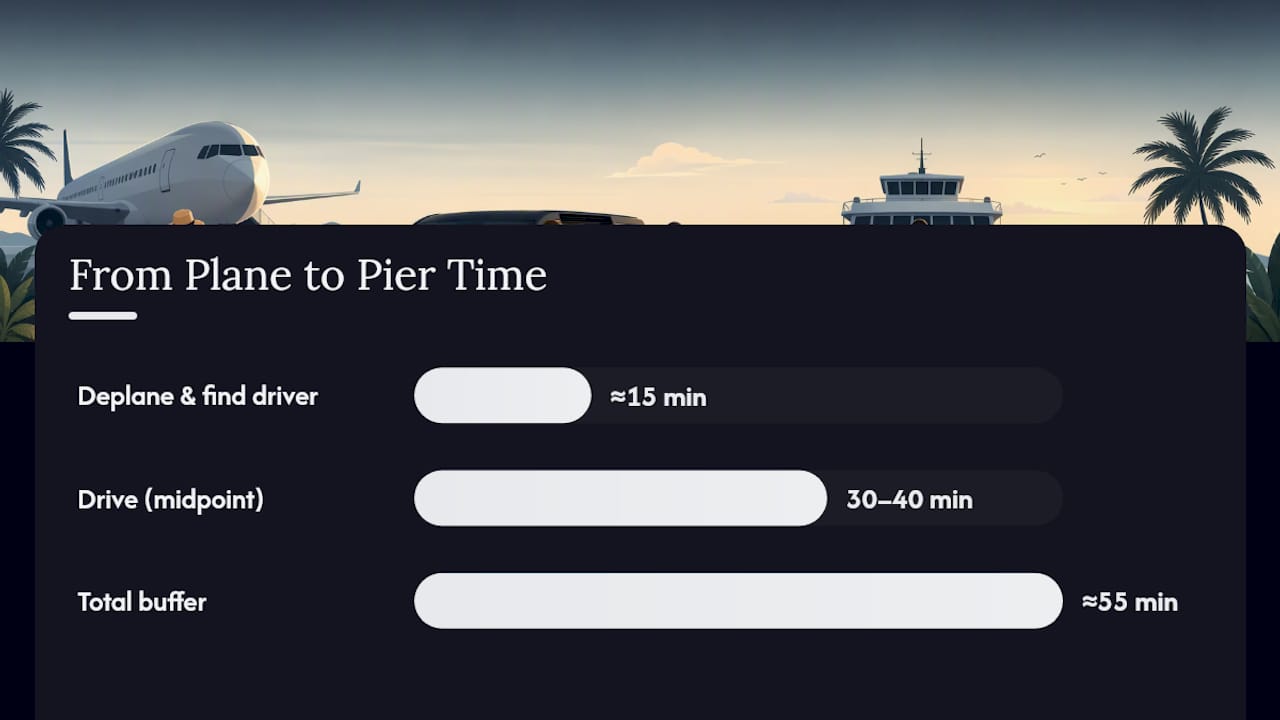
Split Airport sits roughly 20 kilometers from the city center, and that distance is a fixed cost you can’t shrink no matter which ferry you’re booked on. Budget 30 to 40 minutes for the drive itself, before you even factor in exiting the terminal or finding your transfer.
Here’s how the main routes actually play out on the ground:
- Shuttle bus. Buses typically drop passengers at or near the main bus station, directly across from the ferry quays. Fares are modest, but departures aren’t always synced tightly with your specific flight, so don’t assume it’s waiting the moment you clear customs.
- Taxi. Use the official rank rather than drivers soliciting inside the terminal. Metered fares tend to land in that €30 to €40 band, and a licensed taxi will get you straight to the port without a transfer or a walk.
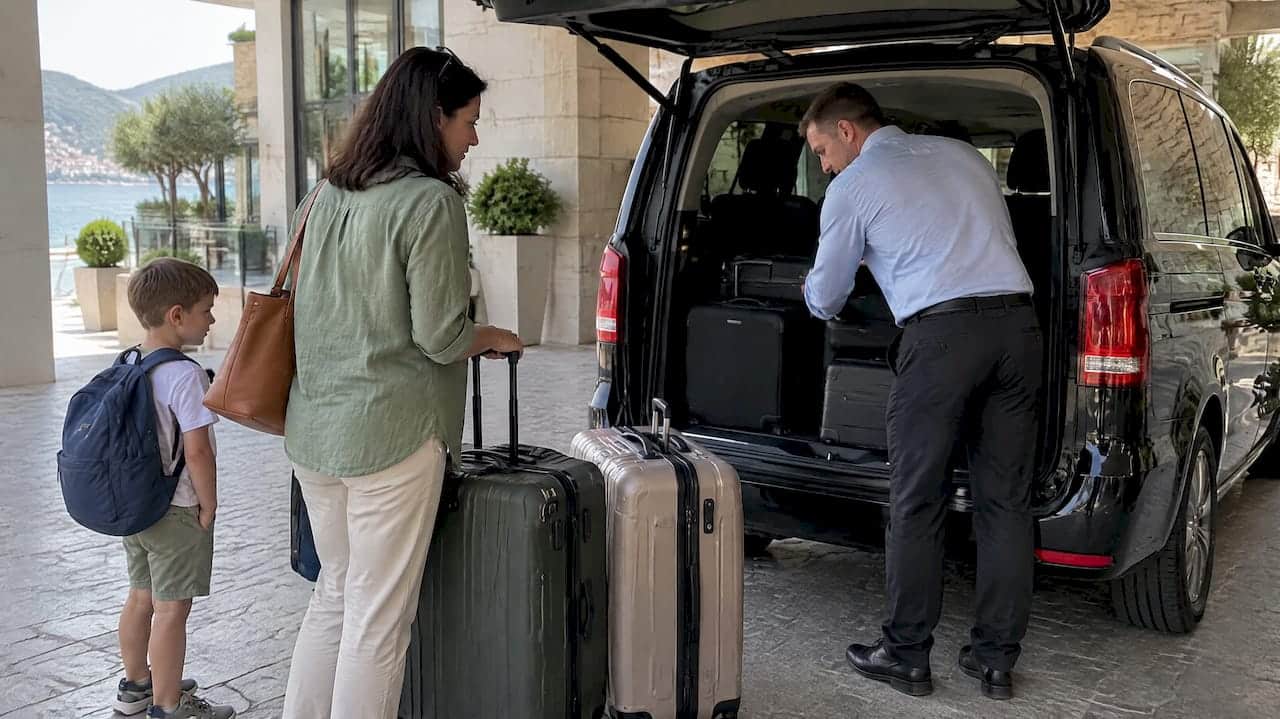
- Pre-booked private transfer. A driver tracks your flight, adjusts for delays automatically, and takes you directly to the correct pier with help to load luggage. This is the option that removes guesswork entirely.
- Private boat pickup. In select cases, a boat collects passengers near the airport or a nearby marina and eliminates the road transfer altogether. It’s a niche option, but a useful one if your itinerary and the tide align.
If your flight is delayed, the practical fallback is contacting your ferry operator immediately. Most fast-ferry operators can’t hold a sailing for a late arrival, so check whether a later departure exists that same day, and if you’ve booked a private transfer, the operator will typically adjust pickup timing without extra fuss.
Pro Tip: Build your buffer around the port, not the airport. A 40 minute drive can become 55 minutes once you account for deplaning, baggage claim, and finding your driver.
Walking, Bus, or Taxi from Split Old Town to the Port
If you’re already staying inside or near Diocletian’s Palace, reaching the ferry quays is almost embarrassingly easy. The port sits directly on the Riva, adjacent to the Old Town, so most central accommodations are within a 5 to 15 minute walk.
- On foot: From the palace walls to the ferry berths is typically under 10 minutes for someone without heavy luggage.
- Local bus: Several city buses stop near the main bus station, which sits beside the port, useful if you’re coming from a hotel further out like Firule or Meje.
- Taxi: Worth the small fare if you’re hauling suitcases uphill from a stay in the Varoš or Manuš neighborhoods, where cobblestones make wheeled luggage a chore.
- Timing: Give yourself extra margin if you’re walking with bags in August heat, or if your ferry operator requires check-in more than 20 minutes before departure.
Finding Your Berth and Building the Right Buffer
Split’s ferry terminal isn’t one single gate. Fast ferries frequently use berths 6 and 7, close to the main bus station, while car ferries and larger vessels depart from other points along the same stretch of the Riva. Before you leave your hotel or the airport, confirm the exact berth number on your ticket or the operator’s app, since pier signage can be easy to miss in the crowds during high season.
- Arrive at least 20 to 30 minutes before boarding for foot passengers with mobile tickets.
- Allow closer to 40 to 45 minutes if you’re checking in a bike, extra luggage, or traveling in a group.
- Confirm your operator’s specific check-in window in advance. Some fast-ferry routes, including the Split to Jelsa run on Hvar, board a set number of minutes before departure and won’t wait for stragglers.
- Keep your mobile ticket loaded and screen brightness up before you reach the gate. Wi-Fi near the port can be patchy when crowds are heavy.
A telling detail from that Split–Jelsa route: it runs about 90 to 100 minutes with an adult fare around €25 and a one-bag luggage allowance. That single-bag rule catches travelers off guard more often than the timing does, so check your operator’s baggage policy before you pack for the ferry leg of the trip.
Where to Check Ferry Schedules and When to Book
Official operator sites are always more reliable than third-party listings, especially for same-day schedule changes. Confirm your route and berth directly through the source before you finalize your land transfer.
- Check timetables and buy mobile tickets directly through operator pages like Split Fast Ferries for catamaran routes, or Jadrolinija for car-ferry routes such as Split to Supetar.
- In July and August, book a week or two ahead for popular island routes, since sailings sell out and walk-up availability shrinks fast.
- Outside peak season, walk-up tickets are usually fine for most routes, though it’s worth checking whether your specific sailing has reduced frequency.
- If you’re connecting multiple legs, such as a land transfer followed by a ferry and another transfer on the island side, confirm each operator’s cancellation window separately. Policies vary and rarely sync up neatly.
When a Private Door-to-Pier Transfer Actually Pays Off
A late-arriving flight, a family with three suitcases and two kids, or a same-day connection to an island with only one remaining sailing are the moments a private transfer earns its price. Flight monitoring, a licensed driver waiting with your name, and a direct drop at the correct pier remove the variables that turn a 35 minute drive into a missed boat. For high-value or time-sensitive trips, that predictability is worth more than the fare difference between a shuttle and a private car.
— Croatia
Book a Private Transfer to the Split Ferry Port
A private transfer service can get you to the right pier with time to spare, using licensed English-speaking drivers who track your flight and adjust pickup automatically if it’s delayed. That’s the real difference from a shuttle timetable or a taxi rank gamble: no waiting in line, no guessing which berth, no scrambling with luggage on cobblestones.

Booking is straightforward. Have your flight number, ferry operator and berth, passenger count, and luggage details ready when you request a quote through the private transfer booking page. Every transfer includes door-to-pier drop-off and a driver who helps with bags, so you walk onto your ferry rather than jogging for it. If you’re weighing whether the upgrade makes sense for your trip, the case for booking private transportation over public options comes down to exactly this kind of connection. Reserve your transfer now and lock in your pickup time before peak season fills the calendar.
Sources
Check Split Fast Ferries for catamaran timetables and mobile tickets, Jadrolinija for car-ferry routes like Split to Supetar, and Arriva Croatia for bus connections to the port area.
- Split Ferry Port — Island Hopping Guide to Hvar, Brač & Šolta
- Split Airport to Hvar, Brač, Vis & Korčula: 2026 Options
- How Do I Get From The Airport To The Ship?
FAQ
Is a Taxi or Rideshare Cheaper in Split?
Rideshare pricing in Split tends to run close to metered taxi fares, though taxis are more consistently available right outside airport arrivals and along the Riva near the port.
How Can I Arrange a Transfer in Croatia?
You can book a shuttle seat, hail a taxi at an official rank, or reserve a private transfer in advance through a service like Croatia-private-transfers, which confirms your pickup time and destination berth ahead of arrival.
How Much Is a Taxi from Split Airport to the Port?
A metered taxi from Split Airport to the ferry port typically runs €30 to €40, depending on traffic and time of day.
What Time Should I Arrive at the Port Before My Ferry?
Plan to arrive at least 20 to 30 minutes before boarding for a standard fast-ferry departure, and closer to 40 to 45 minutes if you’re carrying extra luggage or traveling in a group.
Do Ferries in Split Depart from One Location?
Most fast ferries use berths near the main bus station on the Riva, including berths 6 and 7, but car ferries and other operators may use different points along the same waterfront, so confirm your exact berth on your ticket.