

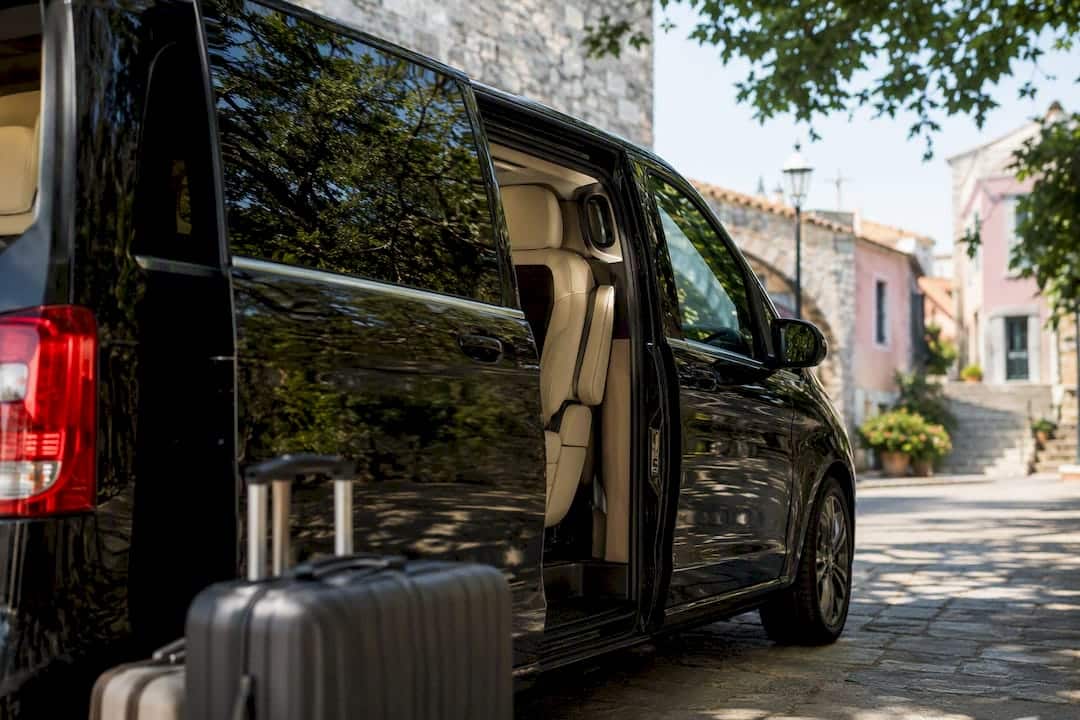
Flexibility in Private Transfers: What to Ask Your Operator
Flexibility is what turns a private transfer or bespoke tour into a usable framework for discovery instead of a rigid script. In practice, it means your driver can shift pickup times, swap a rained-out vineyard stop for a covered market visit, or add forty minutes at a viewpoint because the light is perfect. Industry analysis now treats this adaptability as a defining trait of luxury travel, and Outlook Traveller’s reporting on hyper-personalization shows travelers expect operators to respond fast, not just customize on paper. Operators like Croatia Private Transfers & Tours build this into the service model itself rather than treating it as an upsell.
What flexibility looks like on the ground:
- Adjustable pickup and drop-off windows
- Route detours and unscheduled stops
- Extended time at a site you didn’t expect to love
- Swapped meals, venues, or activities on request
Key Takeaways
Flexibility works because it replaces a fixed schedule with a framework that absorbs weather, energy, and curiosity without breaking core reservations.
| Point | Details |
|---|---|
| Flexibility is requestable, not implied | Ask specifically about wait times, route detours, and duration extensions before booking. |
| Get policies in writing | A written change and cancellation policy protects you better than a verbal promise. |
| Operational buffers make it possible | Fleet standby, supplier relationships, and dispatch systems are what let drivers pivot fast. |
| Flexibility usually costs more | Expect hourly add-ons or capped-change block pricing rather than a flat premium. |
| Verify before you book | Croatia Private Transfers & Tours confirms flexible elements, licensed drivers, and vehicle classes in writing ahead of your trip. |
Table of Contents
- The Role of Flexibility in Business Itineraries and Private Travel
- What Concrete Forms Does Flexibility Take?
- Why Does Flexibility Matter for Travelers?
- How Do Operators Actually Deliver Flexibility?
- What Should You Ask Before You Book?
- How Does Flexibility Affect the Price?
- How Do You Spot a Fake “Flexible” Operator?
- What Does a Flexible Half-Day Itinerary Look Like?
- Choosing an Operator That Delivers on Flexibility
- Frequently Asked Questions
- Sources
The Role of Flexibility in Business Itineraries and Private Travel
Ask any experienced private driver what separates a good day from a forgettable one, and the answer rarely involves the itinerary that was planned. It’s the one that was adapted. The role of flexibility in business itineraries and leisure travel alike comes down to this: a fixed schedule assumes you know exactly how you’ll feel, what the weather will do, and what will catch your interest six hours from now. You don’t. A private driver tour, unlike a scheduled group bus, lets you extend a stop because the site captivated you or shift lunch because the weather turned, according to one London-based touring operator’s breakdown of private driver benefits. That single capacity to pivot is often the difference between a trip that feels curated and one that feels endured.
What Concrete Forms Does Flexibility Take?
Flexibility isn’t a vague promise. It’s a list of specific, requestable service elements, and knowing them helps you ask for exactly what you need.
- Pickup and drop time shifts. Your flight lands late, or your morning meeting runs long. A flexible operator absorbs the shift without penalty within a reasonable window.
- Wait-time allowances. Drivers can hold at a location while you finish a meal, a shopping stop, or a photo session, rather than circling the block.
- Route detours and unscheduled stops. A scenic overlook or a recommended bakery gets added mid-drive, not just pre-planned.
- Activity-duration extensions. More time at Krka Waterfalls if the group is enjoying it, less time elsewhere to compensate.
- Timed-entry slot reallocation. Reserved-entry sites (museums, national parks) get rebooked to a different window when plans shift.
- Meal and venue swaps. A recommended restaurant closed or didn’t suit dietary needs, so the driver pivots to an alternative.
- English-speaking guide availability. Language support stays consistent even when the day’s structure changes.
Pro Tip: Families and multigenerational groups should prioritize wait-time allowances and duration extensions first. Luxury travelers on tighter multi-city schedules should prioritize timed-entry reallocation and meal swaps, since those protect the day’s momentum without sacrificing spontaneity.
Why Does Flexibility Matter for Travelers?
The benefits aren’t abstract comfort. They compound across the whole trip.
- Comfort and energy management. No one enjoys being rushed off a beach or dragged through a museum on autopilot.
- Weather resilience. A guide who can swap an outdoor plan for an indoor one on short notice, without losing core reservations, keeps a rainy day from becoming a wasted one, as noted in reporting on personalized chauffeur tours.
- Room for discovery. The best moments of a trip are rarely the ones on the printed schedule.
- Better pacing for families and multi-generational groups. Grandparents and toddlers don’t move at the same speed, and a flexible day accommodates both.
- Unstructured time for wellness. Sometimes the best plan is no plan for an hour.
Travelers now list this kind of adaptability among their top priorities, and convenience is the top priority in business travel frames it as a baseline expectation rather than a premium extra. The payoff is practical, too: fewer missed reservations, less stress, and a driver who feels like a fixer instead of a clock-watcher.
How Do Operators Actually Deliver Flexibility?
Promising flexibility is easy. Operating it is not. It takes real infrastructure behind the scenes.
- Fleet readiness. Enough vehicles in different classes, with standby capacity, so a change in group size or schedule doesn’t strand anyone.
- Trusted supplier agreements. Restaurants, wineries, and attraction partners who’ll hold or shift a reservation because they know the operator.
- Flexible staffing and dispatch. Drivers and guides who can be reassigned mid-day without disrupting other bookings.
- Centralized, always-on communication. A dispatch line, not a single driver’s personal phone, so requests get handled even off-shift.
- Built-in schedule buffers. Time cushions planned into the day from the start, not squeezed in as an afterthought.
Local supplier partnerships matter more than most travelers realize. An operator with a decade of relationships with regional restaurants and site coordinators can rebook a table or a slot in minutes. One without those ties is stuck apologizing.
A typical on-the-day change moves through a simple chain: the traveler requests it with the driver or dispatch, dispatch checks fleet and supplier availability, the partner venue or attraction gets notified, and the traveler receives confirmation, usually within minutes for straightforward requests.
Operators also balance a real tension: guaranteed reservations give certainty, but open windows give freedom. The best itineraries hold both, reserving the non-negotiable stops while leaving genuine gaps elsewhere.
What Should You Ask Before You Book?
Getting flexibility in practice means asking for it explicitly, in writing, before the trip starts.
- State your needs in the initial inquiry. Mention group composition, mobility considerations, and any must-see or must-avoid items.
- Ask about specific flexible elements. Don’t assume. Ask directly which of the items above the operator supports.
- Request written confirmation. A verbal “sure, no problem” from a booking agent isn’t the same as a documented policy.
- Get a mobile contact and escalation path. You want a real phone number for the day of travel, not just an email inbox.
- Confirm change and cancellation fees upfront. Know the cost of flexibility before you need it, not after.
Sample clause language to request in your confirmation: “Pickup and drop-off times may shift by up to 30 minutes at no charge with advance notice. One unscheduled stop or route adjustment per half-day is included. Additional wait time beyond 15 minutes is billed at the operator’s standard hourly rate.”
Ask pointed questions during booking, too: “Can the driver wait 30 minutes at a stop without extra charge?” “How do you handle changes to timed-entry tickets?” and “Who covers supplier fees if we change plans with less than 24 hours’ notice?”
The gap between a marketing promise of “flexible” and a written policy on wait times and change fees is exactly where disappointing trips get made.
How Does Flexibility Affect the Price?
Flexibility usually costs more, and understanding the pricing logic helps you judge whether it’s worth it.
- Hourly pricing with wait-time add-ons charges a base rate plus a per-minute or per-hour fee once you exceed an included buffer.
- Block-day pricing with capped change allowances bundles a set number of adjustments into a flat day rate, which suits families and groups who want predictability.
- Premium on-demand standby models hold a vehicle and driver in reserve for last-minute changes, and this costs the most because it ties up the operator’s capacity.
As a general pattern, adding a 60-minute waiting buffer or converting a scheduled day into an open-ended one typically adds a noticeable percentage to the base quote rather than a flat small fee, since it consumes driver hours the operator could otherwise book elsewhere. Tailor-made travel reallocates time toward what the group actually values and tends to cost more per person than a fixed group tour precisely because of that. When negotiating, ask about credit for unused hours and a capped ceiling on change fees so a busy day doesn’t turn into an open-ended bill.
How Do You Spot a Fake “Flexible” Operator?

Plenty of companies market themselves as private and flexible while running a fixed route behind the scenes. A common pitfall is assuming private automatically means adaptable. Verify the operator’s explicit change policy in writing before you book, not after your plans change.
Look for these trust signals:
- Licensed drivers with credentials the company will show you
- Clearly listed vehicle classes, such as Mercedes sedans or minivans, with air conditioning confirmed
- English-speaking drivers and guides, not just a translation app
- A transparent, written booking and change policy
- 24/7 contact, not office-hours-only support
- Consistent guide or driver assignment across your trip
- Recent customer testimonials that mention specific on-the-day pivots, not generic praise
Red flags include a scripted itinerary that refuses partial changes, no written confirmation of the change policy, and a chain of subcontractors with no direct line to the actual operator.
What Does a Flexible Half-Day Itinerary Look Like?
Here’s a sample structure for a half-day private tour built with deliberate breathing room:
- 8:30 AM — Pickup from your accommodation (30-minute flex window built in)
- 9:15 AM — Drive to the first site, with an optional detour to a lookout point if road conditions and timing allow
- 10:30 AM — Main site visit, with time extended if the group wants to linger
- 12:00 PM — Lunch at a pre-selected restaurant, swappable on request with 30 minutes’ notice
- 1:30 PM — Return drive, with a buffer for one unscheduled stop
Sample booking terms attached to the confirmation: wait time up to 20 minutes included per stop, one route change permitted without fee, and a direct mobile contact for the driver plus a backup dispatch number.
Licensed, English-speaking drivers and a 24/7 support line mean the plan can bend without breaking. That’s the whole point of building buffer time into the day from the start.
Choosing an Operator That Delivers on Flexibility
If you’ve read this far, you already know what separates a genuinely adaptable trip from one that just says “private” on the website. Croatia Private Transfers & Tours builds that adaptability into every private transfer and bespoke tour, with licensed, English-speaking drivers, Mercedes-class vehicles, and door-to-door service between airports, cities, and UNESCO sites like Plitvice Lakes.
Day trips come with built-in buffer time rather than a rigid minute-by-minute script, and 24/7 contact means an on-the-day change doesn’t depend on catching someone during office hours. When you send your initial inquiry, include your group size, any mobility or dietary needs, and the specific flexible elements that matter most to you (extended stops, meal swaps, timed-entry rebooking) so the private transfer or bespoke tour itinerary can be confirmed with those terms in writing from the start. Reach out through the booking page to get a quote and lock in the flexibility terms before your trip.
A Note From the Road
We’ve built our service around drivers who can adapt without missing a beat, licensed, English-speaking, and backed by 24/7 support. Tell us what matters most in your booking brief, and we’ll build the buffer around it.
Frequently Asked Questions
What is the role of flexibility in business itineraries for private travel?
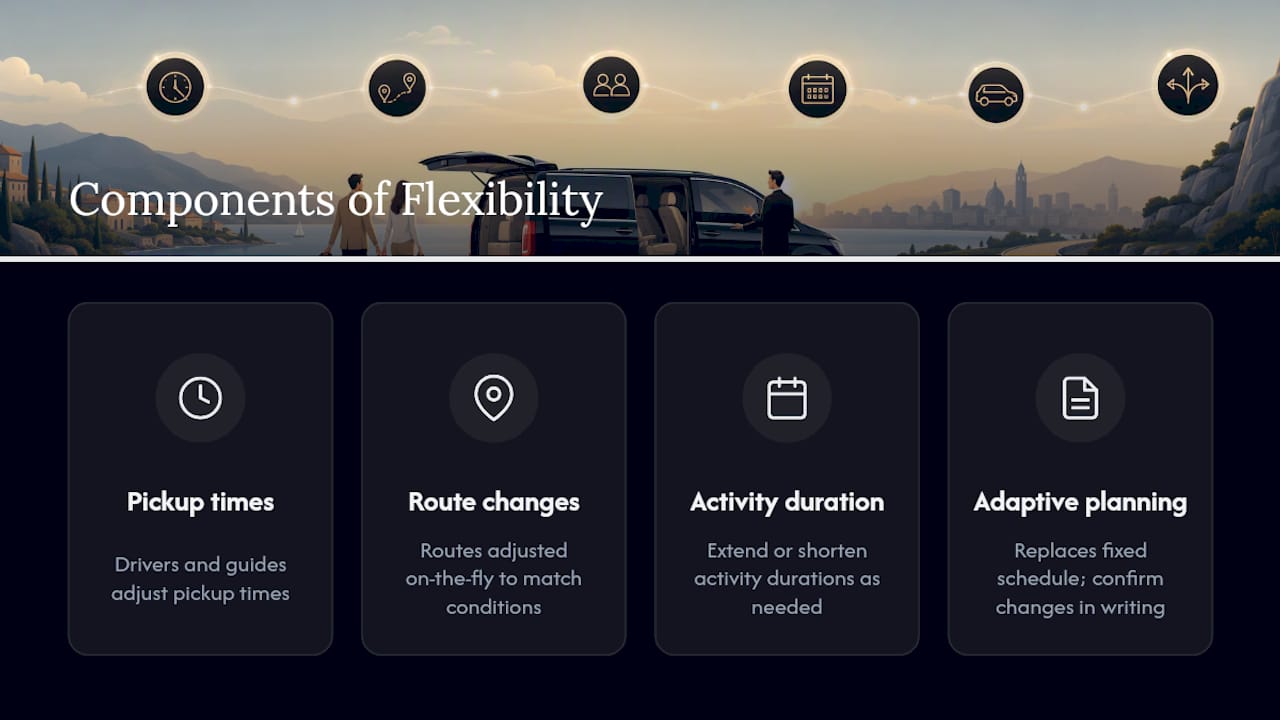
Flexibility functions as the structural backbone of a private itinerary, letting drivers and guides adjust pickup times, routes, and activity durations in response to real conditions instead of forcing the day to match a fixed script.
How much does flexibility typically add to the cost of a private transfer?
It varies by pricing model. Hourly rates add wait-time charges beyond an included buffer, while block-day pricing bundles a capped number of changes into the base rate, so ask for the specific structure before booking.
Can I request a specific wait time or route change after booking?
Yes, most operators will accommodate this if you request it early and get it confirmed in writing, ideally as part of your booking clause rather than a same-day verbal ask.
What’s the difference between a private transfer and a truly flexible one?
A private transfer just means you’re not sharing the vehicle with strangers. A flexible one means the operator has an explicit, written policy for on-the-fly changes to time, route, and activities.
What should I include in my initial booking brief to secure flexibility?
List your group size, mobility or dietary needs, and the specific flexible elements you care about most, such as extended stops or meal swaps, so the operator can confirm those terms upfront.
Sources
- Luxury travel trends: flexibility takes center stage
- Hyper-personalisation: the rise of flexible experience-led luxury travel
- Benefits of tailor-made travel experiences (2026 Guide)