
7 Things to Confirm When Paying for Private Transfers in Croatia
You can usually pay for private transfers in Croatia by cash or card. Many operators now accept in-vehicle card payments through mobile terminals, though surcharges and cancellation terms vary, so it pays to confirm both before you book. Fixed pricing is standard for prebooked transfers, and online bookings count as distance contracts under Croatian consumer rules, which means cancellation and refund details deserve a careful read before you hand over any payment.
TL;DR:
- Most operators accept cash in euros and card payments, with contactless and mobile wallet options limited to locations with supported terminals.
- Confirm whether a card surcharge applies and ensure the fee matches your receipt before paying to avoid unexpected costs.
- Prepaying online offers security for late-night and long-distance trips, while paying on arrival provides flexibility for shorter or city transfers.
- Booking online creates a distance contract with Croatian law protections, including potential 14-day withdrawal rights and clear cancellation policies.
- Always verify payment method acceptance, keep all booking documentation, and carry small cash or backup cards to prevent payment issues.
Table of Contents
- Common payment methods: cash, card, and digital wallets
- Card surcharges, receipts, and what to confirm before you pay
- Prepay online versus pay on arrival: which suits your trip
- Your consumer rights for online transfer bookings in Croatia
- Practical checklist: seven things to confirm before you pay
- How a reputable operator prevents payment surprises
- What most payment mistakes have in common
- How Croatia Private Transfers & Tours handles payment and booking
- Sources
- FAQ
Common payment methods: cash, card, and digital wallets
Cash still works everywhere in Croatia, and most drivers are comfortable with euros even though the official currency is the euro nationwide since Croatia’s changeover. Some smaller operators outside major cities may still quote in kuna out of habit, so ask which currency they expect and keep a mix of small notes for tips or minor extras.
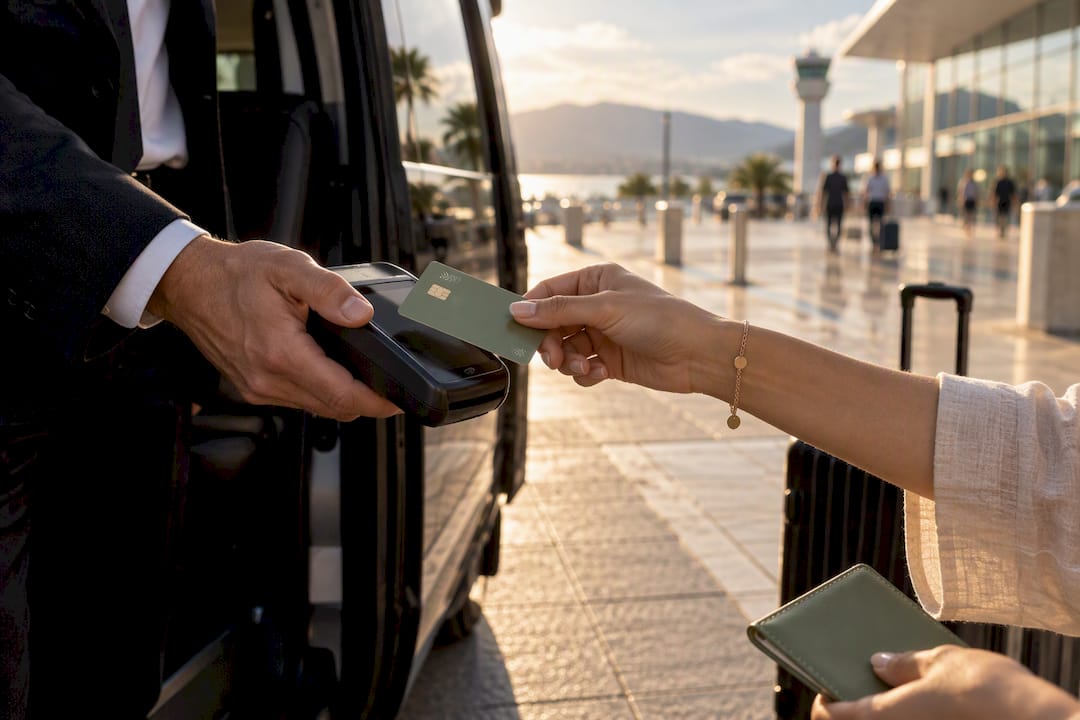
Card payment in the vehicle has become common thanks to mobile point-of-sale terminals. Visa and Mastercard are widely accepted, and contactless taps, along with Apple Pay and Google Pay, work wherever a modern terminal is installed. Mobile wallet payments through dedicated apps remain limited for private transfers specifically, though the trend is growing, so it is worth asking your operator directly if you plan to rely on your phone rather than a physical card.
A few practical points to keep in mind before your pickup:
- Cash in euros is accepted almost everywhere; carry small denominations for convenience.
- Card acceptance in vehicles depends on whether the driver carries a mobile POS terminal. Confirm this at booking.
- Contactless and mobile wallet payments work only where the terminal supports them, so ask ahead if this matters to you.
Card surcharges, receipts, and what to confirm before you pay
Card payments processed inside a vehicle sometimes carry a small surcharge, since merchant processing fees cut into an operator’s margin. Some providers apply a flat fee for card payments to cover that cost, while others absorb it and keep pricing the same regardless of payment method, according to one transfer provider’s payment policy. Transparent operators state this upfront rather than adding it as a surprise at the end of the ride.
Before you pay, a short round of questions saves headaches later:
- Ask whether a card surcharge applies and, if so, how much it is.
- Check that any fee quoted at booking matches what appears on your receipt or invoice.
- Ask whether tipping can be added through the terminal or whether cash is preferred for that.
If you need documentation for business travel, request a proper invoice at booking time. Croatian tax guidance on how operators handle pass-through charges and commissions means a VAT-compliant invoice is easier to arrange in advance than after the fact.
Pro Tip: Screenshot your booking confirmation and price breakdown before you travel, so you have a reference if the amount charged in the vehicle differs from what you agreed.

Prepay online versus pay on arrival: which suits your trip
Choosing when to pay depends on your itinerary, group size, and appetite for risk. Here is how the two approaches compare:
- Prepaying online locks in your price and guarantees your seat, which matters most for late-night pickups or transfers to remote addresses where finding an alternative ride is difficult. Always confirm the cancellation and refund policy before you commit, since terms differ by operator.
- Paying on arrival offers more flexibility and avoids the risk of a prepayment dispute, but it depends on having cash on hand or confirming in advance that the driver accepts cards.
- Prepay when it counts most: large groups, long-distance routes between cities, or arrivals that fall outside normal shuttle and public transport hours all favor locking in a transfer ahead of time.
For shorter, more flexible trips within a single city, paying on arrival often feels simpler. For anything time-sensitive or group-based, prepaying removes one more variable from your travel day.
Your consumer rights for online transfer bookings in Croatia
Booking a private transfer online counts as a distance contract, and Croatian law requires the trader to disclose the full price, service details, and cancellation terms before you complete the booking, under consumer protection rules for distance selling. This disclosure has to happen before you pay, not buried in fine print afterward.
A few things worth knowing:
- Many distance contracts carry a 14-day right of withdrawal, though service bookings tied to a fixed date, such as a transfer scheduled for a specific arrival time, are often excluded from this right, so read the operator’s terms closely.
- Refunds for cancellations covered by the contract terms must be processed within the statutory timeframe set by Croatian consumer law.
- Keep every booking email and confirmation message. If a dispute arises, written proof of what was agreed is your strongest tool.
These protections exist regardless of which operator you choose, but they only help you if you have the paperwork to back up your claim.
Practical checklist: seven things to confirm before you pay
Run through this list before you finalize any private transfer booking in Croatia:
- Confirm which currencies and card types the operator accepts, and whether the driver carries a mobile POS terminal.
- Get written price confirmation and save the booking email or screenshot.
- Confirm the cancellation and refund policy, including how long a refund takes to process.
- Ask for an invoice or receipt if you need one for business expenses or reimbursement.
- Check whether tips can go through the card terminal or whether cash is expected.
- If your arrival falls outside typical shuttle hours or you are heading to a remote address, consider prepaying to guarantee your driver shows up.
- Carry a small amount of euro cash or a backup card in case your primary payment method fails.
Pro Tip: Keep your booking confirmation and driver contact details in an offline note or screenshot, since airport WiFi is not always reliable the moment you land.
How a reputable operator prevents payment surprises
Licensed private transfer operators in Croatia typically list their accepted payment methods clearly, issue invoices on request, and often equip vehicles with mobile POS terminals rather than leaving passengers to hunt for an ATM. These details matter more than they might seem, since they remove the guesswork that leads to disputes later.
A fixed-price, prebooked transfer usually includes flight tracking and a built-in waiting period, which reduces the chance of extra charges showing up if your flight lands late. Compare this with airport taxi services, where published maximum fares apply to common routes but a delayed flight can still mean a longer wait and a higher metered fare.
For groups, families, or multi-stop itineraries, a dedicated operator handling both the route and the payment terms in advance tends to reduce friction compared with arranging things on the spot through a taxi rank or app-only ride:
- Fixed pricing agreed before travel removes the risk of meter-based surcharges.
- Flight tracking built into the service means waiting time for delays is already accounted for.
- An invoice available on request makes expense reporting straightforward for business travelers.
What most payment mistakes have in common
Most payment problems we see come from one assumption: that every driver accepts cards everywhere, every time. That is not always true, and travelers who skip checking terminal availability ahead of time sometimes find themselves scrambling for cash at the worst moment, like a late arrival at a quiet coastal address.
We recommend confirming card acceptance when you book and saving your confirmation email regardless of payment method. When clients need documentation for business or VAT purposes, asking for an invoice at booking time, rather than after the ride, makes the whole process far smoother.
— Croatia
How Croatia Private Transfers & Tours handles payment and booking
Booking a transfer means you know exactly what you are paying and how before the driver ever arrives. Accepted payment methods may include online prepayment at the time of booking, in-vehicle card payment through mobile POS terminals, and cash in euros, allowing you to choose whichever method suits your trip. Fixed-price bookings typically include door-to-door pickup, flight tracking, and a built-in waiting period, with invoices available on request for business records.
- Online prepayment secures your price and your seat before you travel.
- In-vehicle card payment via mobile POS covers travelers who prefer to settle up on arrival.
- Cash in euros remains widely accepted throughout Croatia for most transfers.
| What you get | Detail |
|---|---|
| Pricing | Fixed price agreed before travel |
| Includes | Door-to-door pickup, flight tracking, waiting time |
| Documentation | Invoice available on request |
If you are ready to lock in your transfer details, visit our private transfers page to check availability and confirm your route, or reach out directly for a custom quote on a longer itinerary.
This article is general information, not a substitute for advice from a qualified financial advisor. Consult a qualified financial professional about your own circumstances before acting on anything here.
Sources
- Gov
- Franjo Tuđman Airport Zagreb – By Taxi
- ATAV — Payment options and surcharge example
- Mišljenja SU – Porezna uprava
FAQ
How can I book a private transfer in Croatia?
You can book a private transfer online by choosing your route, entering your travel dates, and confirming pickup details before paying, either in full at booking or on arrival depending on the operator’s policy. Look for clear disclosure of price and cancellation terms before you confirm, since distance-contract rules require this information upfront.
How much does a taxi cost in Croatia?
Taxi fares in Croatia vary by city and route, and some airports publish maximum fares for common journeys to the city center. Prebooked private transfers typically use fixed pricing instead of a meter, which protects you from surge pricing during busy arrival times.
How do I transfer money to Croatia?
For paying transfer operators directly, most accept card payment through a mobile POS terminal or cash in euros, and some offer online prepayment through their booking system. For sending larger sums for other purposes, a bank transfer or an international payment service is the standard route, though that falls outside typical transfer bookings.
Is Uber or a taxi cheaper in Croatia?
Pricing between ride-hailing apps and traditional taxis depends on the city, time of day, and demand, and neither guarantees a fixed price the way a prebooked private transfer does. For predictable costs on longer routes or late-night arrivals, a fixed-price private transfer removes the uncertainty that comes with metered or surge-based fares.
What should I do if my transfer payment is disputed?
Keep your booking confirmation email and any payment receipt as your first line of evidence, since Croatian consumer rules require traders to honor the cancellation and price terms disclosed before booking. If the operator does not resolve the dispute directly, raise it with the relevant consumer protection body using your documented booking details.