
How to Personalize Day Trips for Unforgettable Experiences
TL;DR:
- Personalized day trips are self-directed experiences tailored to individual interests, pace, and priorities, increasing satisfaction compared to package tours. Planning involves defining non-negotiables, using AI drafts validated with local insights, and geographically clustering stops to optimize time and reduce backtracking. Flexibility, deliberate buffer time, and personal touches ensure a memorable journey that balances structure with spontaneity.
A personalized day trip is defined as a self-directed travel experience built around your specific interests, pace, and priorities rather than a preset group itinerary. Knowing how to personalize day trips transforms an ordinary outing into something genuinely memorable, whether you are exploring the walled city of Dubrovnik, the waterfalls of Krka National Park, or a coastal village you discovered in a travel forum. Custom itineraries deliver 40% higher satisfaction compared to package tours, because every stop reflects what you actually care about. The approach covered here is what travel professionals call bespoke itinerary design, and it applies whether you are planning a solo afternoon or a full-day excursion with family.
How to personalize day trips: start with your non-negotiables
Defining your non-negotiables before opening a single booking platform is the single most effective step in the entire planning process. Listing preferences upfront such as cuisine type, activity intensity, pace, accessibility needs, and travel companions filters out irrelevant options immediately and saves hours of research. Think of these as your trip’s decision criteria. Every stop you consider either passes the filter or it does not.
Different traveler profiles produce very different non-negotiables. A family with young children prioritizes short transit times, outdoor spaces, and early dining. A couple focused on cultural depth wants UNESCO-listed sites, local wine, and unhurried afternoon hours. A solo traveler with a photography interest needs golden-hour timing and uncrowded viewpoints. Capturing priorities upfront leads to more authoritative and satisfying recommendations, which is why platforms like Airbnb now build preference capture directly into their AI personalization layer.
Here are the core criteria worth defining before you plan any outing:
- Cuisine and dining style: Sit-down local restaurant, market food, or packed lunch?
- Activity type: Active and outdoor, cultural and historic, or relaxed and scenic?
- Pace: Do you prefer two or three deep experiences, or a broader survey of six to eight stops?
- Accessibility: Are there mobility, language, or health considerations that affect venue choice?
- Group dynamics: Solo, couple, family with children, or a group with mixed interests?
- Budget range: Does the day include paid attractions, private guides, or free-entry sites only?
Pro Tip: Write your non-negotiables on paper or in a notes app before searching online. The act of writing forces clarity and prevents you from being swayed by attractive photos of places that do not actually fit your trip.
What tools and methods work best for building a custom itinerary?
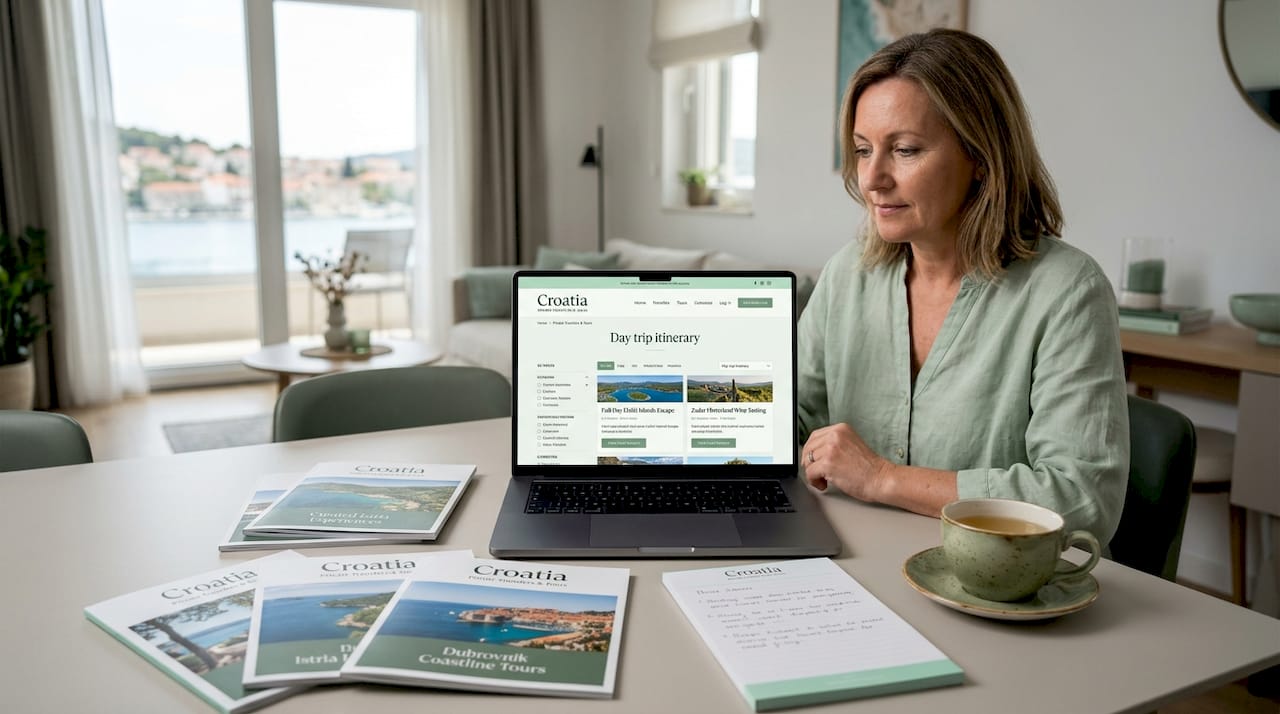
The most practical approach to building a tailored day trip itinerary combines AI-generated drafts with human validation. AI itinerary generators produce a useful first draft quickly, but they frequently include venues with incorrect hours, seasonal closures, or duplicate route crossings that add unnecessary travel time. The correct workflow is draft first, then validate every stop against live sources before committing.

Travel blogs and local forums add a layer of discovery that no algorithm replicates reliably. A blogger who visited Plitvice Lakes in October will tell you which trail direction avoids the tour bus crowds. A Reddit thread about Split will surface a konoba (family-run tavern) that no major platform lists. These human-sourced details are what separate a good itinerary from a great one.
The table below compares the most common planning tools by their strengths and best use cases:
| Tool | Strength | Best used for |
|---|---|---|
| AI itinerary generators (ChatGPT, Gemini) | Fast first drafts with logical sequencing | Starting point before manual validation |
| Travel blogs and niche forums | Local detail, hidden gems, seasonal tips | Enriching and verifying AI-generated stops |
| Google Maps timeline view | Visual route optimization and time estimates | Checking geographic logic and transit gaps |
| EasyItinerary and similar tools | Reusable itinerary elements and resource tracking | Experienced planners managing repeat trips |
| BluePlanIt | Decision-support with dates, times, and costs in one view | On-the-ground reference during the trip |
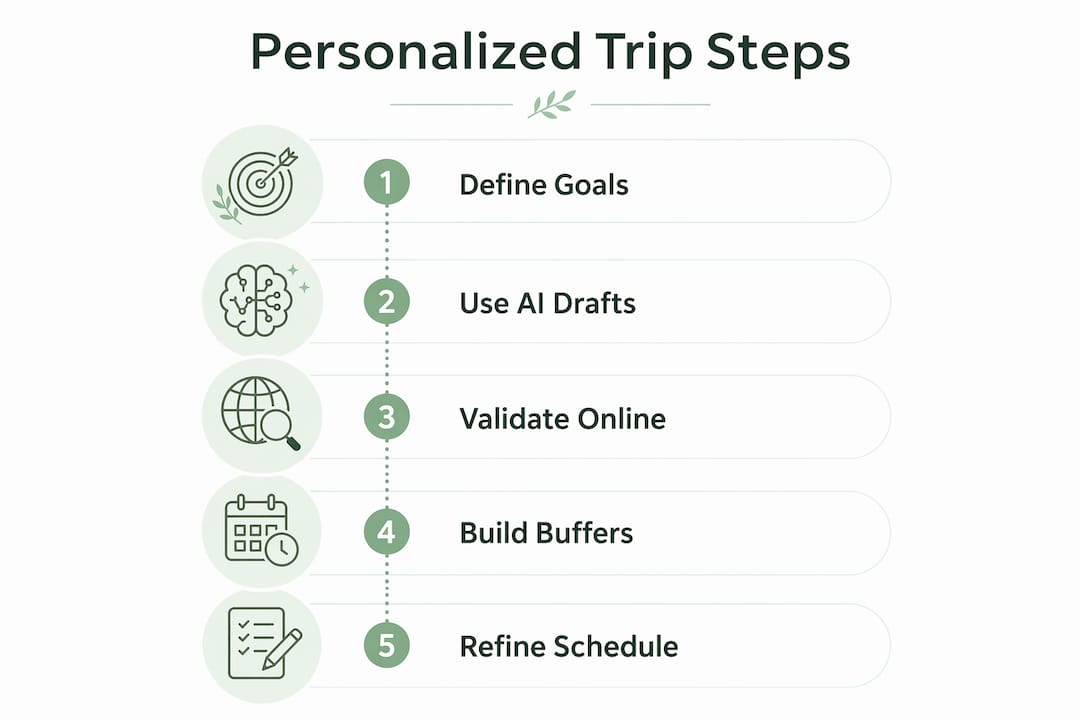
A well-designed itinerary functions as a decision-support tool, giving you accessible information on dates, times, locations, and costs so that on-the-ground choices feel effortless rather than stressful. The goal is not a rigid minute-by-minute schedule. It is a clear framework that frees you to be present.
Pro Tip: Build a 2 to 3 hour unscheduled block into every full-day trip. Deliberate buffer time is not wasted time. It is the space where the most memorable moments tend to happen, from a spontaneous conversation with a local fisherman to an unexpected detour along a coastal path.
How do you sequence and refine a day trip plan for real-world conditions?
Sequencing is where most self-planned day trips fail. Travelers often select great individual stops but arrange them in an order that creates unnecessary backtracking, long midday transits, and arrival times that collide with peak crowds. The fix is geographic clustering: group stops by physical proximity first, then layer in timing logic.
Follow these steps to sequence and refine any custom day trip plan:
- Map all stops geographically. Plot every location on Google Maps before assigning times. Grouping nearby stops eliminates the split-route crossings that drain both time and energy.
- Assign anchor times first. Identify the one or two stops with fixed constraints, such as a boat departure or a timed museum entry, and build the rest of the day around them.
- Verify opening hours and booking windows. Check official venue websites on the day you finalize the plan, not weeks earlier. Hours change seasonally, and popular sites in Croatia and across Europe often require advance reservations.
- Adjust arrival times to beat crowds. Arriving by 9am at popular sites avoids 30 to 45 minutes of peak queues, a principle that applies equally to the Bone Church in Kutná Hora and to the upper lakes trail at Plitvice.
- Insert buffer time between stops. Allow 20 to 30 minutes more than Google Maps estimates for each transit leg. Parking, restroom breaks, and spontaneous photo stops are real and consistent.
- Prepare one backup option. Identify a nearby alternative for your most weather-dependent stop. A coastal boat tour has an obvious indoor substitute; a hilltop viewpoint does not.
The table below shows how arrival timing affects the experience at three types of popular attractions:
| Attraction type | Recommended arrival | Crowd impact |
|---|---|---|
| UNESCO historic old towns | Before 9:00am | Avoids tour group arrivals, cooler light for photos |
| National park trail entrances | At opening time | Shorter queues, wildlife more active |
| Coastal viewpoints | Late afternoon | Fewer visitors, golden-hour light |
What personal touches make a day trip uniquely yours?
The difference between a good day trip and one you describe to friends for years comes down to the personal details layered into the plan. Tailoring stops to your hobbies, energy rhythms, and dining preferences turns a generic itinerary into something that feels authored rather than assembled.
Consider these approaches to adding personal depth to any outing:
- Align stops with your hobbies. A photography enthusiast should schedule the most visually dramatic locations during golden hour, typically 60 to 90 minutes before sunset. A wine lover visiting Dalmatia should include a stop at a family-run winery in the Pelješac Peninsula, where the Plavac Mali grape produces some of Croatia’s most distinctive reds.
- Match the pace to your energy curve. Most travelers have higher energy in the morning and lower energy after lunch. Place physically demanding activities, such as hiking or cycling, in the first half of the day and reserve slower, more contemplative stops for the afternoon.
- Build in a local connection. Eating at a market stall, joining a short cooking demonstration, or asking a local guide for one recommendation that is not in any guidebook consistently produces the most vivid travel memories. Croatia-private-transfers drivers, for example, regularly share off-map recommendations that guests cite as trip highlights.
- Prepare weather-based alternatives. For every outdoor stop, identify an indoor equivalent within 15 minutes. A planned kayaking session near Dubrovnik has a natural substitute in the city’s Maritime Museum or a wine tasting at a nearby cellar.
- Adjust for solo versus group travel. Solo travelers can afford more spontaneity and shorter stops. Groups with mixed interests benefit from a shared anchor activity followed by a free hour where individuals pursue their own preferences before reconvening.
Pro Tip: Research Croatia’s most scenic adventure spots before finalizing your itinerary. Knowing the full range of what is available helps you make genuinely informed choices rather than defaulting to the most-photographed locations.
Key takeaways
Personalizing a day trip requires defining your non-negotiables first, then using a draft-and-validate workflow to build a geographically logical, time-aware itinerary with deliberate buffer space built in.
| Point | Details |
|---|---|
| Define non-negotiables first | List cuisine, pace, activity type, and companions before researching any stops. |
| Use a draft-then-validate workflow | Generate an AI draft, then verify every stop against live hours and booking requirements. |
| Group stops geographically | Cluster nearby locations to eliminate backtracking and reduce transit fatigue. |
| Arrive early at popular sites | Reaching key attractions before 9am cuts queue times by 30 to 45 minutes. |
| Build in unscheduled buffer time | Reserve 2 to 3 hours of open time daily for spontaneity and rest. |
Why I believe the best day trips are never fully planned
After years of curating private day trips across Croatia, from the sun-bleached stones of Dubrovnik’s old city to the emerald pools of Krka, the most consistent observation is this: the guests who enjoy their days most are not the ones with the tightest schedules. They are the ones who planned with intention and then held their plans loosely.
Overplanning is a real problem, and it tends to affect experienced travelers more than first-timers. The instinct to fill every hour comes from a desire to maximize value, but it produces the opposite effect. When a schedule has no slack, every small delay becomes a source of stress rather than an invitation to linger. A 20-minute coffee at a harbor-side café becomes a logistical problem instead of a pleasure.
The blend of AI-generated drafts and human judgment produces the most practical and enjoyable personalized travel experiences. Technology handles the geographic logic and time estimates well. Human judgment handles the texture: knowing that a particular viewpoint is worth 45 minutes instead of 15, or that the restaurant two streets off the main square is worth the detour. Neither works as well without the other.
The travelers I have seen return most satisfied are those who treated their itinerary as a curated set of possibilities rather than a contract. They arrived at Plitvice Lakes with a plan and left with a story. That is the real goal of bespoke itinerary design.
— Croatia
Plan your personalized day trip across Croatia with expert support
Croatia-private-transfers specializes in making the logistics of a tailored day trip effortless, so your attention stays on the experience rather than the transport.
Whether you are arranging private transfers in Croatia between Split and Dubrovnik or booking a fully curated excursion to Plitvice Lakes or the Pelješac wine region, Croatia-private-transfers provides licensed, English-speaking drivers in modern Mercedes-class vehicles. Every itinerary is adapted to your interests, pace, and group size. Explore the full range of tailor-made day tours available across the country, from UNESCO coastal towns to breathtaking national parks, and discover how a private transfer transforms a good day into an exceptional one.
FAQ
What does it mean to personalize a day trip?
Personalizing a day trip means designing the itinerary around your specific interests, pace, and priorities rather than following a preset group tour. The result is a custom travel itinerary that reflects what you genuinely want to see and experience.
How many stops should a personalized day trip include?
Two to four well-chosen stops typically produce a more satisfying day than six to eight rushed ones. Depth of experience at fewer locations consistently outperforms a checklist approach, particularly when buffer time is built into the schedule.
Can I use AI tools to plan a custom day trip?
AI itinerary generators are effective for producing a first draft quickly, but every stop should be validated against live opening hours and booking requirements before the trip. The draft-then-validate workflow combines the speed of AI with the accuracy of human verification.
How do I avoid crowds on a personalized day trip?
Arriving at popular attractions before 9am reduces wait times by 30 to 45 minutes at most high-traffic sites. Scheduling the most visited stops early in the day and reserving afternoons for less-frequented locations also distributes crowd exposure effectively.
Is a private transfer worth it for a day trip?
A private transfer removes the logistical friction of public schedules, shared vehicles, and fixed departure times, giving you full control over your day’s pacing. For travelers prioritizing a truly tailored experience in Croatia, private transport is the most direct way to protect the flexibility a personalized itinerary requires.