
Split to Hvar Door to Door: Catamaran 50–65min, Car 110–120min
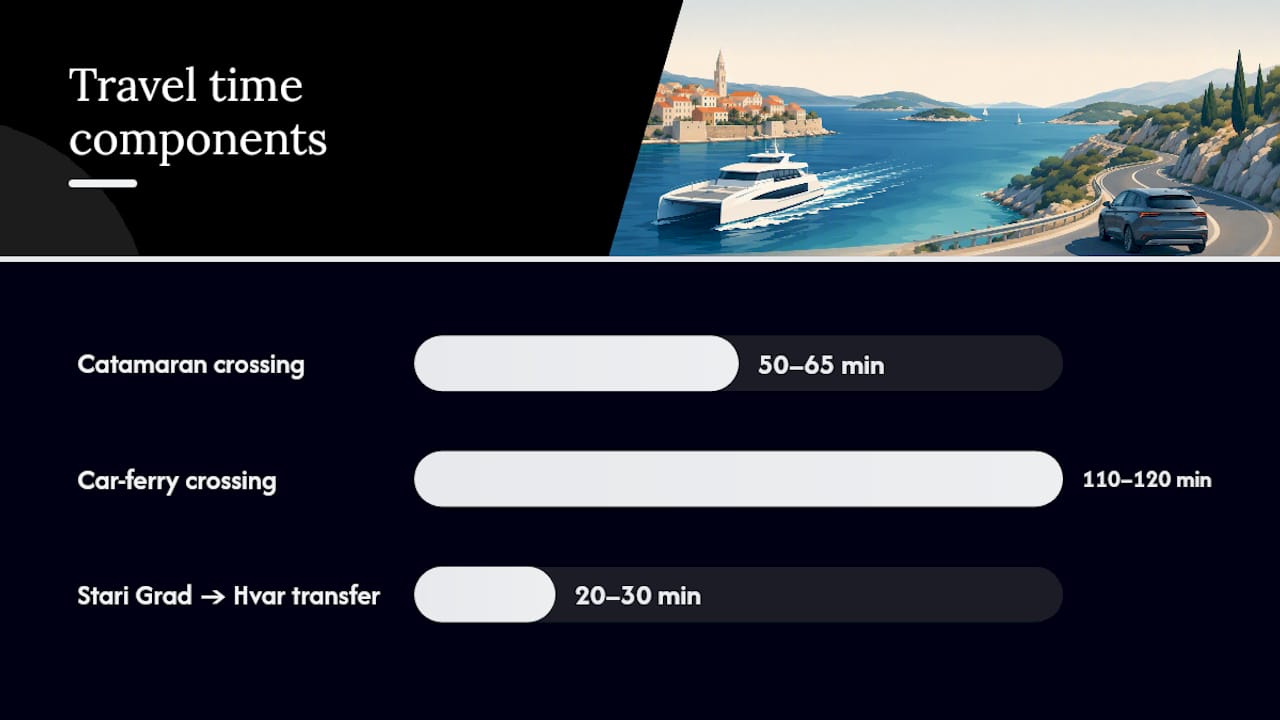
Fast passenger catamarans cover Split to Hvar Town in roughly 50 to 65 minutes, while the car ferry to Stari Grad takes about 110 to 120 minutes. That second figure comes with a catch worth remembering before you book anything: Stari Grad is not Hvar Town, and travelers with a vehicle need another 20 to 30 minutes on the road to reach the harbor everyone pictures when they say “Hvar.”
TL;DR:
- The fastest passenger catamarans from Split to Hvar arrive in about 50 to 65 minutes and are best booked early for peak summer.
- The only car ferry, operated by Jadrolinija, takes about 110 to 120 minutes to Stari Grad, plus an additional 20 to 30 minutes drive to Hvar Town.
- Seasonal schedule changes are significant, with up to 19 daily crossings in summer and only 2 to 3 per day in winter, so check schedules close to your travel date.
- Building your itinerary around door-to-door time is essential, adding at least 90 minutes for walk-on trips and around 3.5 hours for car travelers, including transfers.
- Private transfers and boat tours can be scheduled precisely to your arrival time, offering a smoother, flexible option especially during peak season.
Table of Contents
- How Long Is the Trajekt From Split to Hvar?
- Which Operators Run the Split to Hvar Route?
- What’s the Car Ferry Duration to Stari Grad Like?
- Does the Ferry Schedule Change by Season?
- How Do I Turn Crossing Time Into a Real Travel Plan?
- Why We Treat Ferry Timing as a Planning Problem, Not a Guarantee
- Book a Private Transfer That Matches Your Ferry Arrival
- Where to Check Live Ferry Times Before You Travel
- Sources
How Long Is the Trajekt From Split to Hvar?
The answer depends entirely on which vessel you board, which is the part most first-time visitors miss. A catamaran gets you into Hvar Town’s harbor, right in the heart of the action, in about an hour. The car ferry, by contrast, docks 20 kilometers away in Stari Grad, and while the crossing itself is longer, the real time cost is the drive that follows.
Here’s the quick breakdown:
- Fast catamaran (passengers only): 50 to 65 minutes, arrives directly in Hvar Town
- Car ferry (vehicles and passengers): 110 to 120 minutes, arrives in Stari Grad, plus a 20 to 30 minute road transfer
- Private boat transfer: timing varies by arrangement, but typically lands you closer to your actual destination without a fixed schedule
Fares track this trade-off. Passenger tickets on the catamaran run roughly €6 to €37 depending on season and operator, while bringing a car on the Jadrolinija line tends to cost closer to €70. If you’re not driving, book the catamaran early for July and August sailings, since seats disappear fast. If you are driving, reserve your vehicle space well ahead of your travel date. Car slots on the Stari Grad line vanish just as quickly once peak season hits.
Which Operators Run the Split to Hvar Route?
Three names dominate the passenger catamaran schedule, and knowing the difference matters more than most travel guides let on.
- Jadrolinija runs both the passenger catamaran and the vehicle ferry, making it the only operator offering a direct car crossing to the Hvar area.
- Kapetan Luka (Krilo) operates high-speed catamarans that frequently continue on to other islands, which occasionally stretches the Split to Hvar leg depending on the day’s routing.
- TP Line adds further passenger capacity during the busier months, generally sticking to the direct Split to Hvar Town run.
The direct sailings are consistently the fastest. Once a ferry route calls at Jelsa, Bol, or another stop along the way, the same crossing that would normally take under an hour can stretch closer to 90 minutes. If your priority is speed, check the schedule for “direct” versus “via” before you book, since one word in the timetable changes your afternoon plans considerably.
Peak summer sees up to 19 daily passenger crossings between Split and Hvar, according to Ferryhopper’s route data. That frequency is a gift for spontaneous travelers, but it also means the harbor gets crowded and sea conditions play a bigger role than people expect. A stretch of bura wind in the Adriatic can add real minutes to a crossing that’s normally clockwork, so treat published times as a strong estimate rather than a guarantee.
What’s the Car Ferry Duration to Stari Grad Like?
Jadrolinija’s own timetable lists the Split to Stari Grad crossing at approximately 110 to 120 minutes, and this is the only vehicle ferry route serving the Hvar area. If you’re bringing a car, this line is your one option, so plan around it rather than around the faster passenger catamarans.
Practical points for anyone driving onto the ferry:
- Reserve your vehicle space in advance, especially between June and September when lanes fill up days ahead
- Arrive at the port 45 to 60 minutes before departure, as Jadrolinija recommends for vehicle check-in
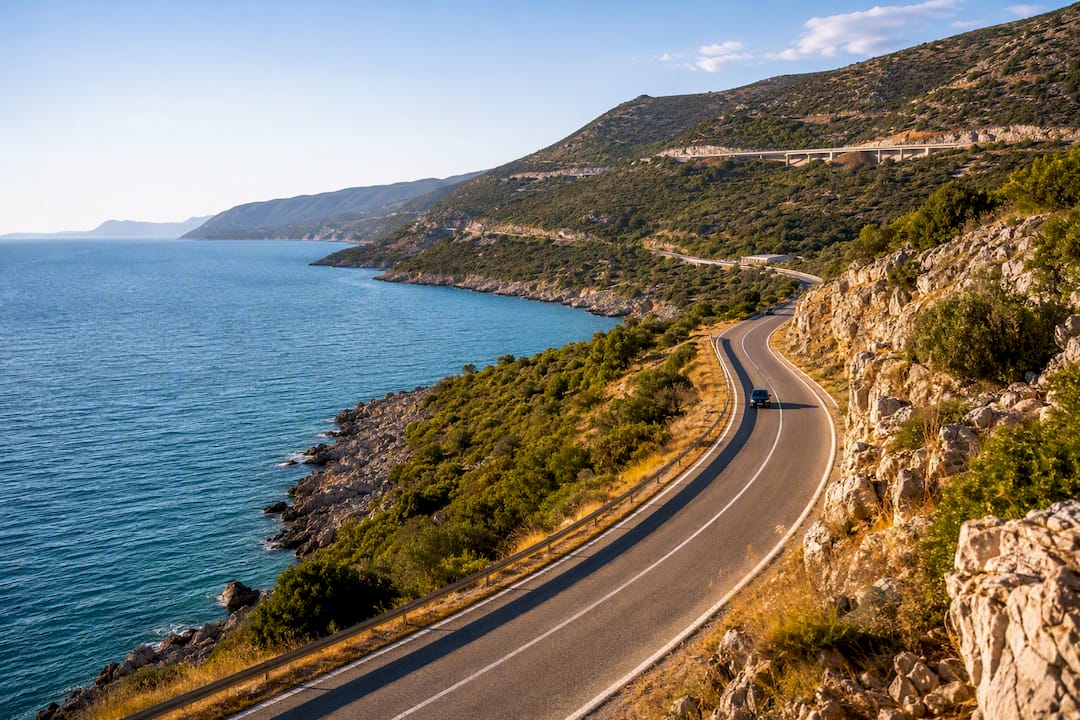
- Expect a 20 to 30 minute drive from Stari Grad port into Hvar Town once you disembark, whether by rental car, local bus, or taxi
Pro Tip: If your hotel sits in Hvar Town itself, ask ahead whether they offer or recommend a pickup from Stari Grad port. It saves you from hunting for a taxi queue after a two-hour crossing, and it turns an awkward gap into a smooth handoff.
Some travelers skip the car altogether and lean on catamarans plus a taxi or private transfer once they land, which sidesteps both the longer crossing and the summer reservation scramble for vehicle slots.
Does the Ferry Schedule Change by Season?
Dramatically, and this is where a lot of trip planning goes wrong. Travelers who check a winter timetable in March and assume it holds for August end up stranded on a dock they didn’t expect to be crowded, or worse, nearly empty.
- Peak summer (June to September): numerous daily passenger crossings and several car-ferry departures on the busiest days
- Low season (November to March): passenger crossings drop to just 2 or 3 a day, and the car ferry falls to roughly 4 to 5 departures
- Special late-night sailings only run during high summer, so don’t count on a midnight ferry option in January
Ferryhopper and Jadrolinija both update timetables seasonally, sometimes with little notice when weather or maintenance forces a change. Check the live schedule within 24 to 48 hours of travel, not the week before, since sailings do get adjusted closer to departure. Anyone heading over for a wedding, a specific hotel check-in, or a connecting flight should treat that recheck as non-negotiable.
How Do I Turn Crossing Time Into a Real Travel Plan?
Crossing time and door-to-door time are two different numbers, and conflating them is how people miss connections. Build your itinerary around the second one.
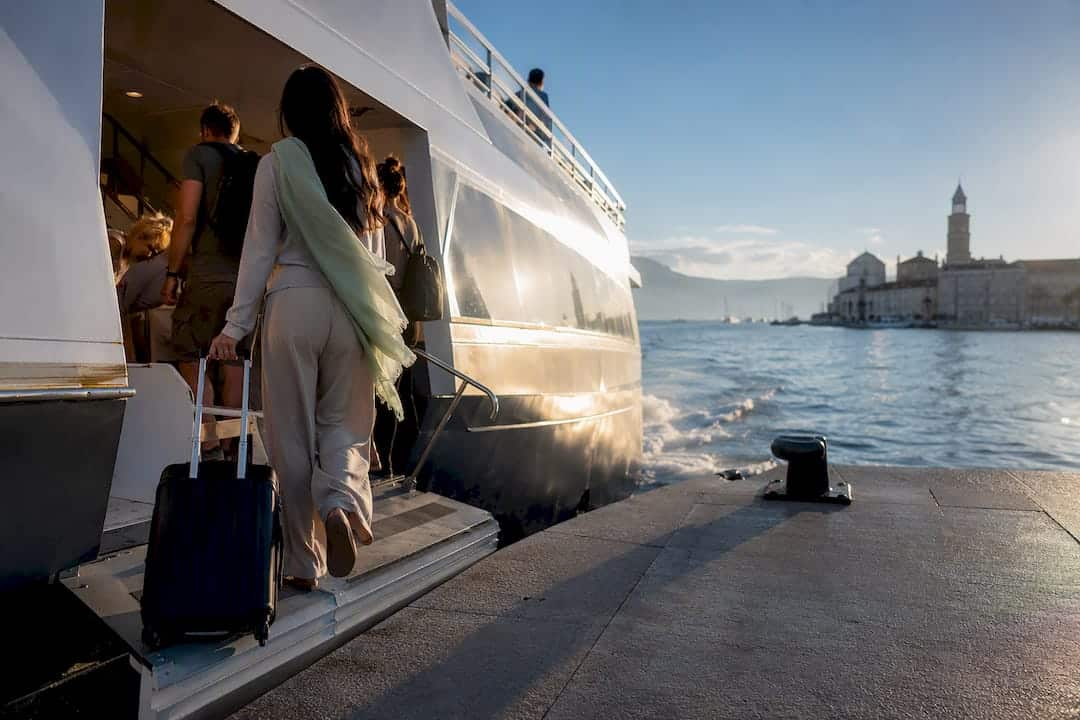
- Walk-on catamaran passengers: add 30 minutes of port arrival buffer to the 50 to 65 minute crossing, plus another 10 to 15 minutes to walk from the Hvar Town harbor to your accommodation. Total realistic window: about 90 minutes to 2 hours from leaving your Split hotel to arriving at your Hvar destination.
- Car ferry travelers: add the recommended 45 to 60 minute check-in window, the 110 to 120 minute crossing, and the 20 to 30 minute drive from Stari Grad. That’s close to 3.5 hours gate-to-gate before you’ve even parked in Hvar Town.
- Anyone with tight connections (same-day flights, cruise departures, dinner reservations) should build in a spare 30 minutes beyond these totals, since Adriatic sailings run on generally reliable but not perfectly punctual schedules.
Luggage matters here too. A rolling suitcase across cobblestones in Hvar Town takes longer than it looks on a map, and a timed private pickup removes that guesswork entirely for travelers who’d rather not calculate walking speed on vacation.
Why We Treat Ferry Timing as a Planning Problem, Not a Guarantee
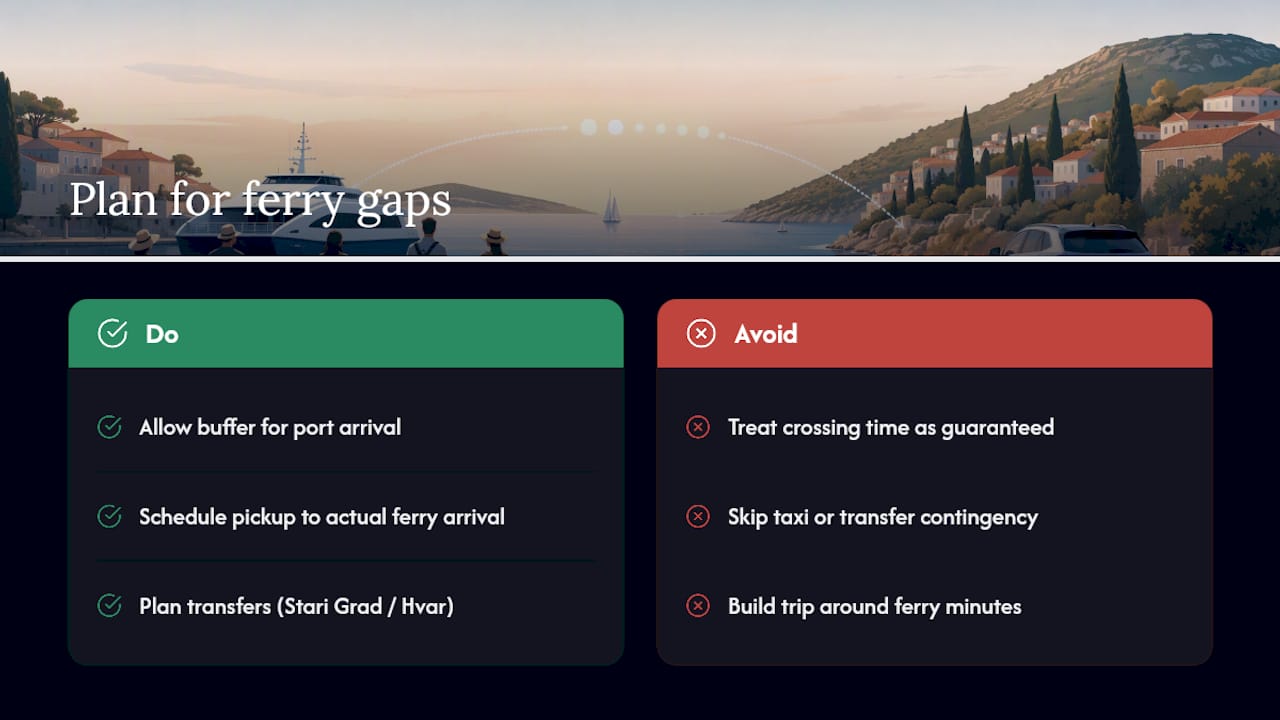
Public ferry schedules are dependable in the way a train timetable is dependable: mostly, until weather, demand, or a missed reservation window gets in the way. What we see most often with travelers is not confusion about the crossing time itself, but a miscalculation of everything around it, the port arrival buffer, the Stari Grad transfer, the taxi line that doesn’t exist when you need it most.
Our approach at Croatia-private-transfers has always been to treat that gap as the actual problem worth solving. A pickup timed precisely against your ferry’s real arrival, whether that’s Hvar Town harbor or Stari Grad port, does more for a trip’s smoothness than shaving five minutes off the crossing itself ever could. We’d rather build the itinerary around your schedule than ask you to build your schedule around a ferry line.
— Croatia
Book a Private Transfer That Matches Your Ferry Arrival
Private transfer services can provide a pickup time that’s built around your actual arrival, not a fixed sailing. When you land in Stari Grad and still have a 20 to 30 minute drive ahead, or when you’d rather skip the public catamaran altogether, a private transfer or bespoke boat option closes that gap without the guesswork.

English-speaking drivers and premium vehicles can meet groups, families, and business travelers right at the port, whether that’s Split’s ferry terminal or Stari Grad’s harbor. For travelers who want to bypass scheduled sailings entirely, our boat tours offer a more flexible route to Hvar, timed to your day rather than a printed timetable. This matters most for groups with luggage, tight connections, or a preference for comfort over crowded summer decks.
Booking a lead time of a few days is usually enough outside peak season, though July and August reservations fill faster. Visit our private transfers page to check availability and arrange a pickup timed to your exact ferry or flight.
Where to Check Live Ferry Times Before You Travel
- Jadrolinija’s official Split to Stari Grad page for booking vehicle space and checking current departures
- The Jadrolinija timetable PDF for seasonal schedule detail, including check-in advice and night sailing notes
- Ferryhopper for comparing catamaran operators and current fare ranges side by side
Recheck your chosen sailing within 24 to 48 hours of departure. Schedules shift with the season, and a July timetable rarely survives unchanged into October.