


How to Arrange City-to-City Transfers: A Traveler’s Guide
Arranging a city-to-city transfer means securing private, door-to-door transportation between two cities so you travel on your schedule, in your own vehicle, without layovers or shared stops. The most effective approach combines a logical route sequence, a reputable provider with licensed vehicles and professional chauffeurs, and a booking made well in advance. Done right, intercity transport feels less like logistics and more like the first chapter of the journey itself.
Here is what every well-arranged transfer involves:
- Route selection: Choose a geographic sequence that moves forward, not back and forth.
- Vehicle choice: Match the vehicle size to your group and luggage before booking.
- Provider vetting: Confirm licensing, driver credentials, and customer support availability.
- Advance booking: Reserve early to lock in availability and preferred pickup times.
- Departure prep: Prepare arrival notes, share pickup details, and build in buffer time.
Table of Contents
- Why private city-to-city car service is worth it
- How to book a city-to-city transfer: step by step
- Common U.S. routes and what to expect for travel time
- Cancellation policies, pricing, and what to expect at pickup
- Expert tips for planning efficient city-to-city transfers
- Croatia-private-transfers brings this level of care to every route
- Key Takeaways
Why private city-to-city car service is worth it
Private city transfer services offer something public transport simply cannot: the journey begins at your door and ends at your destination, with no transfers, no waiting on platforms, and no shared space with strangers. For families, business travelers, or anyone carrying meaningful luggage, that distinction reshapes the entire travel day.
Professional chauffeurs bring punctuality and local knowledge that GPS alone cannot replicate. A licensed driver who knows the corridor between, say, Washington, D.C., and Philadelphia will anticipate traffic patterns and adjust the route accordingly. Door-to-door reliability on long-distance trips significantly improves the passenger experience compared to public alternatives.
Flexibility is another genuine advantage. You set the pickup time, choose the vehicle, and can request stops along the way. There is no fixed timetable to chase and no penalty for a slight schedule shift when your morning runs long.
Pro Tip: When evaluating city transfer services, ask specifically whether the driver monitors your flight or meeting schedule in real time. Providers who do this proactively are the ones worth booking.
- Door-to-door pickup with no intermediate stops
- Private cabin with no shared passengers
- Flexible departure times set by you
- Professional, licensed chauffeurs with route knowledge
- Responsive customer support throughout the journey
How to book a city-to-city transfer: step by step
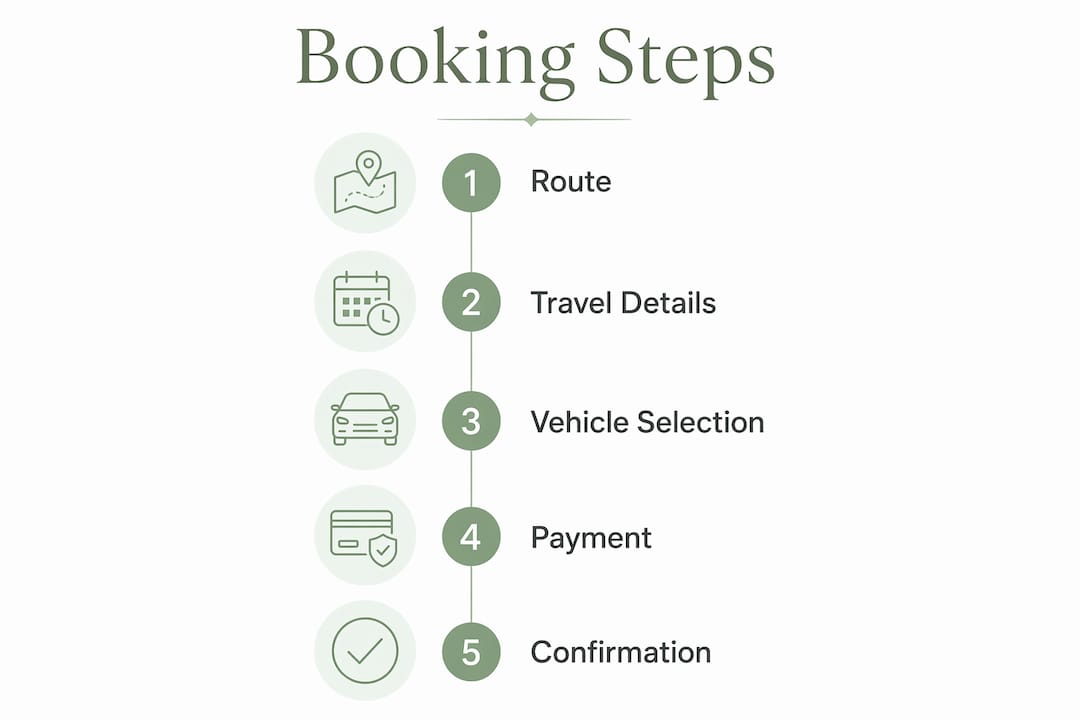
Booking intercity transport is straightforward when you follow a clear sequence. The steps below apply whether you are arranging a single route or a multi-city itinerary.
- Research providers. Look for services with licensed vehicles, trained drivers, and verifiable customer support. Read reviews that mention punctuality and communication specifically.
- Select your route and vehicle. A sedan suits two to three passengers traveling light. A minivan or SUV fits families or groups with luggage. Larger coaches serve groups of eight or more.
- Set pickup details. Specify the exact address, preferred departure time, and any special requests such as child seats or accessibility needs.
- Confirm payment and booking. Most reputable services accept credit cards and send a written confirmation. If you do not receive one, follow up with customer support before the travel date.
- Book in advance. Reserving well ahead of your travel date secures availability and, often, better pricing. Last-minute bookings risk limited vehicle options.
| Booking step | What to prepare |
|---|---|
| Route selection | Origin address, destination address, preferred travel date |
| Vehicle choice | Passenger count, luggage volume, any accessibility needs |
| Pickup details | Exact pickup address, departure time, special requests |
| Payment and confirmation | Credit card, written booking confirmation, driver contact |
| Pre-departure review | Arrival notes, backup contact, buffer time built in |
For private intercity travel, having all of this information ready before you contact a provider cuts the booking process to minutes.
Common U.S. routes and what to expect for travel time
Popular city-to-city routes in the United States cover a wide range of distances, and door-to-door transit time is the metric that actually matters, not the highway distance alone. Traffic, time of day, and route choice all shift the real travel experience considerably.

| Route | Approximate distance | Typical door-to-door time |
|---|---|---|
| New York City to Boston | — | Typical door-to-door time varies depending on traffic and conditions |
| Los Angeles to San Diego | — | Typical door-to-door time varies depending on traffic and conditions |
| Washington, D.C., to Philadelphia | — | Typical door-to-door time varies depending on traffic and conditions |
| Chicago to Milwaukee | — | Typical door-to-door time varies depending on traffic and conditions |
| San Francisco to Sacramento | — | Typical door-to-door time varies depending on traffic and conditions |
| Miami to Orlando | — | Typical door-to-door time varies depending on traffic and conditions |
Pricing on these routes varies by vehicle class, provider, and demand. Flat-rate pricing is standard for private transfers, which means you know the total cost before departure rather than watching a meter climb. Always confirm whether tolls, gratuity, or airport fees are included in the quoted price.
Cancellation policies, pricing, and what to expect at pickup
Most city transfer services use a flat-rate pricing model, where the total is fixed at booking regardless of traffic or minor route changes. Some providers add fees for extra stops, late-night pickups, or oversized luggage, so reading the full rate card before confirming is worth the two minutes it takes.
Cancellation terms vary, but most reputable services allow changes or cancellations up to a defined window before pickup, with full or partial refunds depending on timing. Policies tighten considerably for same-day cancellations.
- Pricing structure: Flat rate is most common; confirm whether tolls and gratuity are included.
- Extra fees: Watch for surcharges on late-night pickups, additional stops, and large luggage.
- Cancellation window: Most providers offer refunds for cancellations made well in advance; same-day changes typically carry a fee.
- Pickup expectations: Your driver will confirm arrival by message or call. Vehicles are clean, air-conditioned, and meet the class you booked.
- Customer support: A responsive contact number during travel is a baseline requirement, not a premium feature.
Understanding what to expect from private transportation before you book removes nearly all the uncertainty from the experience.
Expert tips for planning efficient city-to-city transfers
The difference between a smooth transfer and a stressful one usually comes down to planning decisions made days before departure, not the day itself.

Build 30–60 minutes of buffer time into every transfer, even with a private service. Unexpected delays, a slow hotel checkout, or a last-minute bag repack can compress your timeline fast. Experienced travel planners treat that buffer as non-negotiable.
Plan your route in a logical geographic sequence that moves forward rather than doubling back. For multi-city trips, open-jaw flights — arriving in one city and departing from another — eliminate the backtracking that wastes entire travel days.
Pro Tip: Prepare a simple arrival sheet for each city: how you are arriving, the exact address of your accommodation, and what to do if your driver is delayed. Sharing this with your provider in advance prevents confusion at pickup.
- Allow 30–60 minutes of buffer at every transfer point.
- Sequence cities geographically to avoid retracing your route.
- Use open-jaw flights on multi-city trips to save time.
- Measure door-to-door time, not just highway distance.
- Choose providers with live customer support, not just email contact.
- Prepare written arrival notes and share them with your driver before departure.
Croatia-private-transfers brings this level of care to every route
Croatia-private-transfers specializes in exactly the kind of curated, door-to-door private transport that this guide describes. Where generic booking platforms hand you a confirmation number and wish you luck, Croatia-private-transfers pairs every journey with a licensed, English-speaking chauffeur who knows the route, monitors your schedule, and meets you at the door. Vehicles range from elegant sedans to spacious minivans, all modern and air-conditioned, chosen to match your group size and comfort expectations.
The service covers private transfers across Croatia and beyond, including cross-border routes to Montenegro, with the same standard of professionalism on every leg. Whether you are planning a single transfer or a multi-stop itinerary, the booking process is clear, the pricing is transparent, and support is available throughout your journey. Book your private transfer and travel with the confidence that every detail has been arranged before you leave.
Key Takeaways
Arranging a reliable city-to-city transfer requires a logical route, the right vehicle, a vetted provider, and a booking made well ahead of your travel date.
| Point | Details |
|---|---|
| Plan the route first | Sequence cities geographically to avoid backtracking and reduce total travel time. |
| Door-to-door time is the real metric | Measure full journey time from accommodation to accommodation, not just highway distance. |
| Book in advance | Early reservations secure vehicle availability and give you access to better pricing options. |
| Build in buffer time | Allow 30–60 minutes at every transfer point to absorb unexpected delays without stress. |
| Croatia-private-transfers | Offers licensed chauffeurs, transparent pricing, and door-to-door private transfers across Croatia and beyond. |