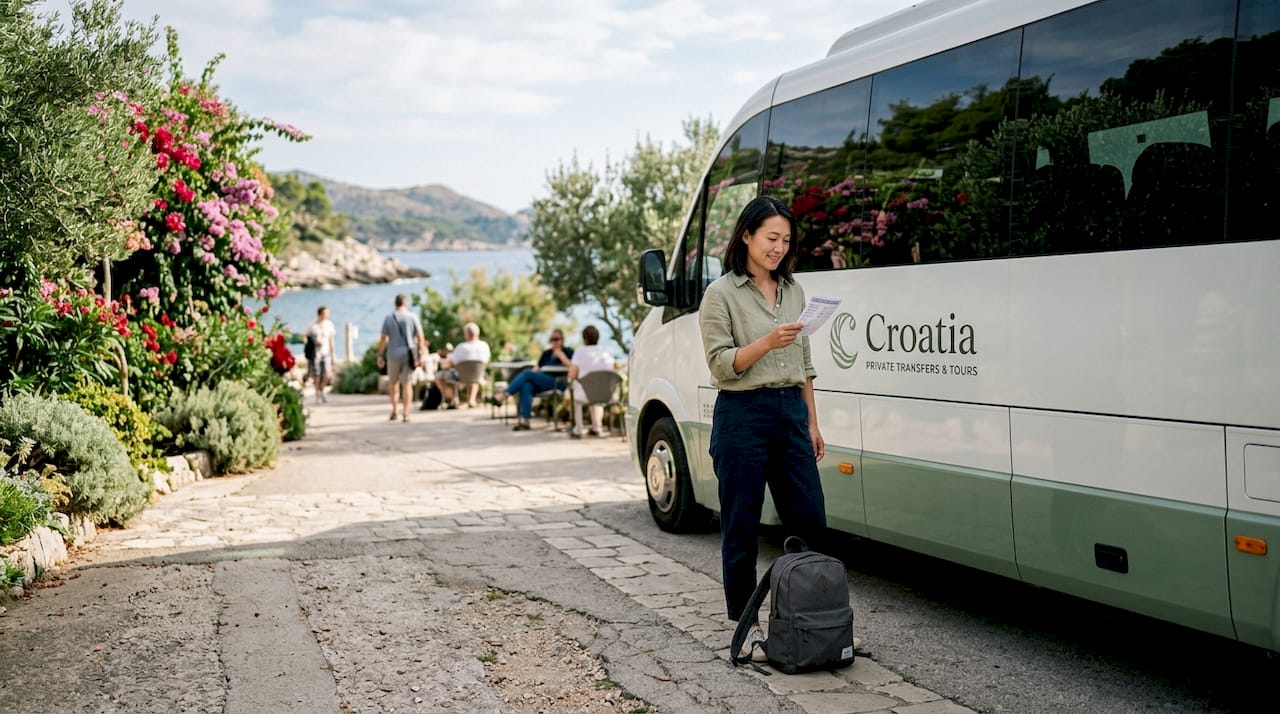


The Real Benefits of Tailored Itineraries for Travelers
TL;DR:
- Personalized itineraries offer travelers significantly higher satisfaction, greater flexibility, and less stress than standard packages.
- They include tailored activities, geographic flow, and built-in free time, allowing spontaneous exploration and genuine immersion.
Most travelers assume that a custom travel plan means endless spreadsheets, rigid hour-by-hour schedules, and the pressure to stick to a plan that leaves no room for spontaneity. The opposite is true. The benefits of tailored itineraries go far beyond convenience. They translate into measurably higher satisfaction, dramatically reduced travel stress, and the kind of freedom that generic package tours simply cannot offer. This article breaks down exactly what makes personalized vacation plans so powerful, how to build one that works for your style, and why experienced travelers keep returning to custom planning.
Table of Contents
- Key takeaways
- What the benefits of tailored itineraries actually look like
- Why the advantages of personalized trips are backed by data
- Common misconceptions about tailored planning
- How to build your own personalized vacation plan
- My honest take on what custom travel actually delivers
- Experience Croatia with a plan built for you
- FAQ
Key takeaways
| Point | Details |
|---|---|
| Higher traveler satisfaction | Personalized itineraries deliver 40% higher satisfaction than standard package tours. |
| Built-in freedom matters | The best plans reserve 20-30% of your time for spontaneous exploration, not more scheduled stops. |
| Expert review reduces stress | Hybrid planning that combines digital tools with expert curation avoids costly errors and cognitive overload. |
| Tailored pacing beats quantity | Fewer, better-chosen activities in a personalized plan outperform a packed generic schedule. |
| Flexibility is a design feature | A well-crafted bespoke itinerary includes anchor bookings alongside open windows, not rigid timelines. |
What the benefits of tailored itineraries actually look like
A tailored itinerary is a travel plan built specifically around your priorities, pace, and style. It is not a generic tour template with your name added to the top. Think of it as the difference between a made-to-measure suit and something pulled off a rack. Both cover the same ground, but only one actually fits.
The core components of a well-designed personalized vacation plan typically include:
- Flexible scheduling that accounts for how you like to move through a day, whether you prefer slow mornings with a strong coffee before exploring, or early starts to beat the crowds at major sites
- Personalized activities chosen around your genuine interests, whether that is wine tasting in Dalmatia, hiking to waterfalls, touring UNESCO World Heritage sites, or simply lingering in a coastal village
- Built-in breathing room so that unexpected discoveries and local recommendations have space to unfold naturally
- Logical geographic flow that eliminates backtracking and wasted travel time between destinations
Compare this to a pre-made group tour package, which follows a fixed route for an average traveler who may share very few of your preferences. Or to fully DIY planning, which can quickly spiral into an overwhelming list of tabs, conflicting reviews, and decision fatigue before the trip even begins. A truly personalized travel guide sits between those two extremes and takes the best from each.
Pro Tip: Before you start building any itinerary, write down three things you absolutely must experience and three things you want to avoid. That clarity alone will shape a dramatically better plan from the outset.
Why the advantages of personalized trips are backed by data
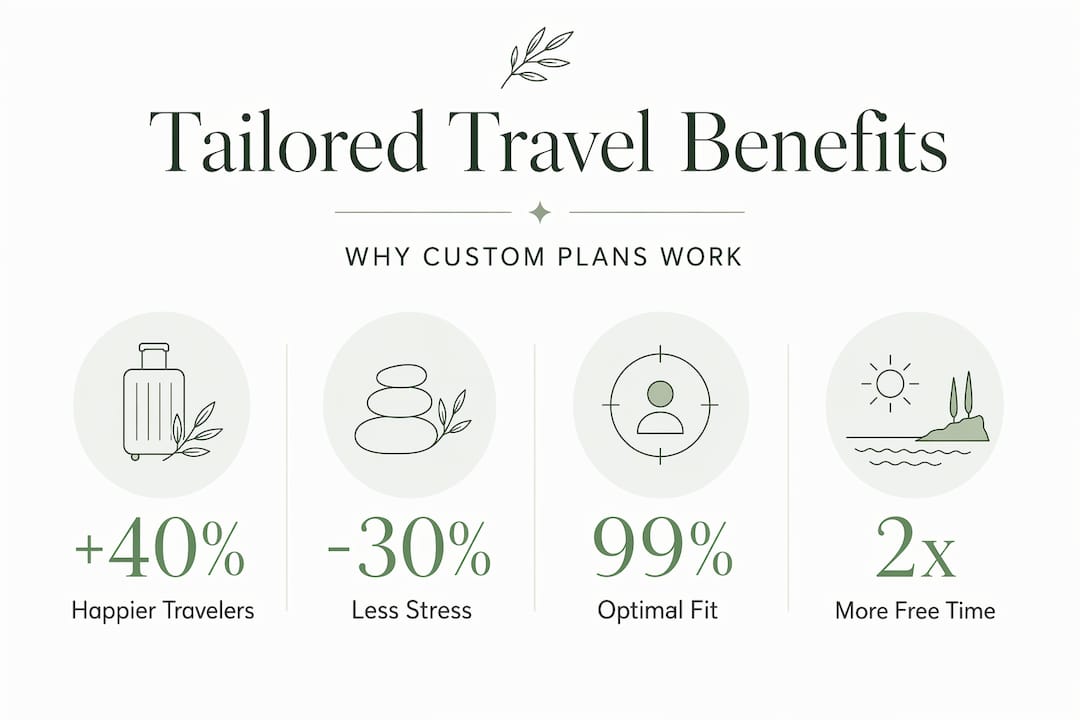
The case for custom travel is not just anecdotal. Travelers using personalized itineraries report 40% higher satisfaction than those on standard package tours. That is a significant gap, and it has everything to do with alignment between what a traveler actually wants and what they experience on the ground.
A Globus survey of 25,000 North American travelers found that 91% want flexibility within a well-planned itinerary, and an extraordinary 97% want free time reserved intentionally. That tells you something powerful. People do not want a blank calendar. They want a thoughtfully designed structure with space to breathe inside it.
“Well-designed travel foundations give travelers the confidence to explore more deeply and feel genuine ownership of their journey.” — Globus CMO Steve Born, via Travel Research Online
The emotional benefits are equally real. Custom trips reduce traveler cognitive load significantly by removing the constant decision-making that exhausts so many travelers. When you are not second-guessing every meal, transport, or timing choice, you free up mental energy for the experience itself. You are present. You notice the quality of the light on the Adriatic at dusk. You linger over a conversation with a local. That kind of presence is the actual point of travel.
The bespoke itinerary benefits also include a logistical edge that is easy to overlook. A good personalized plan routes your days geographically, so you are not zigzagging across a region and wasting hours in transit. For a country like Croatia, where stunning destinations are spread across coastline, islands, and inland national parks, that geographic intelligence makes an enormous difference to the quality of your experience.

Common misconceptions about tailored planning
The biggest myth about custom travel planning is that more planning equals more stress. In practice, the opposite holds true. Strategic subtraction, meaning the deliberate choice to include fewer activities with greater intention, leads to a calmer, richer trip. Overplanning causes travel fatigue, and the best itineraries correct for this by building anchor bookings alongside open windows of unscheduled time.
The second misconception is about digital tools. Many travelers assume that an AI-generated itinerary or a drag-and-drop planning app handles everything. The reality is more nuanced. AI travel planning often saves time during the drafting stage, but the time saved is frequently lost during verification. Booking errors, outdated hours, inaccessible routes, and seasonal closures require human expertise to catch. A hybrid planning approach that combines an AI-generated draft with expert manual review consistently outperforms either method alone.
The same logic applies to planning formats. Drag-and-drop itinerary tools reduce editing time but tend to create reconciliation stress when plans change. Printed PDF itineraries offer stability and clarity once finalized but demand significant upfront effort. The right tool depends on your cognitive style and how volatile your trip is likely to be.
Here is how the three main planning approaches compare:
| Approach | Strengths | Weaknesses |
|---|---|---|
| Tailor-made with expert help | High personalization, error-checked, stress-reducing | Requires clear communication upfront |
| Pre-made package tour | Low effort to book, structured schedule | Inflexible, averaged for group preferences |
| Fully DIY planning | Maximum control, budget flexible | High cognitive load, error-prone, time intensive |
Pro Tip: Match your planning tool to the complexity of your trip. A simple weekend break may work fine with an app. A multi-destination trip through multiple countries deserves expert curation and a reviewed PDF itinerary you can rely on.
How to build your own personalized vacation plan
Applying the advantages of trip customization to your next trip does not require hiring an expensive travel agent, though expert guidance certainly helps. It does require a clear starting point and a few smart decisions early in the process.
- Define your travel goals and style. Are you seeking cultural immersion, outdoor adventure, culinary discovery, or pure relaxation? Knowing this before you build anything prevents the plan from drifting into generic territory.
- Set your anchor bookings first. Identify two or three fixed experiences that define the trip, a boat tour of the Dalmatian islands, a guided walk through Dubrovnik’s old city, a wine evening in Pelješac. Build the rest of the days around those anchors, not the other way around.
- Reserve 20 to 30 percent of your time as unscheduled. This is not wasted time. It is the space where the best travel memories tend to happen. Spontaneous finds, local recommendations, and rest all belong here.
- Verify every booking through trusted sources. Do not assume that an AI-generated suggestion is accurate for the current season. Local expertise catches what algorithms miss.
- Integrate transportation as part of the plan, not an afterthought. For families, couples, and small groups especially, private transfers between destinations shape the entire rhythm of a trip. A reliable, comfortable transfer from Split to Dubrovnik is not just logistics. It is two hours of coastal scenery you can actually enjoy rather than stress through.
- Adjust the plan for your group type. Families with young children need different pacing than couples on a romantic trip. Groups of friends have different priorities than solo travelers. A personalized plan accounts for these distinctions explicitly, not as an afterthought.
For travelers exploring Croatia specifically, understanding the unique travel itineraries available across the coast, islands, and national parks makes the planning process far more intuitive. Local knowledge is not a luxury. It is what turns a good trip into an exceptional one.
My honest take on what custom travel actually delivers
I have worked with enough travelers to know that the ones who struggle most on trips are not those with the smallest budgets. They are the ones who tried to fit too much in, trusting a rigid itinerary that left no room for reality. The destination did not disappoint them. The plan did.
What I have come to believe, genuinely, is that the true advantage of personalized trips is not about access to exclusive places or premium vehicles, though those matter. It is about effortless flow. When logistics are handled expertly, when your route makes geographic sense, when you have room to be surprised, travel stops feeling like an achievement and starts feeling like a gift.
The emotional ease of custom planning is something travelers rarely articulate until they experience it. One couple I worked with described it as “traveling without the background noise.” That is exactly right. When you are not mentally managing the logistics of the next three days, you are fully present in this one.
My honest advice: prioritize one beautiful, immersive experience per day over four rushed ones. Trust a plan that was built specifically for you. And make sure your transportation is as carefully chosen as your destinations. The drive along Croatia’s Dalmatian coast deserves to be experienced, not endured.
— Croatia
Experience Croatia with a plan built for you
If reading this has you rethinking how your next trip could feel, Croatia-private-transfers has spent years doing exactly this kind of thinking on behalf of travelers. The services go beyond transfers. They connect every part of your Croatian experience with care, local knowledge, and vehicles that make the journey as enjoyable as the destination.
Whether you are looking for multi-day tours with a private driver that weave through Dubrovnik, Split, Plitvice Lakes, and beyond, or private transfers across Croatia that connect your anchor destinations with comfort and punctuality, the team at Croatia-private-transfers builds each experience around your priorities. You can also explore exclusive boat tours tailored to your group’s pace and interests along the Adriatic coast. Every vehicle is modern, every driver is licensed and English-speaking, and every itinerary reflects what you actually want from your time in Croatia.
FAQ
What are the main benefits of tailored itineraries?
Tailored itineraries deliver higher traveler satisfaction, reduced stress, and more efficient use of time by aligning every element of a trip with your personal interests and pace. Research shows travelers on personalized plans report 40% higher satisfaction than those on standard packages.
Are tailored itineraries more expensive than package tours?
Not necessarily. While some bespoke services carry a premium, a well-designed personalized plan often eliminates wasted spending on activities you would not enjoy, over-scheduled days that require recovery, and costly errors from unverified DIY planning.
How much free time should a tailored itinerary include?
Most travel experts recommend reserving 20 to 30 percent of your trip as unscheduled time. This space allows for spontaneous discovery, rest, and the unexpected moments that often become the highlights of any journey.
Can I use AI tools to build my personalized vacation plan?
AI tools are useful for generating initial drafts quickly, but they require thorough verification to avoid errors with booking availability, seasonal closures, and routing. A hybrid approach that pairs an AI-generated draft with expert review produces the most reliable results.
Why do tailored itineraries reduce travel stress?
Custom itineraries remove the constant decision-making that drains travelers throughout a trip. When logistics are handled in advance by someone who knows the destination, you stop second-guessing and start experiencing, which is the whole point of being there.