

When to Skip Driving: Croatia Motorways and Tolls 2026 Guide
Croatia does not use a vignette system. Every motorway charges by section, and you pay at toll barriers in euros by cash, card, or an ENC electronic transponder. Whether you’re renting a car in Zagreb or driving your own vehicle down to the coast, check the official HAC toll rates before you leave, and consider an ENC device if you’ll pass through barriers more than a handful of times.
TL;DR:
- Tolls on Croatian motorways are charged by section with cash, card, or ENC transponder, depending on whether the system is open or closed.
- Vehicle categories are based mainly on height and axles; misclassification can lead to incorrect charges or lane issues.
- ENC devices offer discounts of roughly 21.74% and are most cost-effective for frequent travelers crossing multiple tolls; short-term visitors may not recoup setup costs.
- Peak season traffic during summer weekends significantly increases toll plaza wait times, so planning routes to avoid busy times saves delays.
- Croatia’s planned Crolibertas free-flow tolling system aims to replace barriers by 2027, but most motorways still require ticket and payment management today.
Table of Contents
- How Does the Croatian Toll System Actually Work?
- What Vehicle Category Applies to Your Car?
- Cash, Card, or ENC: Which Payment Method Should You Use?
- How Much Will Tolls Actually Cost on Your Route?
- What Are the Best Times to Drive Croatia’s Toll Roads?
- What Is Crolibertas and How Will It Change Croatian Tolls?
- Toll Payment Rules You Need to Know Before You Drive
- Are There Toll Discounts for Residents or Disabled Drivers?
- What Safety Rules Apply When Approaching a Toll Plaza?
- What Are the Alternatives to Croatia’s Tolled Motorways?
- Official Pages and Tools to Bookmark
- When Booking a Private Transfer Beats Driving Yourself
- Skip the Tolls, Not the Trip: Book a Private Transfer
- Sources
How Does the Croatian Toll System Actually Work?
Croatia runs two types of toll systems, and knowing which one you’re on changes what you do at the barrier. On a closed system, you take a ticket when you enter the motorway and pay the exact amount owed when you exit, based on distance traveled. On an open system, you pay a fixed toll at a single plaza positioned along the route, no ticket required.
Most of the A1 (Zagreb to Split to Dubrovnik direction), A3, and A4 corridors run as closed systems, so grabbing that entry ticket matters. Lose it, and you’ll likely be charged the maximum possible fare for that stretch on exit. Drivers arriving from Slovenia or Austria, where vignettes are standard, sometimes miss this step entirely because they’re conditioned to expect a sticker, not a ticket.
Here’s what determines your process at any given plaza:
- Closed system: ticket on entry, payment on exit, amount reflects actual distance driven.
- Open system: one flat toll paid at a fixed barrier, no ticket needed.
- ENC-equipped vehicles: automatic detection at dedicated lanes on either system, no manual ticket handling.
Signage before each plaza tells you which lane type applies, so slow down early and read it rather than guessing at the barrier.
What Vehicle Category Applies to Your Car?
HAC prices tolls by vehicle category, not a flat per-car rate, and the category depends on height and axle count more than anything else. Get this wrong (say, by ignoring a roof box), and you risk being charged incorrectly or waved into the wrong lane.
The standard categories break down as:
- Category IA: motorcycles.
- Category I: passenger cars and vans under 1.9 meters in height with two axles.
- Category II: vehicles between 1.9 and 3.5 meters, or cars towing a trailer or small camper.
- Category III: vehicles over 3.5 meters or with three axles, covering larger vans and small trucks.
- Category IV: heavy vehicles with four or more axles.
A standard sedan or a family SUV sits in Category I. Add a roof box that pushes your vehicle over 1.9 meters, though, and you may need Category II pricing instead. All tariffs are distance-based and already include VAT, and the Gov confirms this structure while linking out to the section-by-section price lists. For exact euro figures on any specific stretch, the HAC toll rates pages list current per-section tariffs by category, and that’s the only place worth trusting for a number you’ll actually budget against.
Cash, Card, or ENC: Which Payment Method Should You Use?
All Croatian toll plazas accept euros in cash and by card, and staffed lanes remain common even as electronic collection expands. Carry some small change anyway. Card readers occasionally go offline at remote plazas, and nobody wants to hold up a line of cars during peak season while fumbling for a backup.
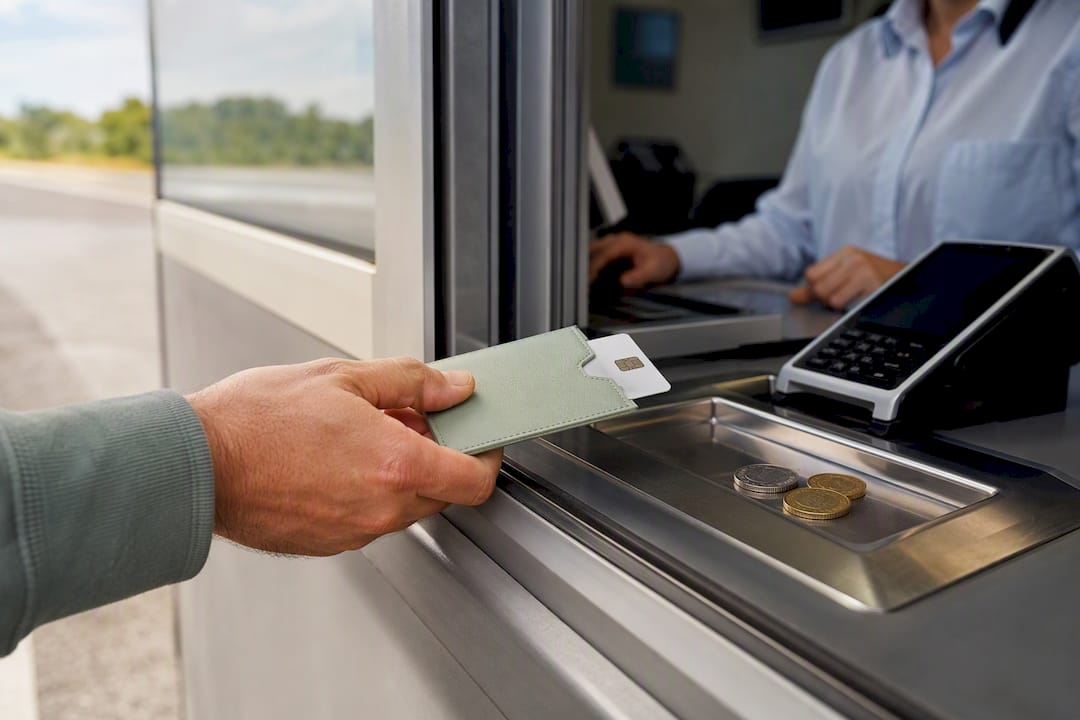
The ENC transponder is where things get genuinely useful for frequent drivers. It’s Croatia’s electronic toll collection system, similar in spirit to ETC systems elsewhere in Europe, and it comes in prepaid and post-paid versions depending on whether you’re a resident or a short-term visitor.
Setting one up looks like this:
- Buy the device at HAC sales points, petrol stations, or post offices, tying it to your license plate and vehicle category.
- Choose prepaid or post-paid based on how long you’ll be driving in Croatia and whether you hold a Croatian address.
- Load funds or link a package to activate the discount, which runs at roughly 21.74% off standard toll rates on ENC packages.
- Top up through the HAC ENC mobile app, at vendor outlets including INA, Petrol, Tifon, Crodux, and Hrvatska post, or via linked banking apps.
- Mount the device according to instructions so the dedicated ENC lane readers detect it cleanly at each plaza.
One detail trips up a surprising number of drivers: the ENC device is registered to a specific plate and vehicle category, not just to a person. Swap cars, rent a different vehicle, or bolt on a roof box that changes your height classification, and the device may misread your category unless you update the account first.
Pro Tip: If you’re only making one or two toll crossings during a short holiday, run the math before buying an ENC device. Between the device cost and setup, a single round trip often doesn’t recoup the discount, according to Croatia toll guides that break down the break-even point. ENC pays off when you’re crossing barriers repeatedly, not occasionally.
How Much Will Tolls Actually Cost on Your Route?
Budgeting for tolls comes down to knowing your entry and exit points, since Croatia’s closed systems charge by the exact distance between them rather than a flat corridor fee. HAC’s toll pages let you check current per-section rates before you drive, and that’s worth five minutes of your time if you’re planning a longer coastal run.
As a rough anchor, driving from Zagreb (Lučko interchange) to Split on the A1 runs approximately €26 for a standard Category I car, with motorcycles paying less under Category IA. Treat that figure as a planning estimate, not gospel. Toll rates shift periodically, and the only reliable number is whatever HAC’s live tables show on your travel date.
A few habits make this easier:
- Check the exact per-section rate on HAC’s official pages a day or two before departure.
- Add coastal detours or island ferry connections separately since ferry tariffs are listed apart from motorway tolls.
- Factor tolls into your total trip cost alongside fuel, since a Zagreb to Dubrovnik run can involve multiple toll sections stacking up.
For longer multi-city itineraries, tolls add up faster than most first-time visitors expect, often rivaling the fuel bill on a Zagreb to Split to Dubrovnik loop.
What Are the Best Times to Drive Croatia’s Toll Roads?
Summer weekends turn Croatia’s coastal motorways into slow, congested corridors, and HAC itself flags June through September as the peak congestion window, especially at Saturday changeover times when one wave of vacationers heads home and another arrives.
Plan around it where you can. Leaving before 8 a.m. or after 8 p.m. on Saturdays during peak season often shaves an hour or more off plaza wait times alone, before you even factor in the open road beyond it.
A few practical habits help:
- Check LiveTrafficHR or HAC’s own traffic status pages before you leave, not the night before.
- Watch for lane signage at each plaza: dedicated ENC lanes move fastest, combined lanes accept card and ENC, and staffed lanes handle cash.
- Never drift into an ENC-only lane without a working device. Barriers won’t lift, and reversing out of a toll lane in traffic is exactly the situation you want to avoid.
Pro Tip: If your route allows it, cross major plazas mid-morning on a weekday rather than late afternoon on a Friday. The difference in wait time during high season can be dramatic, even on the same stretch of the A1.
What Is Crolibertas and How Will It Change Croatian Tolls?
Crolibertas is Croatia’s planned free-flow tolling system, designed to eventually eliminate physical barriers by billing vehicles automatically as they pass under overhead camera portals. It’s built for EETS interoperability, meaning it should eventually recognize electronic tags issued anywhere in the European Electronic Toll Service network, not just Croatian ENC devices.
Rollout is underway but not complete. Portal installation across sections including the A2 continued through 2026, with wider implementation targeted toward 2027. Barriers still operate on most motorways in the meantime, so don’t expect to skip the ticket-and-pay routine yet.
What this means practically for drivers:
- Keep your vehicle registration details accurate, since free-flow billing depends on correctly matching plates to accounts.
- Heavy vehicle operators should expect an ENC or plate-billing arrangement to remain necessary even as free-flow expands.
- Watch operator announcements from HAC and Crolibertas directly rather than relying on secondhand summaries, since rollout timing can shift by corridor.
Toll Payment Rules You Need to Know Before You Drive
Each payment method carries its own quirks, and most toll-related frustration on Croatian motorways traces back to one of a handful of avoidable mistakes.
Cash and card work at every staffed lane, but card terminals occasionally fail at smaller, rural plazas. Keep at least €30 to €40 in small bills in the car for a longer coastal drive, since breaking a large bill at a toll booth during a queue is nobody’s idea of a good time.
ENC transponders require the device to be mounted correctly and visible to the lane reader, typically on the windshield behind the rearview mirror. A poorly mounted or expired device won’t trigger the barrier, and stopping in an automated lane to sort that out backs up traffic behind you fast. If your ENC balance runs low mid-trip, top up through the HAC ENC app or at a vendor location before your next plaza, not after you’ve already rolled into the ENC-only lane with insufficient funds.
The single most common mistake happens on closed systems: losing the entry ticket. Without it, the system defaults to charging the maximum toll for that entire corridor on exit, since there’s no way to verify your actual entry point. Keep the ticket on the dashboard or in the driver’s door pocket, not buried in a bag in the trunk.
Another frequent error involves vehicle changes. Swapping to a rental with different axle height or adding a roof box changes your vehicle category and can misalign your ENC billing until you update the account. Update it before you drive, not after a disputed charge shows up.
Are There Toll Discounts for Residents or Disabled Drivers?
Croatian toll pricing includes structured discounts, though they work differently depending on who’s asking and how often they drive.
It’s not a residency-based discount so much as a frequency-based one: the savings accumulate the more you drive tolled sections, which is why HAC and toll guides consistently recommend it for commuters and repeat travelers rather than one-time holiday drivers.
Croatian residents living near border-adjacent motorway sections sometimes qualify for local commuter arrangements through specific ENC package tiers, though these vary by section and require checking directly with HAC rather than assuming a blanket national discount applies.
For drivers with disabilities, Croatia’s broader road framework includes accessibility provisions tied to vehicle registration and parking, but toll-specific exemptions are not part of HAC’s standard published discount structure. Anyone in this situation should confirm current provisions directly through HAC’s customer service channels or gov.hr before travel, since eligibility rules and required documentation can be specific to the vehicle’s registration status rather than a simple universal waiver.
Nobody should assume a discount applies without confirming it against HAC’s current terms first. Rates and eligibility criteria shift periodically, and a guide, this one included, can only point you toward the right official source, not substitute for it.
What Safety Rules Apply When Approaching a Toll Plaza?
Toll plazas are one of the higher-risk points on any Croatian motorway simply because traffic slows sharply and lane choices multiply in a short distance. A few habits go a long way toward keeping that transition smooth.
Start slowing well before the plaza itself, not at the last second. Overhead signage usually indicates lane types a few hundred meters out, giving you time to merge into the correct lane rather than cutting across at the barrier. ENC lanes are typically marked with an electronic symbol, while combined and cash lanes carry different, clearly distinct signage.
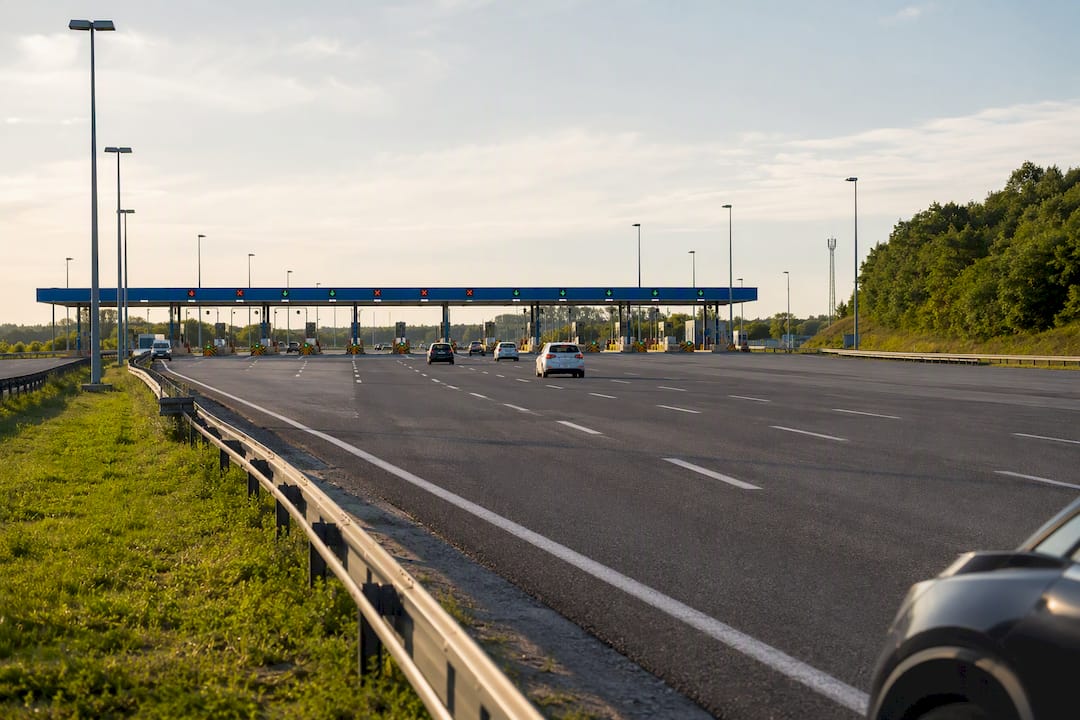
Never stop in an active toll lane to search for cash or sort out a ticket. If you realize too late that you’re in the wrong lane, it’s safer to proceed through and resolve any discrepancy afterward than to reverse or stop in moving traffic. Reversing at a toll plaza is one of the more common causes of minor collisions on Croatian motorways during peak season, when following distances shrink.
Keep a reasonable gap from the car ahead as you approach the barrier, since sudden stops are common when a driver ahead fumbles a card or misses the ticket slot. Once through, accelerate back to highway speed gradually and check your mirrors before merging, since traffic often bunches up right past the plaza as everyone re-enters the flow at different speeds.
What Are the Alternatives to Croatia’s Tolled Motorways?
Skipping tolls entirely means trading time for savings, and whether that trade makes sense depends heavily on your route and how much you value the scenery along the way.
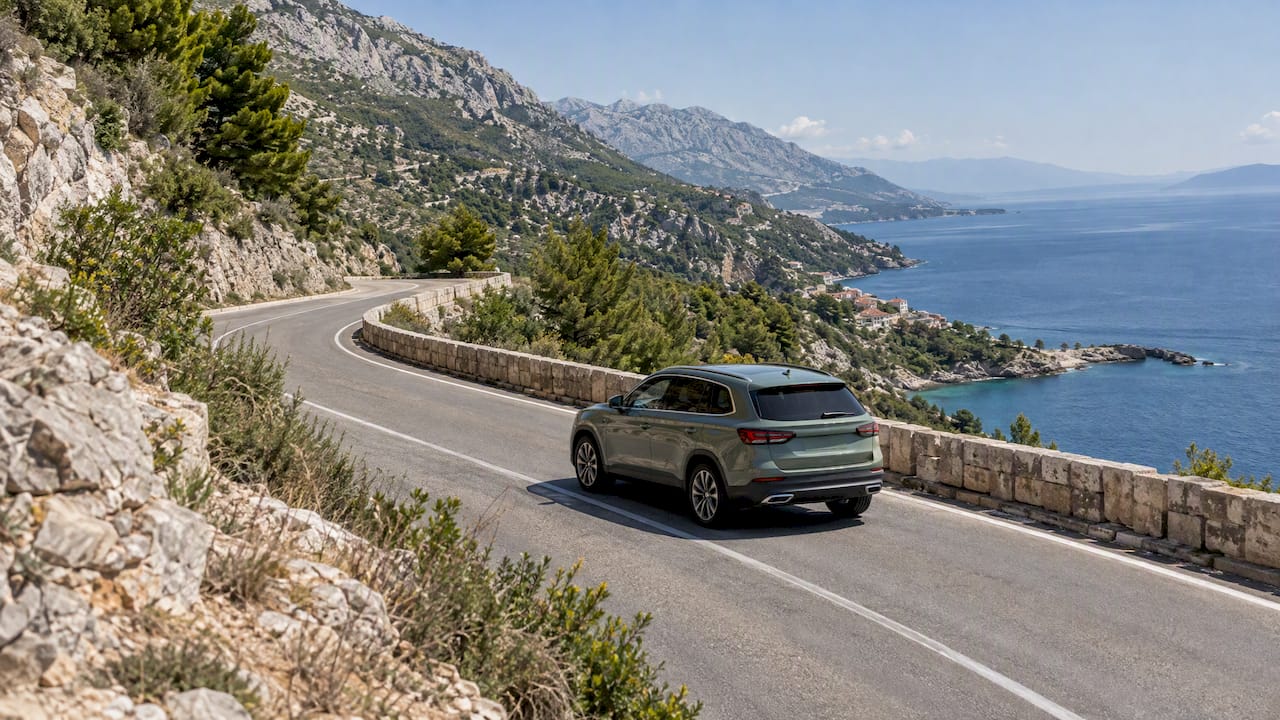
Croatia’s older state roads, the D-roads, run parallel to most motorway corridors and cost nothing to drive. The coastal D8, for instance, hugs the Adriatic for long stretches between Split and Dubrovnik, offering dramatic sea views the inland A1 simply doesn’t provide. The tradeoff is time: a drive that takes roughly four hours on the tolled A1 route can stretch well past six or seven hours on the coastal D8, especially through towns with lower speed limits and heavier local traffic.
For shorter hops between cities close together, the toll-free option often makes more sense anyway, since the toll savings on short sections are modest and the state road detour is minimal. For long-haul routes like Zagreb to Dubrovnik, most travelers find the time saved on the motorway easily justifies the toll cost, particularly with luggage, kids, or a flight connection waiting at the other end.
Travelers weighing scenic value against time can compare Croatia’s best coastal drives against the faster inland motorway option before committing to a full-day detour.
Official Pages and Tools to Bookmark
A handful of official sources cover everything you’ll need for live rates, ENC management, and traffic conditions.
- HAC toll rates: current per-section tariffs and vehicle category tables.
- HAC ETC/ENC page: device purchase, top-up channels, and package discount details.
- Gov: consolidated government overview linking to operator price lists and ferry tariffs.
- Crolibertas: rollout updates on the free-flow tolling system.
- HAC homepage: links to LiveTrafficHR for real-time congestion and plaza status.
When Booking a Private Transfer Beats Driving Yourself
Some travelers genuinely enjoy the logistics of toll tickets and ENC top-ups. Most don’t, especially after a long flight, with kids in the back seat, or with a wine tour on the agenda that ends better without anyone behind the wheel.
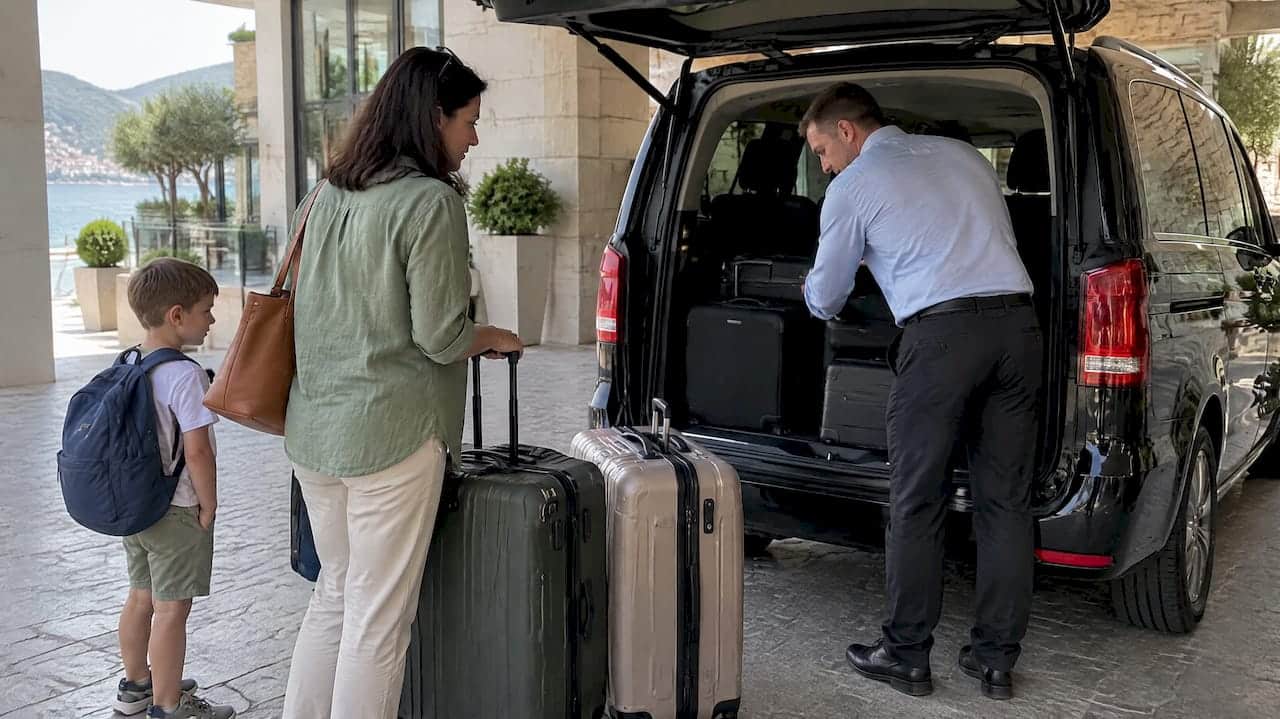
Private transfers make the most sense for small groups, families with heavy luggage, and travelers who’d rather watch the Dalmatian coast than a lane-selection sign at 80 km/h. When you book with a driver, toll tickets, ENC balances, and plaza lane choices become someone else’s job entirely, folded quietly into the fare you already agreed to.
— Croatia
Skip the Tolls, Not the Trip: Book a Private Transfer
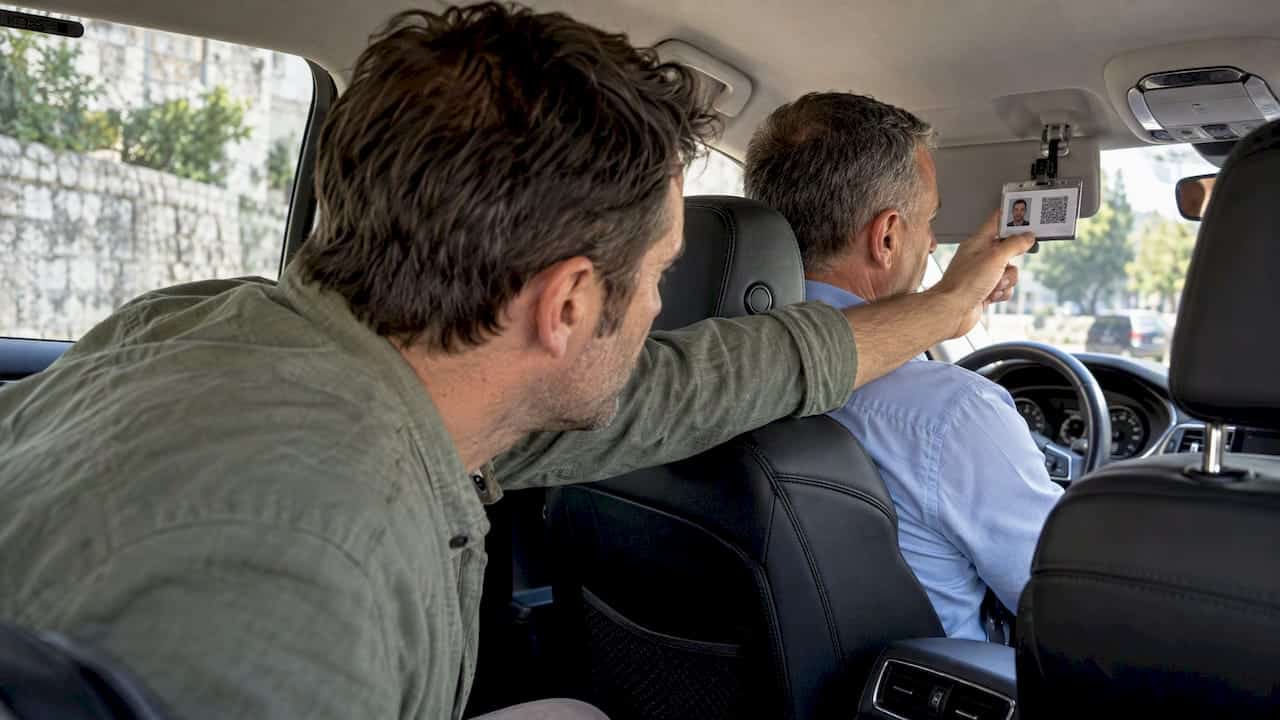
Using a private transfer service can be an alternative to renting a car and managing your own toll tickets, ENC top-ups, and plaza lane guessing across the country’s motorway network. Such transfers often include a driver handling toll payments and route navigation for you.
Whether you’re heading from Zagreb to the coast, connecting between cities on a multi-day itinerary, or just want the Split to Dubrovnik run without touching a toll booth, a private transfer removes the entire payment layer from your trip. It’s a particularly easy call for travelers arriving with a flight connection to catch, a family in tow, or simply no interest in navigating an unfamiliar motorway system on unfamiliar roads.
Explore private transfers across Croatia and get a quote for your route, or check why travelers choose private transportation over self-driving before you lock in your itinerary.
Sources
- Toll rates | Hrvatske autoceste
- ETC | Hrvatske autoceste
- Gov
- Vignette for Croatia? None Needed — 2026 Toll Guide
- Naslovna – Crolibertas