
Driving Safety in Croatia: The Complete Road Guide
Buckle your seat belt, stow your phone, and check your tires before you turn the key. That is the short answer to staying safe on Croatian roads. Whether you are navigating the sweeping curves of the Dalmatian coast or cruising the A1 motorway toward Split, road safety in Croatia depends on knowing the local rules, reading the conditions, and planning ahead. If you are traveling between November 15 and April 15, winter equipment is not optional. And if anything goes wrong, three numbers matter most: 112 (emergency services), 192 (police), and HAK roadside assistance at 1987.
Immediate actions before you drive:
- Seat belt on for every passenger, every trip
- Phone on silent and out of reach (hands-free only if you must use it)
- Speed adjusted to conditions, not just the posted limit
- Zero alcohol if you are a professional driver or new driver; 0.5 g/L BAC limit for others
- Rest if you feel tired. Pull over. No destination is worth the risk.
Emergency contacts: Call 112 for any life-threatening emergency. Call 192 for police (required when there are injuries or significant property damage). Call HAK at 1987 for roadside mechanical assistance anywhere on the Croatian road network.
Key Takeaways
Driving safely in Croatia requires knowing the legal rules, reading the seasonal conditions, and having a clear plan for what to do when something goes wrong.
| Point | Details |
|---|---|
| Winter equipment dates | Mandatory November 15–April 15: M+S tires on all wheels, or summer tires with 4 mm tread plus snow chains. |
| Urban roads carry the highest risk | Croatia recorded 292 fatalities in 2021, with urban roads accounting for a disproportionate share. |
| Rest breaks reduce crashes | HZJZ and the 2026 “Vozi odmorno” campaign both confirm that short, regular stops measurably cut crash risk. |
| After an accident: call 192 | Police attendance is legally required for injuries, impairment, significant damage, or disputed fault. |
| Croatia-private-transfers | Licensed drivers, certified child seats, and planned rest stops make private transfers the safety-first choice for visitors. |
Table of Contents
- What does driving safety in Croatia actually require?
- Common hazards on Croatian roads and how to handle them
- Your pre-departure checklist for driving in Croatia
- What to do immediately after an accident in Croatia
- Where to find official road information in Croatia
- What Croatia’s road safety data tells you
- How a licensed private transfer reduces your driving risk
- Parking rules and penalties in Croatian cities and tourist areas
- Croatian traffic signs you may not recognize
- Driving on Croatian highways: rules and toll payment
- Why safety-first transfers matter more than most travelers expect
- A safer way to experience Croatia’s roads
- Sources
What does driving safety in Croatia actually require?
Croatian traffic law is grounded in the Zakon o sigurnosti prometa na cestama, which defines every driver’s duties, vehicle equipment requirements, and the enforcement roles of police and transport inspectors. Understanding what is legally mandatory versus what is simply good practice is the first step toward confident, safe driving.
Seat belts and child restraints
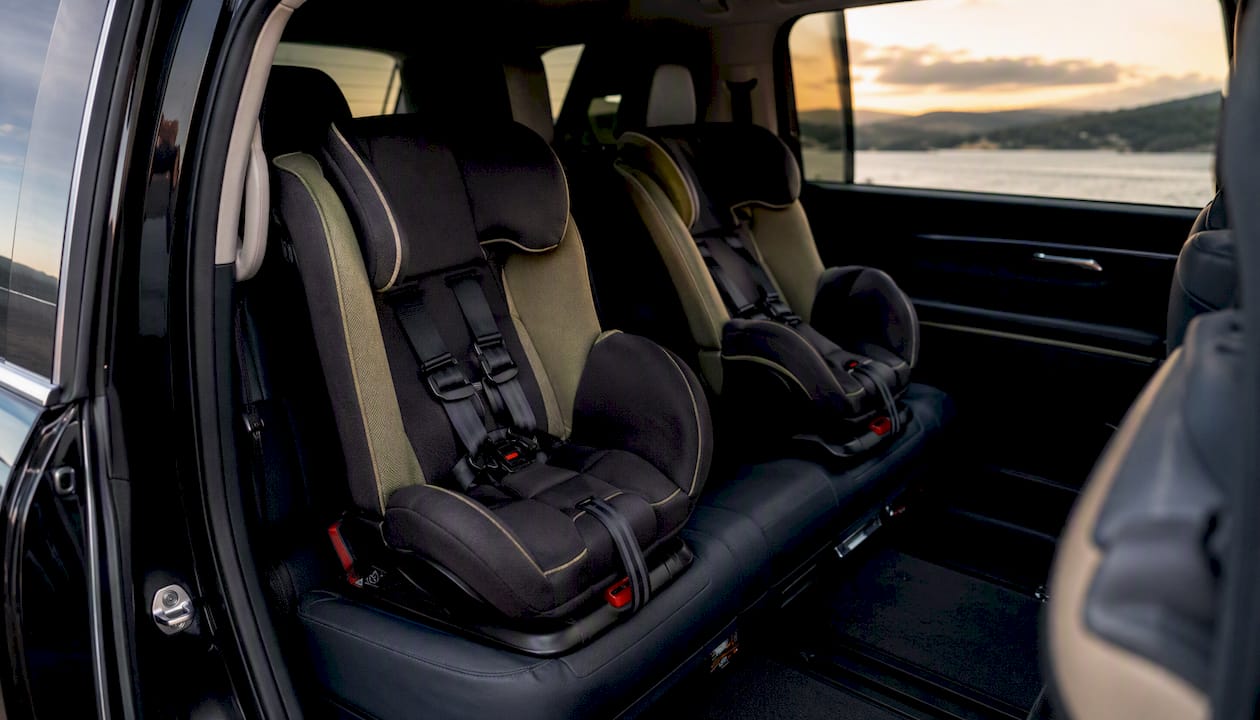
Seat belts are compulsory for all occupants in all seats. Children under 12 and shorter than 150 cm must travel in an approved child restraint appropriate for their weight and height. Visitors booking private vehicles should confirm child-seat availability before departure, since renting a car without the right restraint puts you in legal jeopardy from the first kilometer.
Alcohol and drugs
The legal blood alcohol limit is zero for professional, young, and new drivers; others must stay below any detectable level. Drug impairment carries the same penalties as alcohol. Police conduct roadside checks regularly, particularly on coastal routes during summer.
Mobile phones
Handheld phone use while driving is prohibited. A hands-free device is permitted, but Croatian enforcement practice treats any visible phone interaction as a violation. The safest approach is to mount your navigation before you start and leave the phone alone.
Winter equipment
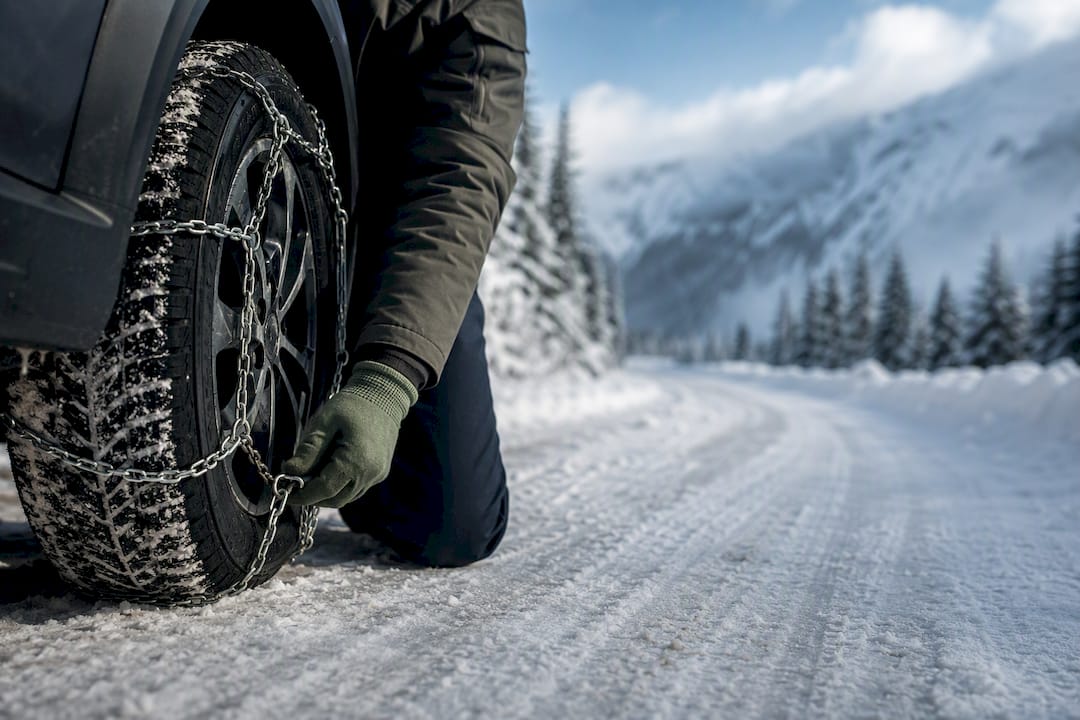
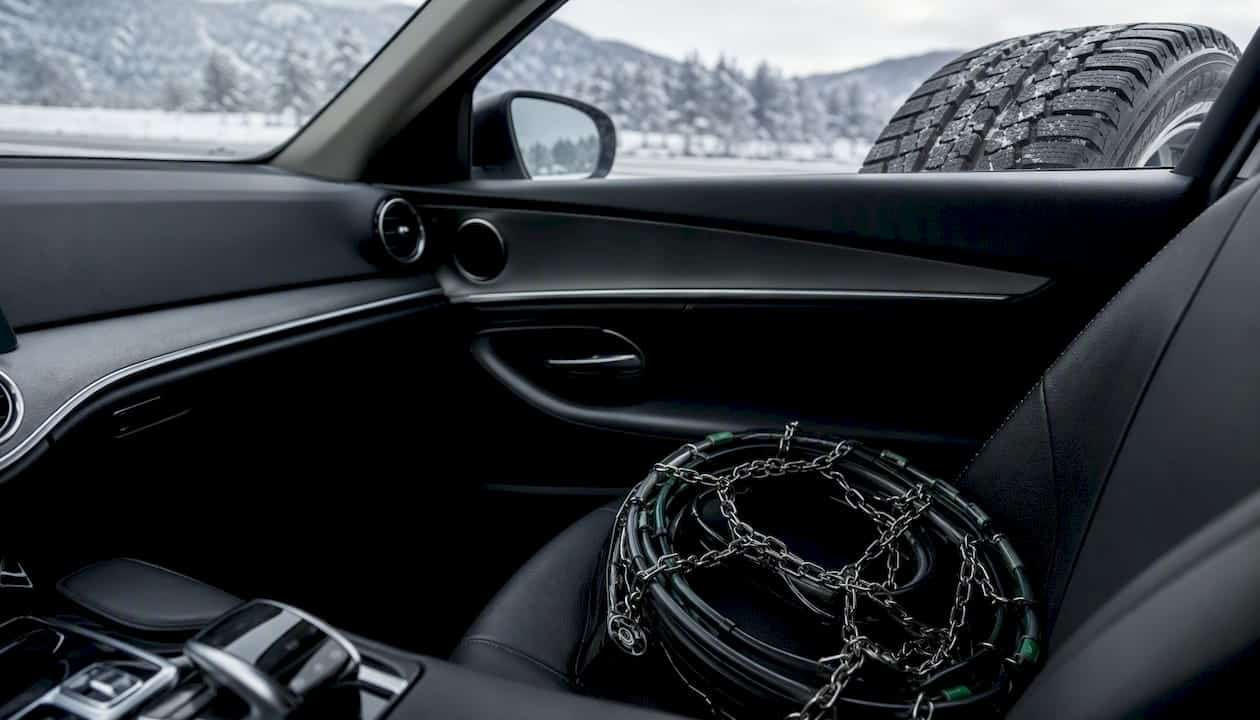
Winter equipment is mandatory on major roads between November 15 and April 15. Drivers must fit M+S winter tires on all wheels, or use summer tires with a minimum tread depth of 4 mm and carry snow chains for the driven wheels. This rule applies to visitors driving rental cars as much as to residents. Rental companies do not always fit winter tires automatically, so confirm before you collect the vehicle.
Pro Tip: If you are renting between November and April, request written confirmation from the rental company that the vehicle meets Croatian winter-equipment requirements. A verbal assurance is not enough if you are stopped at a checkpoint.
HAK’s “10 golden rules” identify seat-belt nonuse, mobile phone distraction, and improper child restraints as the behaviors most consistently linked to serious injuries and fatalities on Croatian roads.
Common hazards on Croatian roads and how to handle them
Croatia’s roads range from immaculate motorway surfaces to steep, single-lane coastal tracks where two vehicles can barely pass. Each environment carries its own risks.
- Driver fatigue is among the most underestimated hazards. HZJZ recommends short, regular breaks to restore cognitive function and reaction time, particularly on long summer drives. Stop every two hours, even briefly.
- Heat stress in July and August can impair judgment before you notice it. Keep water in the car, park in shade during midday stops, and run the air conditioning on longer stretches.
- Tourist-season congestion peaks on Friday and Sunday afternoons along the coastal corridor. Expect slow traffic on the A1 approach to Split and on the D8 coastal road. Leave earlier or later than the crowd.
- Narrow coastal roads and blind bends demand a slower speed than the posted limit suggests. On single-lane stretches, the vehicle traveling uphill generally has right of way. Yield early rather than forcing a standoff on a cliff edge.
- Wind on bridges and exposed coastal sections can be severe enough to trigger vehicle-class restrictions. The Maslenica Bridge and the Pag Bridge are regularly closed to high-sided vehicles and motorcycles in bora conditions. Check HAK live road conditions before crossing.
- Tunnels require headlights on at all times, reduced speed, and increased following distance. The Sv. Rok and Mala Kapela tunnels on the A1 are long enough that ventilation conditions can change quickly.
- First rain after a dry spell creates unexpectedly slippery surfaces, particularly on older coastal and regional roads where oil and dust accumulate. Hrvatske autoceste operational guidance specifically flags this risk on non-motorway roads.
Pro Tip: On steep, single-lane mountain descents, use engine braking rather than riding the foot brake continuously. Overheated brakes on a long descent are a genuine risk on routes like the road to Brela or the approach to Omiš.
The 2026 “Vozi odmorno, vozi sigurno” campaign reinforces what police data has shown across prior campaign periods: brief, deliberate rest stops measurably reduce crash frequency.
Your pre-departure checklist for driving in Croatia
Running through a short checklist before you leave takes ten minutes and can prevent hours of delay or worse.
Vehicle safety items:
- Tires: check tread depth (minimum 4 mm in winter season) and inflation pressure
- Lights: confirm all exterior lights work, including hazard flashers
- Wipers and washer fluid: essential for coastal salt spray and mountain rain
- Coolant level: critical in summer heat
- Brakes: listen for grinding or pulling; address before a long coastal descent
- First-aid kit, warning triangle, and at least one reflective vest (all legally required in Croatia)
Planning and logistics:
- Check HAK road conditions and HAC motorway status the morning of departure
- Verify weather forecasts, especially for mountain passes and coastal bridges
- Plan rest stops every two hours on journeys longer than four hours
- Confirm toll payment method: Croatian motorways use cash, credit card, or the ENC (electronic toll collection) transponder. ENC lanes move faster and reduce stop-and-go risk
- Account for ferry schedules on island routes, which can add unpredictable wait times
Pro Tip: Download the HAK app before you travel. It provides live alerts, road closures, and seasonal restrictions in one place, and it works without a Croatian SIM card over Wi-Fi.
What to do immediately after an accident in Croatia
Croatian law requires specific actions at the scene of any collision. Following them protects you legally and helps emergency services respond effectively.
- Secure the scene. Switch on hazard lights immediately. Place the warning triangle at least 100 meters behind the vehicle on open roads (50 meters in urban areas). Put on your reflective vest before you exit the vehicle.
- Check for injuries. If anyone is injured, call 112 without delay. Do not move injured persons unless they face immediate danger from fire or traffic.
- Call the police (192) when required. Police attendance is legally required when there are injuries, when a driver is under the influence, when significant property damage has occurred, or when the parties cannot agree on fault. For minor damage with no injuries and mutual agreement, an exchange of data may suffice, but when in doubt, call.
- Move vehicles only if safe. If the vehicles are blocking traffic and can be moved safely, photograph their positions first, then move them to the roadside.
- Document everything. Photograph vehicle positions, all visible damage, road markings, traffic signs, and any skid marks. Note the time, weather, and road conditions.
- Exchange information. Collect the other driver’s name, address, phone number, vehicle registration, insurance company, and policy number. Note witness names and contact details.
- Obtain a police report. When police attend, request a copy of the official report number. Insurers, including those handling Green Card claims for foreign drivers, will require it.
Documents to keep in the vehicle at all times:
- Valid driver’s license
- Vehicle registration certificate
- Proof of insurance (Green Card for foreign-registered vehicles)
- Personal ID or passport
Where to find official road information in Croatia
Knowing which organization to contact, and when, saves time and reduces risk.
- HAK (Hrvatski autoklub): Croatia’s primary road-safety and motorist-assistance organization. Call 1987 for roadside help. Check live road conditions for closures, restrictions, and seasonal advice. HAK also runs driver-education campaigns and publishes safety statistics.
- HAC (Hrvatske autoceste): Manages the A-network motorways. Their live motorway status page shows lane closures, works, and travel-time advisories in real time. Check it before any motorway journey.
- MUP (Ministarstvo unutarnjih poslova) / Police: Call 192 for incidents requiring police attendance. MUP is responsible for accident investigation, enforcement of traffic law, and issuing official accident reports.
- HZJZ (Hrvatski zavod za javno zdravstvo): Croatia’s public-health institute publishes driver safety guidance covering fatigue, heat, and seasonal risk factors.
- European Road Safety Observatory (ERSO): Publishes country-level fatality and trend data useful for understanding where Croatia’s risks are concentrated relative to EU benchmarks.
Bookmark the HAK and HAC live-status pages before you travel. Both update continuously and are available in English.
What Croatia’s road safety data tells you
The European Road Safety Observatory recorded 292 road fatalities in Croatia in 2021. The long-term trend is downward, with meaningful reductions across the 2012–2021 period. Croatia’s per-capita fatality rate, however, remains above the EU average, and a disproportionate share of those fatalities occur on urban roads rather than motorways.
Key statistic: Croatia recorded 292 road fatalities in 2021, with urban roads accounting for a higher share of deaths than the EU average — a pattern that points directly to the need for extra vigilance in cities and tourist corridors, not just on open highways.
That urban concentration matters for how you drive. Pedestrians, cyclists, and mopeds share narrow city streets in Dubrovnik, Split, and Zagreb with vehicles, and tourist-season foot traffic amplifies the risk. Slow down through historic centers, expect the unexpected at unmarked crossings, and treat amber lights as a signal to stop, not accelerate.
How a licensed private transfer reduces your driving risk
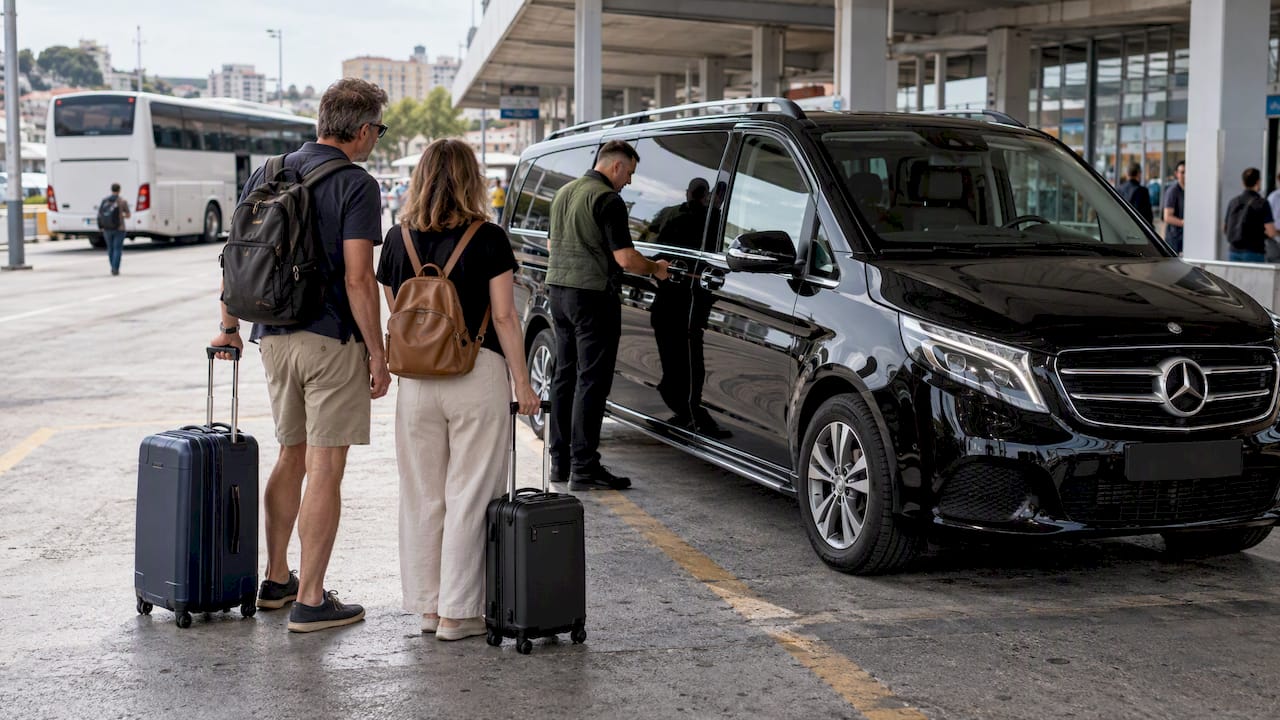
For travelers who prefer not to navigate unfamiliar Croatian roads, a licensed private transfer removes the most demanding variables entirely. Professional drivers bring local route knowledge, familiarity with seasonal restrictions, and planned rest schedules built into every journey.
When evaluating any transfer service, look for these features:
- Full licensing and insurance: The operator should hold a valid Croatian passenger-transport license and comprehensive vehicle insurance.
- Certified child seats: Confirm availability and the specific seat type for your child’s age and weight before booking.
- Driver language skills: An English-speaking driver can communicate road conditions, detours, and delays clearly, reducing passenger anxiety.
- Known route experience: Drivers who regularly cover coastal and mountain routes understand wind restrictions, ferry timing, and seasonal closures that GPS alone cannot anticipate.
- Vehicle class for conditions: A Mercedes sedan or minivan with modern stability systems handles coastal crosswinds and wet mountain roads more confidently than an economy rental.
Pro Tip: Ask your transfer provider whether they monitor HAK and HAC alerts in real time during the journey. A driver who adjusts routes proactively based on live conditions is a measurably safer choice than one who follows a fixed GPS path regardless of what is happening on the road.
For group travel with children, the safety and comfort case for private transportation is particularly strong: certified seats, planned stops, and a driver who knows the route mean the adults in the vehicle can focus on the experience rather than the road.
Parking rules and penalties in Croatian cities and tourist areas
Parking in Croatia’s coastal cities and historic centers is tightly regulated, and penalties are applied consistently. Most urban areas use a zone-based system with color-coded markings: yellow lines indicate no parking, blue zones require a paid ticket or a parking card displayed on the dashboard, and white zones may be free or time-limited depending on local signage.
In Dubrovnik’s Old Town, private vehicles are largely excluded from the historic core. Visitors arriving by car must use designated parking garages on the city perimeter, the largest of which is the Ilijina Glavica garage above the old walls. Split’s historic center operates similarly, with most parking concentrated in the Sukoišan garage and surrounding paid zones.
Fines for parking violations are issued by municipal wardens and must be paid within a set period to avoid escalation. Vehicles parked illegally in no-stopping zones or blocking emergency access can be towed, with recovery fees added to the original fine. During peak summer months, enforcement is frequent and swift in tourist-heavy areas.
Croatian traffic signs you may not recognize
Croatian road signs follow the Vienna Convention framework, so most are familiar to European drivers. A handful of locally specific or less common signs are worth knowing before you drive.
Signs unique to or frequently misread in Croatia:
- “Autocesta” sign (blue with motorway symbol): Marks the start of a motorway where full motorway rules apply, including minimum speed of 60 km/h and mandatory headlights.
- “Odmorište” (rest area) signs: Brown signs indicating rest areas with facilities. These appear frequently on the A1 and are worth using for mandatory rest stops.
- Wind-restriction signs on bridges: Variable message signs at bridge approaches display vehicle-class restrictions during bora wind events. These are legally binding and enforced by police.
- “Usporena vožnja” (slow driving zone): Appears in construction zones and near schools. Speed is typically reduced to 30 km/h.
- “Zabranjen promet” (road closed): A red circle with a white horizontal bar. Applies to all vehicles unless a supplementary sign specifies exceptions.
- Priority road signs on mountain routes: The yellow diamond sign indicates you have priority; its inverse (white diamond with gray border) means you must yield. These appear frequently on narrow inland and coastal roads where right-of-way is otherwise ambiguous.
Reading these signs correctly, especially the dynamic wind-restriction boards, can prevent a dangerous situation before it develops.
Driving on Croatian highways: rules and toll payment
Croatia’s motorway network (autoceste) is modern, well-maintained, and subject to specific rules that differ from ordinary roads.
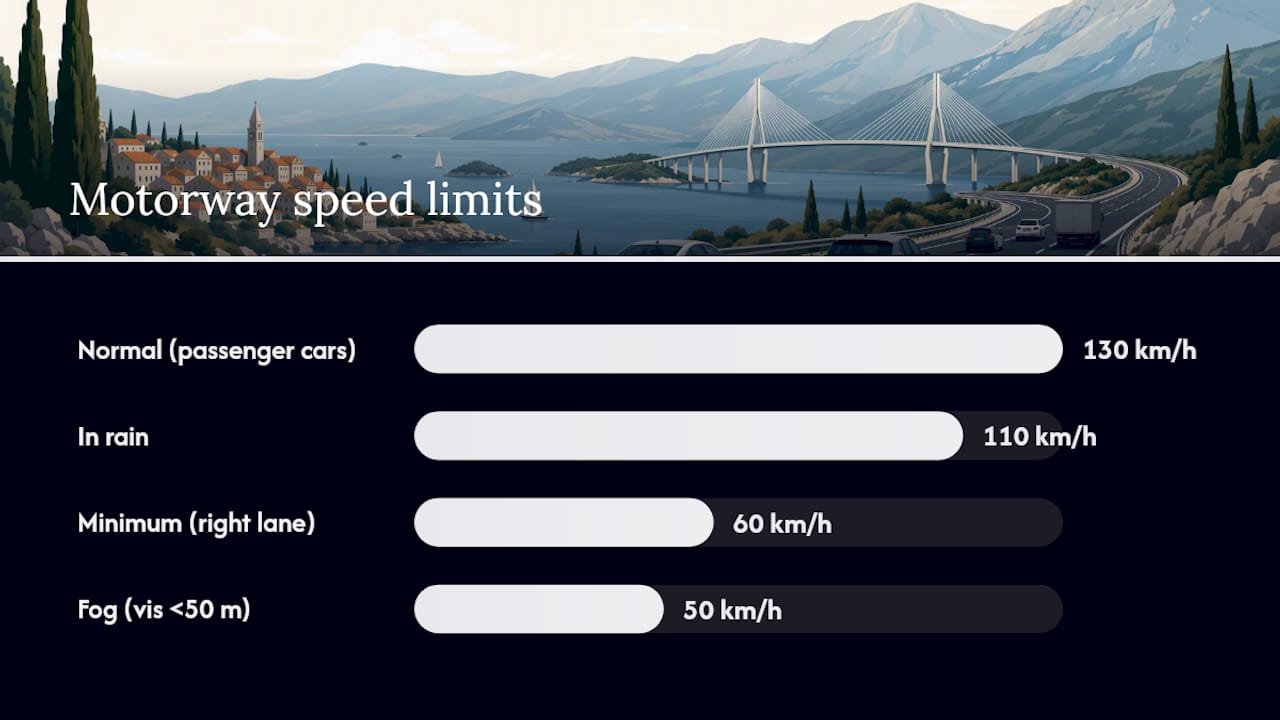
Speed limits on autoceste: 130 km/h for passenger cars in good conditions, reduced to 110 km/h in rain and 50 km/h in fog with visibility below 50 meters. Minimum speed is 60 km/h in the right lane.
Headlights: Mandatory at all times on motorways, regardless of daylight or weather.
Lane discipline: Overtaking on the right is prohibited. Keep to the right lane except when overtaking.
Tolls: Croatia’s motorways are tolled at most junctions. Payment options include cash (kuna or euro), credit/debit card, and the ENC electronic transponder. ENC lanes are marked with a blue sign and allow passage without stopping. If you plan multiple motorway journeys, an ENC transponder (available from HAK and HAC service points) saves time and reduces the stop-and-go risk at toll plazas.
Emergency lanes: The right-hand emergency lane is for breakdowns and emergency vehicles only. Driving in it is a serious offense.
The A1 (Zagreb to Split/Dubrovnik) and A3 (Bregana to Lipovac) are the busiest routes. On summer Saturdays, expect heavy traffic at the Split and Zadar exits from mid-morning onward. Traveling before 7:00 AM or after 8:00 PM significantly reduces both congestion and accident risk on these corridors.
Why safety-first transfers matter more than most travelers expect
There is a tendency among experienced travelers to treat road safety as a background concern, something to think about only after the itinerary is set. In Croatia, that instinct can be genuinely costly. The combination of narrow coastal roads, seasonal wind events, tourist-season congestion, and unfamiliar signage creates a driving environment that rewards local knowledge in ways that GPS navigation simply cannot replicate.
What the data and the road conditions together suggest is this: the risk on Croatian roads is not evenly distributed. It concentrates in urban areas, on coastal roads during peak season, and in the first hours after a long overnight flight when fatigue is highest and alertness is lowest. A traveler arriving at Split Airport at midnight after a transatlantic connection and then driving two hours to Dubrovnik is not making a neutral choice. They are accepting a measurable increase in risk at the exact moment their body is least equipped to manage it.
Licensed private transfers address that specific gap. Not because driving in Croatia is inherently dangerous, but because the conditions that make it demanding tend to coincide precisely with the moments when visitors are most vulnerable.
A safer way to experience Croatia’s roads
Croatia-private-transfers offers a genuinely different approach for travelers who want to arrive at every destination refreshed rather than road-worn. Every driver is fully licensed under Croatian passenger-transport law, carries comprehensive insurance, and knows the coastal and inland routes across all seasons, including which bridges close in bora conditions and which mountain roads demand a slower pace after rain.
Families traveling with children will find certified child seats available on request, confirmed at booking rather than discovered missing at pickup, as explained in our minibus options for safe school excursions guide. Planned rest stops are built into longer transfers, not added as an afterthought. Vehicles are modern Mercedes sedans and minivans with stability systems suited to Croatia’s varied terrain.
To book or check availability, visit Croatia-private-transfers private transfers or go directly to the booking page. When reserving, ask about child-seat specifications, driver language, route flexibility, and the cancellation policy. A provider who answers those questions clearly before you pay is one you can trust on the road.
Sources
- Prometna pravila i sigurnost|Hrvatska
- Sigurno u prometu – savjeti za vozače | Hrvatski zavod za javno zdravstvo
- Deset zlatnih pravila sigurnosti u prometu – HAK
- ROAD SAFETY
- Zakon o sigurnosti prometa na cestama