

The Role of Vehicles in Luxury Travel: A 2026 Guide
TL;DR:
- Luxury vehicles in high-end travel serve as mobile extensions of accommodations, focusing on comfort and personalized service. The choice of vehicle influences traveler mood and satisfaction, with options ranging from sedans to motorcoaches designed for different group sizes and journeys. Real-time technology and attentive chauffeur services are now standard, ensuring seamless, private, and flexible experiences that elevate the overall travel quality.
The role of vehicles in luxury travel is defined by one principle: the vehicle is not a means to an end but a core part of the experience itself. High-end travel vehicles function as mobile extensions of accommodations, offering multi-functional interiors built for work, socializing, and wellness. The luxury travel transportation market has responded by producing vehicles with handcrafted finishes, real-time connectivity, and white-glove service models that rival five-star hotels. For affluent travelers, the ground transport choice shapes mood, productivity, and satisfaction from the first moment of a trip. Croatia-private-transfers has built its entire service philosophy around this truth.
What defines the role of vehicles in luxury travel?
A luxury vehicle earns that label through materials, technology, and the quality of service surrounding it. Standard transport moves people. Luxury transport creates an environment. The distinction matters because luxury road travel is now viewed as a genuine alternative to private aviation, offering privacy, personal control, and health safety that commercial flights cannot match.

Premium materials and craftsmanship
The interior of a true luxury vehicle reads like a curated space. Hand-stitched leather seating, ambient lighting with adjustable color temperature, and handcrafted wood or carbon fiber trim are standard expectations, not upgrades. These details signal to the traveler that their comfort was considered before they ever stepped inside.
Advanced technology and connectivity
Noise-canceling cabin insulation, onboard Wi-Fi, and integrated entertainment systems transform travel time into productive or restful time. The Mercedes-Benz Sprinter, for example, is preferred for long journeys because its standing height and converted interiors allow passengers to move, work, and socialize in ways a sedan simply cannot accommodate. That physical freedom changes the entire character of a multi-hour drive.
Vehicle types and their distinctions
Different trip profiles call for different vehicle classes. The table below outlines the primary categories and their best-fit scenarios.
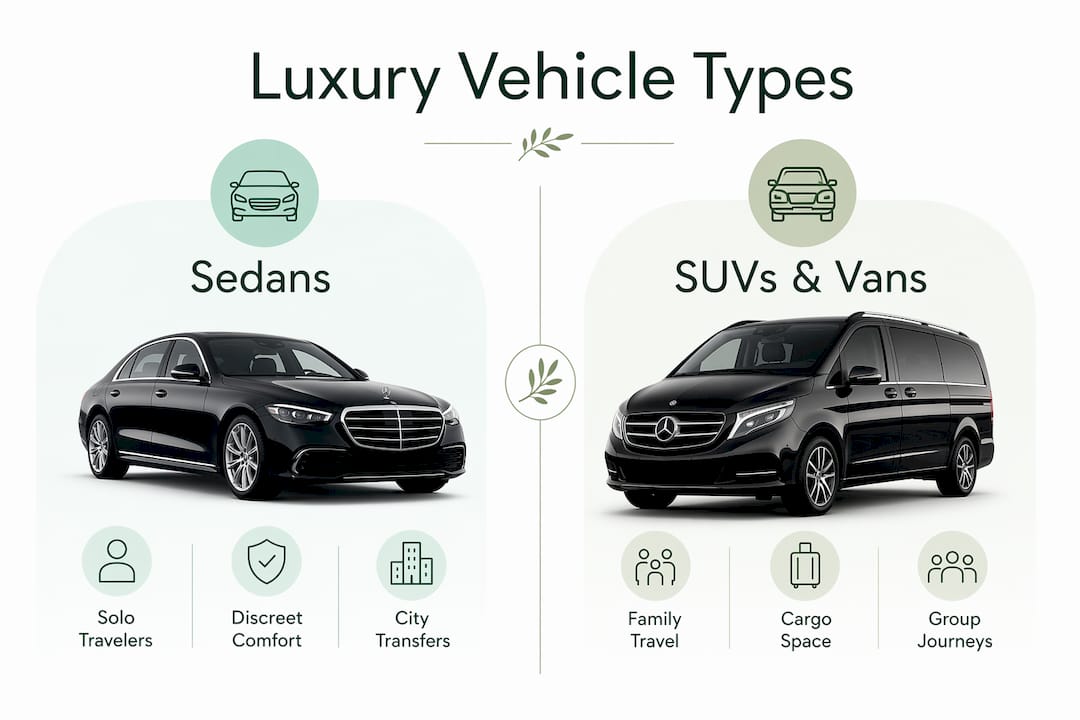
| Vehicle Type | Best For | Key Advantage |
|---|---|---|
| Executive sedan | Solo or couple transfers | Discreet, fast, refined |
| Luxury SUV | Small families, airport runs | Space plus prestige |
| Mercedes-Benz Sprinter van | Groups, multi-hour drives | Standing room, social layout |
| Luxury motorcoach | Large groups, multi-day tours | Full onboard amenities |
| Adventure van | Remote or off-grid travel | Off-grid power, rugged comfort |
Pro Tip: When traveling with more than four people, a luxury van outperforms a fleet of sedans on every measure: group cohesion, cost per seat, and onboard comfort.
How do luxury vehicles enhance comfort and the travel experience?
Privacy is the defining luxury in ground transport for high-profile and executive travelers. A private vehicle provides discretion, uninterrupted travel time, improved security, and the ability to work or rest without an audience. That combination is something no shared shuttle or rideshare service can replicate.
The tangible enhancements luxury vehicles deliver fall into several clear categories:
-
Personalized chauffeur service. A trained chauffeur does more than drive. They anticipate needs, manage luggage, adjust the cabin temperature before arrival, and communicate proactively about route changes or delays. This level of attentiveness mirrors the service standard of a personal concierge.
-
Onboard amenities. Premium vehicles increasingly feature chilled beverage stations, noise-canceling headphones, curated reading materials, and in some configurations, private restrooms and lounge seating. The goal is a “hotel room on wheels” experience that makes the journey itself worth savoring.
-
Coordination with private aviation. Chauffeurs meet clients within 10 minutes at private terminals, handling luggage and arrivals support to eliminate the friction that typically follows a flight. That speed matters because it preserves the mood and energy the traveler arrived with.
-
Flexible scheduling. Unlike fixed departure times on shared transport, a private luxury vehicle operates on the traveler’s schedule. A late dinner, an extended vineyard visit, or a spontaneous coastal detour does not require renegotiating with a driver pool.
-
Health and wellness considerations. Post-pandemic, many affluent travelers actively prefer private ground transport over crowded terminals. The controlled environment of a private vehicle reduces exposure and gives travelers authority over their own space.
Pro Tip: Ask your transfer provider whether the vehicle has been detailed and ventilated before pickup. Premium operators treat cabin air quality as a standard part of preparation, not an optional request.
The impact of vehicles on luxury travel extends beyond comfort metrics. Travelers who arrive relaxed and on schedule consistently report higher satisfaction with the entire trip, not just the transfer. Transportation is the “final frontier” in luxury hospitality, and a flawless vehicle experience significantly influences overall guest satisfaction.
Which vehicle types suit different luxury travel scenarios?
Selecting the right vehicle class is a practical decision, not a status choice. The wrong vehicle for a given scenario creates friction, regardless of how premium the brand.
Executive sedans work best for solo business travelers or couples on airport transfers and city-to-city runs. They offer a refined, quiet cabin and a low profile that suits travelers who prefer discretion. Their limitation is capacity: beyond two passengers with full luggage, comfort degrades quickly.
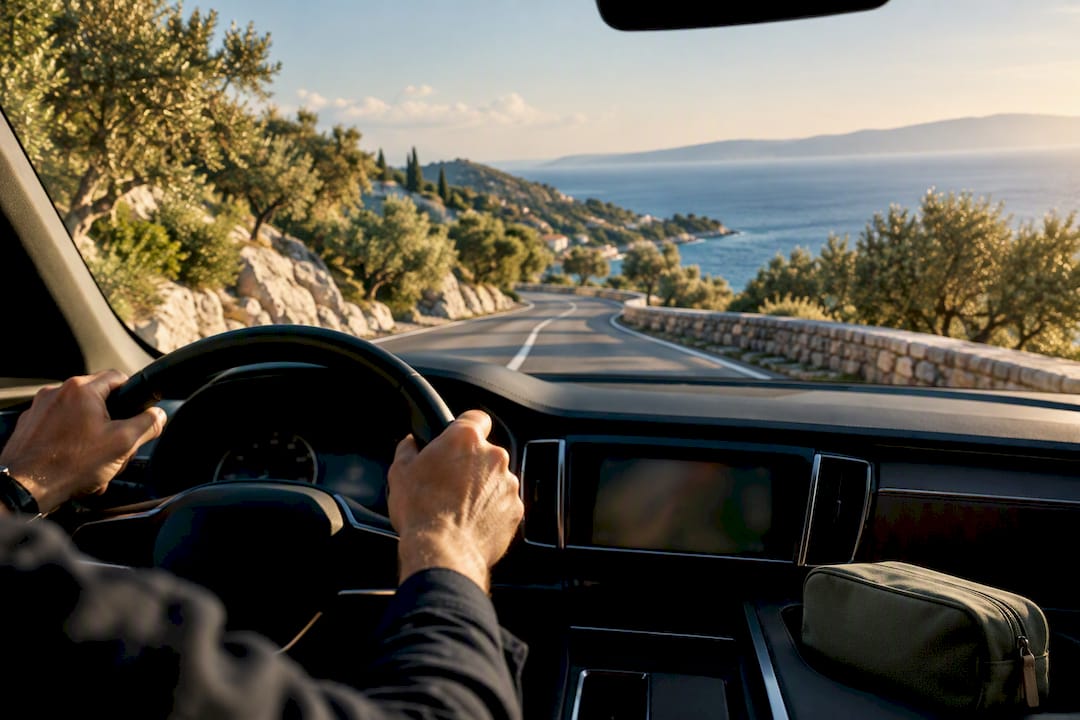
Luxury SUVs handle families of three or four with ease, adding cargo space without sacrificing the premium interior. They also perform well on varied terrain, making them a strong choice for coastal or mountain routes where road conditions shift.
Mercedes-Benz Sprinter vans have become the preferred choice for groups on multi-hour journeys. Their converted interiors, with ambient lighting, handcrafted finishes, and technology integration, allow passengers to stand, move around, and interact. For a group traveling from Zagreb to Dubrovnik, a Sprinter van turns a five-hour drive into a social experience rather than an endurance test.
Luxury motorcoaches serve large groups and multi-day itineraries. All-inclusive motorcoach rentals typically start around $20,000 per trip, covering driving, routing, onboard amenities, concierge support, and round-the-clock assistance. That price point reflects the full-service nature of the product, not just the vehicle itself.
Adventure vans occupy a niche but growing segment. Vehicles like those from 27North feature lithium-ion batteries and solar power, enabling climate control, coffee machines, and electronic functionality entirely off-grid. For travelers who want to reach remote Croatian islands or mountain retreats without sacrificing comfort, this category is redefining what exclusive travel transport options look like.
Key factors to evaluate when choosing a vehicle class:
- Passenger count and luggage volume. Always size up rather than compress.
- Journey duration. Trips over three hours warrant standing room and onboard amenities.
- Privacy requirements. High-profile travelers should prioritize tinted windows and single-vehicle arrangements.
- Terrain and route. Coastal and mountain routes favor SUVs or vans over low-clearance sedans.
- Environmental preferences. Electric and hybrid luxury vehicles are increasingly available for travelers who prioritize sustainability without compromising comfort.
Croatia-private-transfers offers private transfers across Croatia in modern, air-conditioned Mercedes-class vehicles, matching vehicle type to group size and itinerary with precision.
What technologies are shaping the future of luxury travel vehicles?
Technology is the engine behind the next generation of best vehicles for luxury trips. The most significant shift is the integration of real-time data into ground transport coordination. Real-time flight tracking allows chauffeurs to adjust pickup timing based on actual arrival data, not scheduled departure times. That single capability eliminates the most common failure point in luxury ground transport: the client waiting on the curb.
The broader technology stack shaping luxury vehicle experiences includes:
- Mobile app coordination. Travelers adjust pickup times, communicate preferences, and track their vehicle in real time, all from a single interface.
- White-glove concierge integration. Premium operators connect vehicle bookings to hotel arrivals, restaurant reservations, and yacht departures, creating a single thread of service across an entire itinerary.
- Off-grid energy systems. Lithium-ion and solar-powered adventure vans maintain full electronic functionality in remote locations, extending the reach of luxury travel into wilderness areas.
- Acoustic engineering. Advanced noise-canceling cabin design, now standard in top-tier vehicles, reduces road and wind noise to levels that make phone calls and video conferences practical at highway speed.
- 24/7 concierge support. The best operators offer round-the-clock assistance for schedule changes, route adjustments, and special requests, treating every hour of a trip as a service window.
The integration of real-time flight data with ground transport is no longer a premium add-on. It is the baseline expectation for any operator serving private aviation clients. Travelers who experience it once will not accept anything less.
For travelers exploring private transfers in Iceland or other high-demand destinations, this technology-first approach is already the standard. The same expectation is spreading rapidly across European luxury travel markets, including Croatia.
Key Takeaways
The vehicle you choose for a luxury trip defines the quality of the experience as much as the destination itself.
| Point | Details |
|---|---|
| Vehicles as accommodations | Luxury vehicles function as mobile extensions of five-star stays, not just transport. |
| Privacy drives satisfaction | Private ground transport delivers discretion, security, and uninterrupted comfort that shared options cannot match. |
| Match vehicle to scenario | Sedans suit solo transfers; Sprinter vans serve groups on long drives; motorcoaches handle multi-day tours. |
| Technology is now baseline | Real-time flight tracking and mobile coordination are standard expectations, not premium upgrades. |
| Service quality seals the experience | White-glove chauffeur service and 24/7 concierge support determine whether a vehicle feels truly luxurious. |
Why vehicle choice is the detail most travelers underestimate
After years of coordinating luxury travel across Croatia, I have watched the same pattern repeat. Travelers invest weeks selecting the right hotel and the right restaurant. They spend hours comparing flight options. Then they book ground transport as an afterthought, often in the final 48 hours before departure.
That sequencing is a mistake. The vehicle is the first and last impression of every destination. A traveler who arrives at Dubrovnik’s Old City in a cramped, overheated shuttle carries that discomfort into the first hour of their stay. A traveler who steps out of a climate-controlled Mercedes-Benz van, luggage already handled, driver already briefed on the afternoon itinerary, arrives in a completely different state of mind.
I have also noticed that the travelers who get this right share one habit: they treat vehicle selection the same way they treat hotel selection. They ask about the specific model, the interior configuration, the driver’s experience, and the contingency plan if a flight is delayed. Those questions separate a good transfer from a genuinely curated one.
The luxury travel transportation market in Croatia has matured significantly. Travelers now have access to vehicles and service standards that rival anything available in London or Dubai. The opportunity is real. The only question is whether you treat ground transport as a detail worth getting right.
— Croatia
Premium private transfers in Croatia, built for discerning travelers
Croatia-private-transfers offers a fleet of modern, air-conditioned Mercedes-class vehicles paired with licensed, English-speaking drivers who know Croatia’s roads, coastlines, and cultural sites with genuine depth.
Whether you need a private airport transfer into Split, a scenic drive along the Dalmatian coast, or a curated multi-day itinerary connecting Zagreb, Plitvice Lakes, and Dubrovnik, Croatia-private-transfers matches the right vehicle to your group size and travel goals. Every booking includes door-to-door service, luggage handling, and flexible scheduling built around your plans, not a fixed timetable. Explore private transfers across Croatia and see how the right vehicle transforms every kilometer into part of the experience.
FAQ
What is the role of vehicles in luxury travel?
Luxury vehicles serve as mobile extensions of premium accommodations, providing privacy, comfort, and personalized service that define the quality of the overall travel experience. The vehicle choice shapes traveler mood and satisfaction from the first moment of a trip.
What makes a vehicle qualify as a luxury travel vehicle?
A luxury travel vehicle combines premium materials such as leather and handcrafted finishes, advanced technology including onboard Wi-Fi and noise-canceling cabins, and a professional chauffeur service that anticipates traveler needs. The full definition and types cover sedans, SUVs, Sprinter vans, and motorcoaches.
How do chauffeur services differ from standard car hire?
Premium chauffeur services offer all-inclusive rates covering fuel, tolls, and waiting time, with no night or weekend surcharges, creating full cost transparency. Standard car hire places logistics and navigation responsibility on the traveler.
Which vehicle is best for a group luxury trip?
The Mercedes-Benz Sprinter van is the preferred choice for groups on journeys over three hours, offering standing room, handcrafted interiors, and technology integration. Luxury motorcoaches suit larger groups or multi-day itineraries requiring full onboard amenities.
How does real-time flight tracking improve luxury ground transport?
Real-time flight tracking allows chauffeurs to adjust pickup timing based on actual arrival data, meeting clients within minutes at private terminals and eliminating wait times. This integration is now a baseline expectation for operators serving private aviation clients.