


Workflow for Private City Tours: Your Complete Guide
TL;DR:
- A private city tour workflow involves gathering traveler requirements, building a personalized itinerary, refining it through revisions, and executing with flexibility.
- Clear communication and tiered priorities before booking ensure the tour adapts to travelers’ needs, and constant engagement helps guides customize the experience on the day.
A structured workflow for private city tours is defined as the end-to-end process of gathering traveler requirements, building a custom itinerary, refining it through revision cycles, and executing the tour with real-time flexibility. This process separates a forgettable city visit from a curated, deeply personal experience. The best private tour operators treat this workflow as a living system, not a checklist. When each phase connects cleanly to the next, travelers arrive at every stop feeling informed, comfortable, and genuinely engaged with the place around them.
What does a workflow for private city tours actually involve?
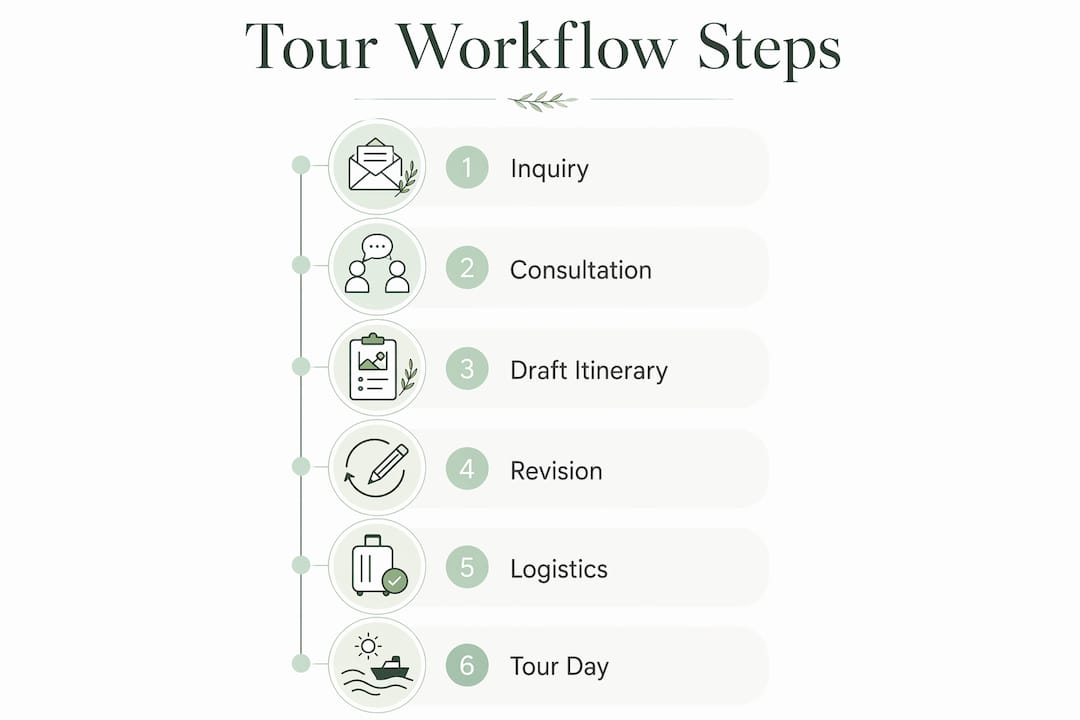
The private tour planning process covers six distinct phases: inquiry, consultation, itinerary drafting, revision, logistics confirmation, and day-of execution. Each phase builds on the last. Skip one, and the gaps show up as confusion on the day of the tour. The industry term for this end-to-end approach is tour operations management, though most travelers simply experience it as the difference between a guide who felt prepared and one who does not.
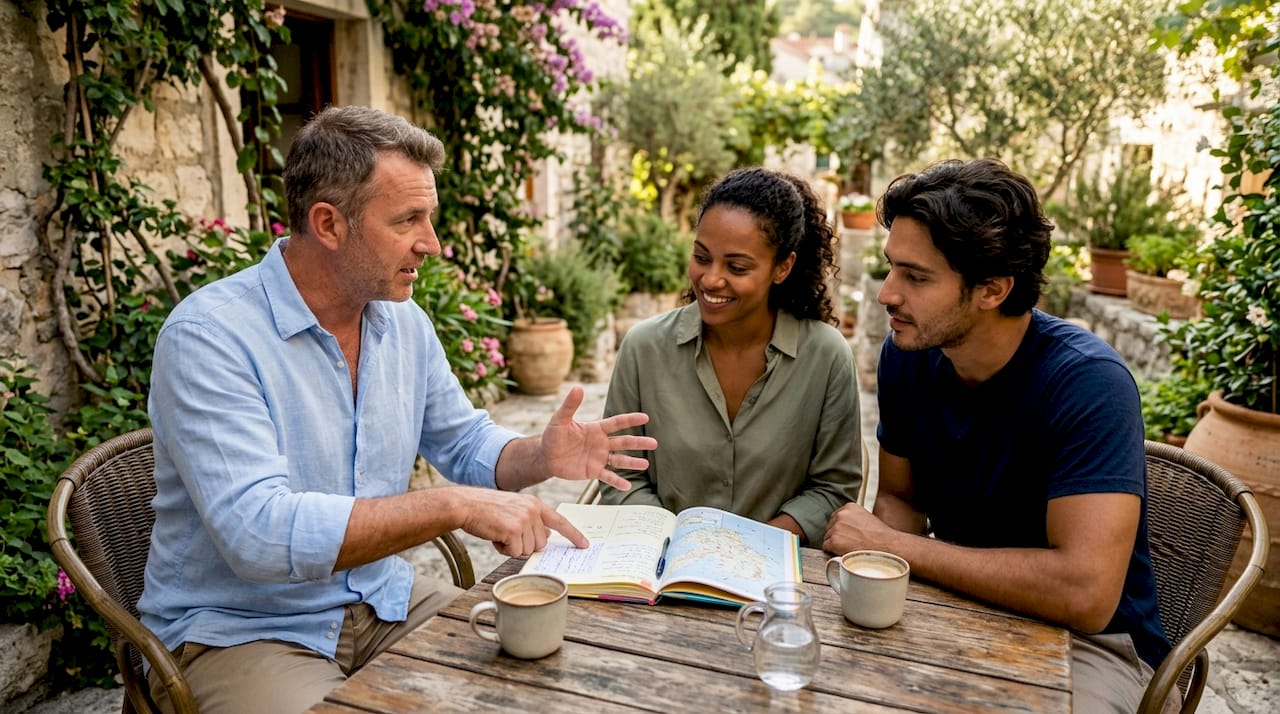
Structured city tour management produces better outcomes for both travelers and guides. When a traveler submits clear, organized information upfront, a guide can focus creative energy on crafting the right route rather than chasing missing details. Croatia-private-transfers applies this principle across every customized private tour it offers, from coastal Dubrovnik walks to full-day Zagreb cultural experiences.
What information do you need before booking a private tour?
The single most valuable thing a traveler can do before reaching out to an operator is prepare a concise, prioritized brief. Structured initial requests with travel dates, group size, duration, budget, and top priorities enable faster and more accurate itinerary drafts. That means your guide spends less time asking follow-up questions and more time designing a route that fits you.
The following details form the foundation of any strong inquiry:
- Travel dates and flexibility: Exact dates or a date range, plus whether you can shift by a day if conditions favor it
- Group size and composition: Number of adults, children, and any accessibility requirements
- Destination focus: Which city or cities, and whether you want depth in one area or breadth across several
- Budget range: A realistic figure helps guides propose the right level of inclusions without overbuilding or underdelivering
- Top three priorities: The experiences that matter most, ranked clearly
Using a tiered requirement system separates must-have experiences from nice-to-have additions. Clear tiered requests reduce wasted time negotiating extras and help guides protect the core experience during planning. For example, if seeing Diocletian’s Palace in Split is non-negotiable but a wine tasting stop is optional, say so explicitly. That single distinction can save two full revision rounds.
Pro Tip: Write your inquiry as if you are briefing a knowledgeable friend, not filling out a form. Mention what disappointed you on a previous trip. Guides use that information to avoid repeating experiences that felt flat.
How does the itinerary customization process work, step by step?
Once an operator receives a complete inquiry, the private tour planning process moves through a predictable sequence. Understanding each step helps travelers engage productively at every stage rather than waiting passively for a final document.
- Inquiry received and reviewed (Day 1): The operator reads the brief, identifies any gaps, and may send one clarifying question before drafting.
- First draft delivered (within 48 hours): Tour specialists typically deliver the first draft itinerary within 48 hours after receiving structured information. This draft outlines stops, timing, transport, and inclusions.
- Traveler review and feedback (Day 3–4): The traveler reads the draft and notes what fits, what feels off, and what is missing. Specific feedback produces better revisions than general reactions.
- Revision rounds (24 hours each): Most private tour operators offer unlimited revisions, typically completed within 24 hours each before deposit. In practice, 2–3 rounds bring most itineraries to a final state.
- Logistics confirmation: Before payment, the traveler and operator confirm meeting points, transport arrangements, ticket handling, and cancellation terms.
- Final itinerary issued and deposit paid: The confirmed document becomes the tour blueprint.
The table below shows what typically changes in each revision round and what stays fixed:
| Revision round | Common adjustments | What stays fixed |
|---|---|---|
| Round 1 | Pace, number of stops, overall duration | Destination city, core theme |
| Round 2 | Specific sites, meal inclusions, accessibility needs | Approved stops from Round 1 |
| Round 3 | Timing, transport mode, optional add-ons | Confirmed logistics |
The consultation phase 24–48 hours after initial contact is the best window to share physical limits, dietary needs, and past travel experiences. Guides use this information to avoid repeating what felt uninspiring and to build toward what genuinely excites you. For travelers customizing tour itineraries, this phase is where the real personalization happens.
Pro Tip: When reviewing a draft, mark each stop as “keep,” “adjust,” or “replace” before writing your feedback. This format gives your guide a clear action for every element and cuts revision time significantly.
What should you expect on the day of your private city tour?
Private tours are live services, and the best guides treat the itinerary as a strong starting point rather than a rigid script. Guides adjust pace and itinerary on the day based on traveler feedback, including varying intensity or adding and removing stops. That flexibility is a feature, not a flaw.
Travelers who get the most from their tours stay communicative throughout the day. If a site feels less interesting than expected, say so. If a neighborhood captures your attention, mention it. Good guides anticipate these shifts and adapt routes accordingly.
A few day-of details to keep in mind:
- Meeting point: Confirm the exact location the evening before, not the morning of. Addresses in historic city centers can be ambiguous.
- Transport: Know whether your guide is also your driver or whether a separate vehicle is involved.
- Tickets: Clarify in advance which admissions are pre-booked and which require queuing. Pre-booked tickets at sites like Plitvice Lakes National Park save significant time.
- Weather contingencies: Ask your guide what happens if rain affects an outdoor stop. A prepared guide has an indoor alternative ready.
“Effective private tours depend on clear expectation alignment about pace and interests prior to the first stop. When travelers and guides share that alignment, the day unfolds with a natural rhythm that no group tour can replicate.”
Day-of flexibility in private tours is standard practice. A skilled guide reads energy levels, notices when a traveler lingers at a particular fresco or viewpoint, and reshapes the afternoon accordingly. That real-time responsiveness is what makes personalizing day trips so rewarding compared to fixed group schedules.
How does the workflow affect private tour pricing and transparency?
Private tours command a 30–60% premium over group tours due to exclusivity and the logistics complexity of dedicated personnel. That premium is not arbitrary. It reflects a guide’s undivided attention, a vehicle reserved solely for your group, and the planning hours invested before you arrive.
Understanding what that price includes prevents the most common source of post-tour frustration: unexpected costs. A clear, itemized quote should specify:
- Guide fees and hours covered
- Transportation type and distance
- Pre-purchased admission tickets
- Meal inclusions or exclusions
- Cancellation and amendment terms
Pro Tip: Ask for a line-item quote, not a single total. When you can see each cost separately, you can adjust scope to fit your budget without losing the experiences that matter most.
The table below compares two common pricing approaches in the private tour industry:
| Pricing approach | What it includes | Best suited for |
|---|---|---|
| All-inclusive flat rate | Guide, transport, tickets, one meal | Travelers who want zero surprises |
| Base rate plus add-ons | Guide and transport only; tickets and meals separate | Travelers who want to control specific costs |
Workflow clarity drives pricing transparency. When the planning process is structured and documented, both the traveler and the operator have a written record of what was agreed. That record protects both parties and makes any scope adjustment straightforward. For travelers comparing options, understanding private transfer vs. taxi costs is a useful starting point for building a realistic city tour budget.
Key Takeaways
A well-executed private city tour workflow depends on structured communication, tiered priorities, and real-time flexibility from the first inquiry through the final stop.
| Point | Details |
|---|---|
| Prepare a complete inquiry brief | Include travel dates, group size, budget, and your top three priorities before contacting an operator. |
| Use a tiered priority system | Separate must-have experiences from optional additions to protect core tour elements during revisions. |
| Expect 2–3 revision rounds | Most itineraries reach final form after two to three rounds, each completed within 24 hours. |
| Confirm logistics before payment | Verify meeting points, transport, ticket handling, and cancellation terms before paying a deposit. |
| Stay communicative on the day | Real-time feedback helps guides adjust pace and stops to match your energy and interests. |
What I have learned from years of private tour planning in Croatia
The travelers who have the best experiences are almost never the ones with the most elaborate itineraries. They are the ones who communicate clearly and stay genuinely curious throughout the day. I have seen meticulously planned tours fall flat because a traveler held back feedback, and I have seen simple half-day routes become unforgettable because the traveler told the guide exactly what moved them.
The most common mistake I observe is treating the itinerary as a contract rather than a conversation. When a traveler arrives at a site that does not resonate, the instinct is often to push through because “it is on the plan.” A good guide wants to know immediately. That honesty is what allows the afternoon to be reshaped into something genuinely memorable.
Accessibility needs deserve particular attention. Travelers who mention mobility considerations upfront receive routes that account for cobblestone streets, stair counts, and rest intervals. Those who mention it on the day often find that the best alternatives are already booked or closed. Proactive disclosure is not a burden on the guide. It is the information that makes a curated route possible.
Finally, the relationship between a traveler and a guide works best when it is collaborative and respectful. Guides carry deep local knowledge, and the travelers who ask questions, engage with context, and share reactions get far more from that knowledge than those who move silently from stop to stop.
— Croatia
Private transfers and custom tours across Croatia
Croatia-private-transfers brings the same structured approach to every tour and transfer it operates across Croatia. From airport arrivals to full-day city explorations, every experience begins with a clear brief and ends with a thoughtfully paced itinerary built around what matters to you.
Whether you are planning a single city day trip or a multi-day cultural route through Dubrovnik, Split, and Zagreb, the team at Croatia-private-transfers handles logistics so you can focus on the experience. Explore private transfers across Croatia for door-to-door comfort, or browse multi-day tours with a private driver for a fully guided regional experience. Every itinerary is built to your brief, revised until it fits, and delivered by licensed, English-speaking professionals who know Croatia’s cities and coastlines in depth.
FAQ
What information should I include in my first tour inquiry?
Include your travel dates, group size, destination, budget range, and top three priorities. Structured inquiries allow operators to deliver a first draft itinerary within 48 hours.
How many revision rounds does a private tour itinerary typically require?
Most itineraries reach final form after 2–3 revision rounds. Operators typically complete each revision within 24 hours before a deposit is paid.
Why do private city tours cost more than group tours?
Private tours cost 30–60% more than group tours because they include dedicated personnel, reserved transport, and personalized logistics planning that group formats cannot provide.
What logistics should I confirm before paying a deposit?
Confirm meeting points, transport arrangements, ticket handling procedures, and cancellation terms. Verifying these details before payment prevents the most common day-of friction points.
Can a guide change the itinerary on the day of the tour?
Yes. Private tours are live services, and guides routinely adjust pace, stops, and intensity based on traveler feedback and conditions. That real-time adaptability is one of the core advantages of a private format over a fixed group schedule.