

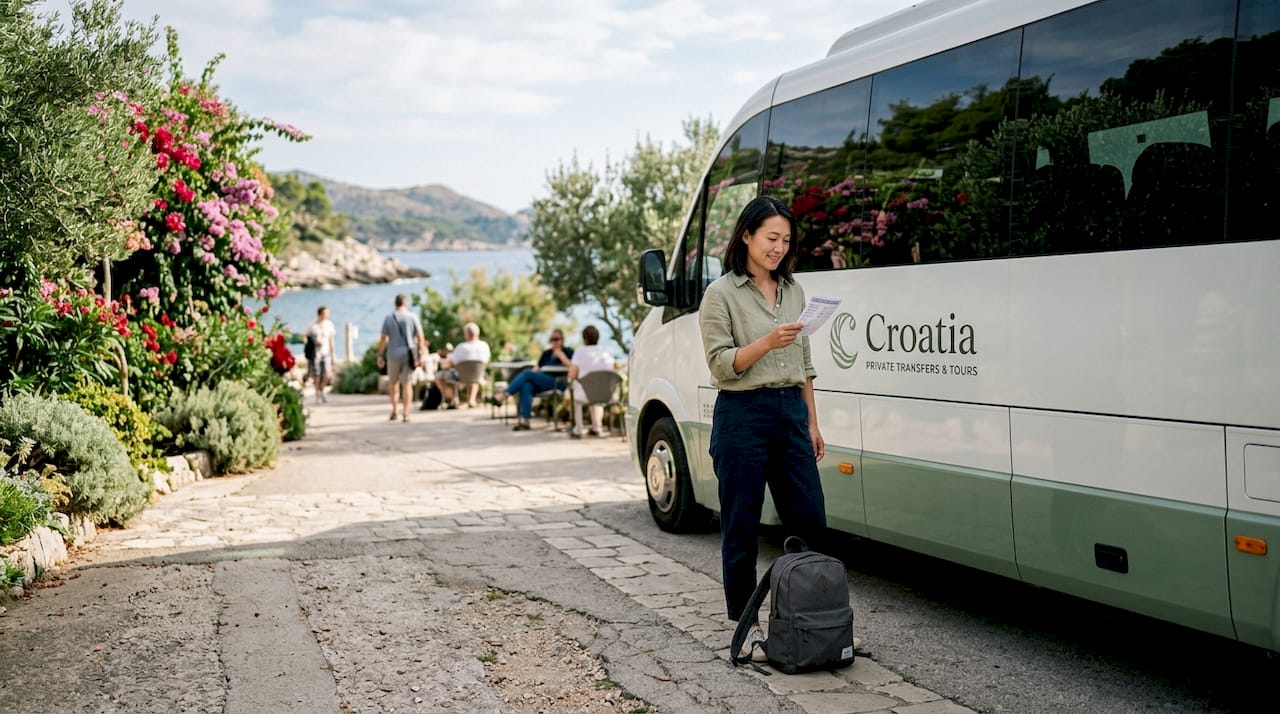
What Are Intercity Shuttles? A Traveler’s Guide
TL;DR:
- Intercity shuttles are scheduled, shared transportation services that connect two or more cities with limited stops. They require advance booking, focus on direct routes, and operate under higher safety and licensing standards. Travelers benefit from affordability, efficiency, and regional connectivity, especially when booking early and planning carefully.
Intercity shuttles are defined as scheduled, shared transportation services that connect two or more cities on fixed routes with limited stops. The Federal Transit Administration defines intercity bus service as regularly scheduled transport for the general public, connecting urban areas not in close proximity, with baggage capacity and meaningful long-distance connections. That definition matters because it separates intercity shuttles from local city buses, regional transit, and private taxis in both regulation and practical experience. Travelers who understand this distinction make smarter booking decisions and arrive with the right expectations. This guide covers how intercity shuttle services work, how to book them, their real benefits and limitations, and where they fit into a broader travel plan, including in Croatia.
What are intercity shuttles and how do they differ from other transport?
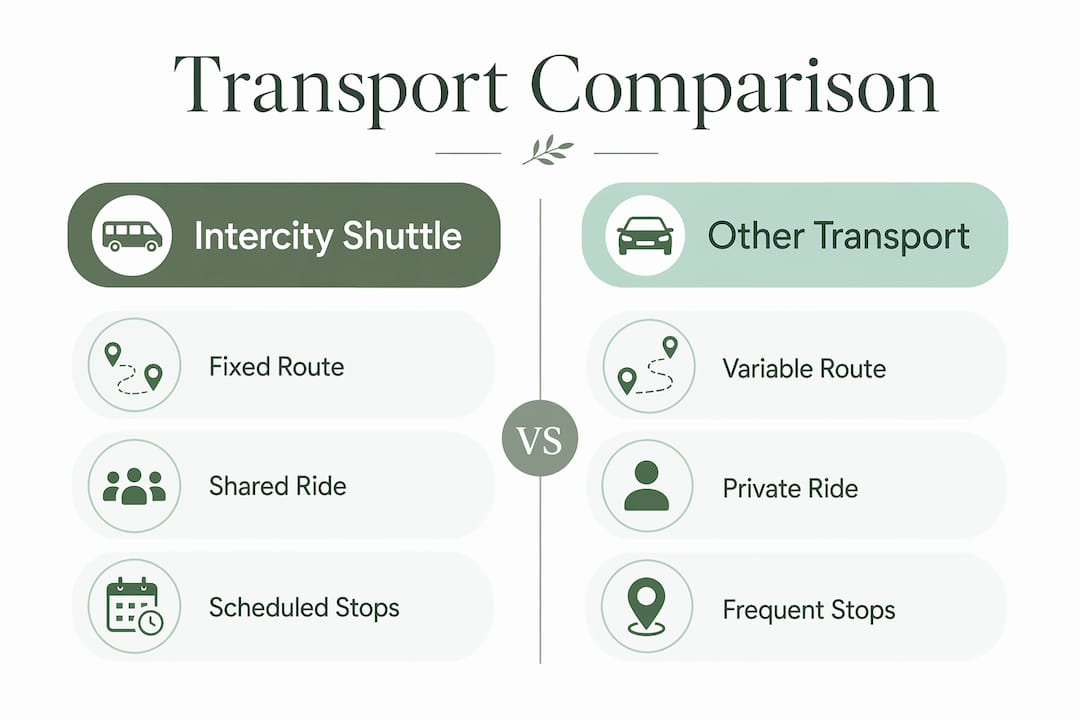
Intercity shuttles occupy a specific lane in the transportation world. They are not local buses, which stop every few blocks and serve commuters within a single city. They are not regional transit lines, which may cover a wider area but still prioritize frequent stops over direct, city-to-city connections. The core purpose of an intercity shuttle is speed and directness between two distinct urban centers.

The clearest distinction lies in ticketing and stops. Intercity buses require advance booking, use formal ticketing systems, and focus on terminal-to-terminal travel with fewer stops and the ability to carry passenger baggage. Local transit, by contrast, accepts cash or tap cards at the door and stops constantly. That difference in structure reflects a difference in purpose: intercity shuttles serve travelers, while local buses serve daily commuters.
Regulatory oversight adds another layer of distinction. Intercity shuttles operate under federal or state-level oversight, with specific safety standards and licensing requirements that differ from local transit rules. This means the vehicles, drivers, and routes must meet a higher compliance threshold. Travelers benefit from that structure through greater consistency and safety.
Private taxis and charter services differ from intercity shuttles in a fundamental way: they are not shared. A taxi serves one party at a time and follows no fixed schedule. An intercity shuttle aggregates multiple passengers on a single vehicle, which is exactly what keeps the price low and the departure times predictable.
| Feature | Intercity shuttle | Local city bus | Private taxi |
|---|---|---|---|
| Route type | Fixed, city-to-city | Within one city | On-demand |
| Stops | Few, terminal-based | Many, frequent | None (direct) |
| Ticketing | Advance booking required | Pay on board | Metered or app |
| Baggage | Included | Limited | Depends on vehicle |
| Regulatory level | Federal or state | Municipal | Local licensing |
How do travelers book and use intercity shuttle services effectively?
Booking an intercity shuttle works more like booking a flight than hailing a cab. Travelers must secure a seat in advance through a terminal ticket counter, a dedicated website, or a mobile app. Walk-up availability exists on some routes, but popular departures sell out, especially during peak travel seasons.
The booking process typically follows these steps:
- Choose your route and departure time. Most services publish fixed schedules days or weeks in advance.
- Select your ticket class. Standard tickets are often non-refundable. Flexible or premium classes allow changes or cancellations.
- Confirm baggage allowance. Most intercity shuttles include one or two checked bags, but oversized items may carry a fee.
- Arrive at the terminal early. Departure times are firm. Missing your bus typically means losing your fare.
- Board with your ticket confirmation. Digital tickets on a smartphone are accepted by most modern services.
- Settle in for the ride. Amenities vary by operator but often include assigned seating, air conditioning, and onboard Wi-Fi on premium routes.
Onboard experience depends heavily on the operator and route. Budget intercity bus transportation may offer basic seating and minimal amenities. Premium routes, particularly those serving tourist corridors, often include reclining seats, USB charging ports, and climate control.
Pro Tip: Always purchase a flexible ticket when your travel connects to a flight. Ticketing rigidity in intercity shuttles mirrors airline policy. Missing a departure usually means losing the full fare unless you specifically chose a refundable option.
Cancellation policies vary widely. Some operators offer a full refund if you cancel 24 hours before departure. Others apply a flat fee or offer only travel credits. Reading the fine print before confirming a booking saves real money.
What are the benefits and challenges of intercity shuttle travel?
Intercity shuttles deliver genuine value for travelers who plan ahead. Buses are four times more fuel-efficient than automobiles and typically cost less than trains or flights for medium-distance trips. That combination of environmental efficiency and affordability makes them one of the most practical options for city-to-city travel.
The benefits extend beyond price. Intercity shuttles handle luggage, follow direct routes, and connect major terminals where onward transport is easy to find. For travelers who want to avoid the stress of driving an unfamiliar road or paying for parking, a shuttle removes those friction points entirely.
The challenges are real, though. Schedule rigidity is the most common complaint. Shuttle services optimize occupancy and schedule less frequently than local transit, which means departures may be spaced hours apart. If you miss your window, the next option may not fit your plans.
Here are the most practical tips for getting the most from intercity shuttle travel:
- Book early. Popular routes fill up, and early booking often unlocks lower fares.
- Check the terminal location. Some intercity terminals sit outside the city center, requiring a short local transit connection.
- Pack light carry-on items. Keep valuables and essentials in a bag you keep with you, not in the luggage hold.
- Confirm the schedule the day before. Delays and schedule changes happen. A quick check saves a wasted trip to the terminal.
- Use the shuttle for medium distances. For trips under 300 miles, intercity bus transportation often beats flying once you factor in airport time and fees.
Pro Tip: Intercity shuttles complement rail and air travel well. Use a shuttle to reach a regional airport or train station, then switch modes for the longer leg. This combination often cuts total travel cost significantly.
Where are intercity shuttle services available and how do they fit into travel logistics?
Intercity shuttle services operate across most of the world’s populated regions. In the United States, routes connect major metros and secondary cities across every state. In Europe, dense networks link capitals, coastal cities, and inland towns with reliable frequency. Intercity bus service connects rural and urban areas, supporting economic growth, tourism, and regional accessibility in ways that rail and air travel cannot always reach.
Airport shuttles represent one of the most widely used subcategories. These services connect airports to city centers, hotels, and transit hubs, with luggage handling built in and timing coordinated around flight schedules. They serve a different function than a city-to-city route but follow the same shared, scheduled model.
Croatia offers a clear example of how intercity shuttle services integrate with tourism. The country’s coastal geography means travelers frequently move between Zagreb, Split, Dubrovnik, and smaller towns along the Adriatic. Shuttle routes serve these corridors, connecting airports, ferry terminals, and city centers. Travelers planning a Croatian itinerary can explore intercity shuttle options in Croatia to understand which routes serve their destinations.
The broader role of intercity shuttles in travel logistics includes:
- Connecting secondary cities that lack direct rail or air links
- Providing affordable first and last mile connections to airports and train stations
- Supporting tourism by linking popular attractions to major transit hubs
- Enabling business travel in regions where rail infrastructure is limited
For travelers building a multi-city itinerary, intercity shuttles fill the gaps that flights and trains leave open. They are not always the fastest option, but they are often the most practical for distances between 50 and 300 miles.
Key Takeaways
Intercity shuttles are the most cost-effective and fuel-efficient option for city-to-city travel in the 50–300 mile range, provided travelers book in advance and choose flexible ticket classes.
| Point | Details |
|---|---|
| Formal definition | The FTA defines intercity shuttles as scheduled, limited-stop service connecting urban areas with baggage capacity. |
| Booking is mandatory | Advance ticketing is required; walk-up seats are limited and popular routes sell out fast. |
| Ticket flexibility matters | Non-refundable fares are common; always choose a flexible class when connecting to a flight. |
| Environmental advantage | Buses are four times more fuel-efficient than cars, making shuttles the greener choice for medium distances. |
| Croatia integration | Intercity shuttles connect Zagreb, Split, and Dubrovnik, fitting naturally into multi-city Croatian itineraries. |
What I’ve learned from watching travelers get intercity shuttles wrong
The most common mistake I see is treating an intercity shuttle like a local bus. Travelers show up at the terminal without a ticket, assume they can pay on board, and then miss the departure entirely. The ticketing structure is closer to an airline than a city transit system, and that gap in expectations causes real problems.
The second mistake is ignoring the terminal location. Many intercity terminals sit on the edge of a city, not in the center. Travelers who plan to walk from their hotel to the terminal often arrive late. Building in a 20-minute local transit connection changes everything.
What actually works is treating the shuttle as one leg of a planned sequence, not a spontaneous option. Book the ticket when you book the hotel. Check the terminal address and map the connection from your accommodation. Confirm the schedule the evening before departure. These three habits eliminate 90% of the friction travelers experience with intercity bus transportation.
The cost argument for intercity shuttles is also stronger than most travelers realize. When you factor in airport fees, security time, and the cost of getting to and from a regional airport, a direct shuttle between two cities often saves both money and total travel time. That calculation surprises people, but it holds up consistently for trips in the 100–250 mile range.
For Croatia specifically, I find that travelers who combine a private transfer from the airport with an intercity shuttle for the longer coastal legs get the best of both worlds: comfort on arrival and affordability for the scenic stretches between cities.
— Croatia
Private transfers in Croatia for travelers who want more flexibility
For travelers who find intercity shuttle schedules too rigid or routes too limited, private transfers offer a compelling alternative across Croatia.
Croatia-private-transfers provides door-to-door private transfers across Croatia, connecting airports, city centers, and coastal destinations in licensed, air-conditioned vehicles with English-speaking drivers. Unlike fixed shuttle routes, private transfers depart on your schedule and go directly to your chosen destination. Families, small groups, and travelers with specific timing needs find this flexibility worth the added cost. Booking at least 48 hours in advance secures the best vehicle options and confirms availability, particularly during the busy summer season along the Adriatic coast.
FAQ
What is an intercity shuttle?
An intercity shuttle is a scheduled, shared transportation service that connects two or more cities on a fixed route with limited stops and formal ticketing. The Federal Transit Administration defines it as regularly scheduled bus service for the general public, with baggage capacity and meaningful long-distance connections.
How do intercity shuttles differ from local buses?
Intercity shuttles require advance booking, make fewer stops, and travel between cities rather than within one. Local buses accept payment on board, stop frequently, and serve commuters within a single urban area.
Can you book intercity shuttles online?
Most intercity shuttle services offer online booking through their own websites or third-party travel platforms. Digital ticket confirmation on a smartphone is accepted by the majority of modern operators.
What happens if you miss an intercity shuttle departure?
Missing a departure typically results in losing the fare, since most intercity shuttles use non-refundable ticketing similar to airline policy. Purchasing a flexible ticket class protects against this when travel plans are uncertain.
Are intercity shuttles available in Croatia?
Croatia has intercity shuttle routes connecting major cities including Zagreb, Split, and Dubrovnik, with connections to airports and ferry terminals. Travelers can also arrange private intercity travel for more flexibility along the Adriatic coast.