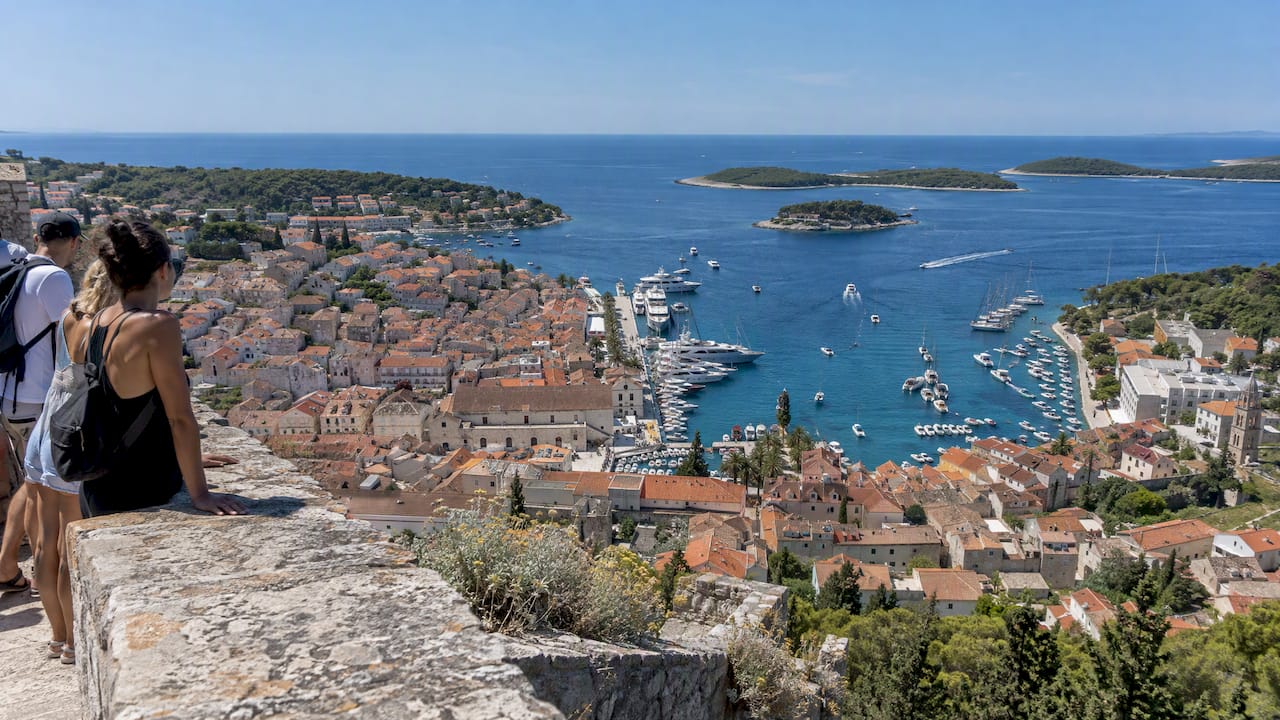


Personalized Travel Experiences Explained for Discerning Travelers
TL;DR:
- Personalized travel involves designing every aspect of a trip to match your individual preferences, pace, and interests rather than following fixed group schedules. Technology, especially AI, provides useful baseline plans, but human expertise refines these by incorporating local insights and addressing personal friction points. Engaging fully in the planning process and sharing detailed needs results in more meaningful, memorable experiences that foster deeper connections with each destination.
Most travelers book a trip and accept what comes standard: fixed departure times, group itineraries, and sightseeing stops chosen for the masses. But personalized travel experiences explained through the right lens reveal something fundamentally different. Personalized travel means tailoring every element of a journey to match your individual preferences, interests, and pace rather than slotting into someone else’s schedule. This guide unpacks what that truly looks like in practice, how technology and human expertise each play a role, and how you can design a trip that feels genuinely built for you.
Table of Contents
- Key takeaways
- Personalized travel experiences explained: what they really mean
- How technology and AI shape tailored travel
- Examples of personalized travel by traveler type
- How to build your own personalized travel itinerary
- Benefits that extend well beyond the trip itself
- My honest take on personalization and where most travelers go wrong
- Experience truly tailored travel in Croatia with Croatia-private-transfers
- FAQ
Key takeaways
| Point | Details |
|---|---|
| Personalization starts with honesty | Sharing true pain points, not just preferences, leads to itineraries that genuinely fit your travel style. |
| AI is a useful baseline, not a final answer | AI tools generate solid starting points but require human input to break repetitive recommendation patterns. |
| Traveler type shapes every decision | Family, luxury, adventure, and cultural travelers each need different pacing, accommodations, and activity structures. |
| Expert collaboration refines the result | Most tailored itineraries require multiple revision rounds to reach the right balance of detail and flexibility. |
| Personalized trips create lasting loyalty | Customized experiences drive satisfaction, positive referrals, and a deeper connection to the places you visit. |
Personalized travel experiences explained: what they really mean
At its core, personalized travel is not about upgrading your hotel room or choosing a private tour over a group bus. It is about designing the entire trip outward from your specific brief. Your pace, your curiosity, your physical limits, your appetite for adventure or stillness. Every element, from accommodation style to daily timing, reflects who you are as a traveler.
The contrast with generic travel is stark. A standard package tour to Croatia might include Dubrovnik’s Old City walls, a wine tasting stop, and a sunset boat ride shared with forty strangers. A personalized version of that same day might mean a private car at 7 a.m. before the crowds arrive, an exclusive table at a family-run winery in the Pelješac peninsula, and a quiet private sunset sail designed for two. Same destination, completely different experience.
The key elements that define truly personalized travel include:
- Pace: Some travelers want to absorb three locations in one day; others prefer to spend an entire afternoon at a single cathedral. Neither is wrong.
- Interests: History, food, architecture, wildlife, adventure sports. Your itinerary should reflect what genuinely excites you, not what most visitors check off.
- Logistics: Private transport, flexible timing, and door-to-door transfers eliminate the friction points that wear travelers down.
- Budget sensitivity: Personalization does not require unlimited spending. It means allocating resources where they matter most to you.
Pro Tip: Before planning anything, write down not just what you love but what exhausts or frustrates you when traveling. Crowds, long meals, early starts, unpredictable transport. Sharing those friction points with a travel advisor produces a far sharper itinerary than a list of bucket-list sights alone.
How technology and AI shape tailored travel
AI has transformed how travelers discover and book experiences. Algorithms analyze browsing behavior, past bookings, and search patterns to surface options that feel relevant. For travelers who know what they want, this is genuinely useful. For everyone else, there is a catch.
AI excels at pattern recognition but risks becoming a mirror. When every recommendation reflects what you have already done or searched for, you stop encountering new possibilities. Travel writer and personalization analyst Antoine Souma describes this as the “filter bubble” problem: AI keeps confirming existing preferences rather than expanding traveler horizons.
“The best personalization learns when to surprise, not just confirm what you already want.” — Antoine Souma
The most effective approach blends both worlds. Use AI to generate a baseline itinerary quickly, then work with a local expert or travel advisor to layer in activities that break the pattern. A local festival you would never have found on your own. A scenic coastal route rarely featured in algorithm-driven results. A family-owned restaurant that does not appear in any app.
There is a second limitation worth understanding. AI preferences captured at booking often fail to translate into on-the-ground service. Guests expect their room preference, dietary needs, and interests to follow them from the booking platform to the concierge desk, and that chain frequently breaks. Human coordination fills that gap in ways no algorithm currently can.
Pro Tip: Use an AI travel tool to draft your first itinerary outline in under an hour. Then deliberately add at least two activities that the AI did not suggest, sourced from local recommendations or a specialist advisor. That combination tends to produce the most memorable trips.
Examples of personalized travel by traveler type
Understanding personalized travel in theory is one thing. Seeing it applied across different traveler profiles makes the concept tangible. Consider how the same Croatian destination shifts completely based on who is traveling.
| Traveler type | Traditional approach | Personalized approach |
|---|---|---|
| Family with young children | Group tour with fixed schedule | Flexible private transfer, child-friendly pace, built-in rest stops |
| Romantic couple | Hotel package with standard excursion | Private sunset sail, curated wine pairing dinner, late checkout |
| Adventure traveler | Pre-booked activity sampler | Custom route combining sea kayaking, cycling, and off-trail hiking |
| Cultural enthusiast | Bus tour of major landmarks | Private access to local artisan workshops, UNESCO site at dawn |
| Luxury group | Standard private dining | Michelin chef’s table, tailored group logistics, exclusive villa booking |
The Tanzania safari industry offers one of the clearest models for this thinking. Every tailor-made safari starts as a blank page built outward from the traveler’s brief, covering pace preferences, accommodation tier, specific wildlife interests, and physical comfort thresholds. Croatia’s private travel sector works the same way when you engage the right provider.
One insight that consistently surprises travelers: disclosing true pain points produces better trips than disclosing preferences alone. Telling your advisor “I love museums” is less useful than telling them “I love museums but experience sensory overload after about two hours in dense crowds.” The second version gives an expert the information needed to build recovery time, sequence venues strategically, and protect your energy across a full day.
Luxury travelers are also moving away from sanitized, predictable experiences. Authentic curated access to local life, such as dining with a Croatian family in a coastal village or joining a winemaker during harvest, carries more value for discerning travelers than another polished resort amenity.

How to build your own personalized travel itinerary
Planning a customized itinerary does not require handing everything to a travel agency, though that option has real advantages. The process can be approached systematically whether you are going DIY or working with a specialist.
Start with these foundational questions:
- What is the primary purpose of this trip? Rest, discovery, celebration, adventure, or cultural immersion? The answer shapes every other decision.
- What pace suits you realistically? Not idealistically. If your last trip left you exhausted by day three, build in more breathing room than you think you need.
- Where does your budget create the most impact? Private transport, unique accommodation, or exclusive experiences? Choose your priority and allocate accordingly.
- What do you want to avoid? Crowds, long coach rides, tourist-heavy restaurants. Be explicit about this with any advisor you work with.
- What level of spontaneity do you want? Some travelers want every hour confirmed; others want a strong framework with open afternoon slots.
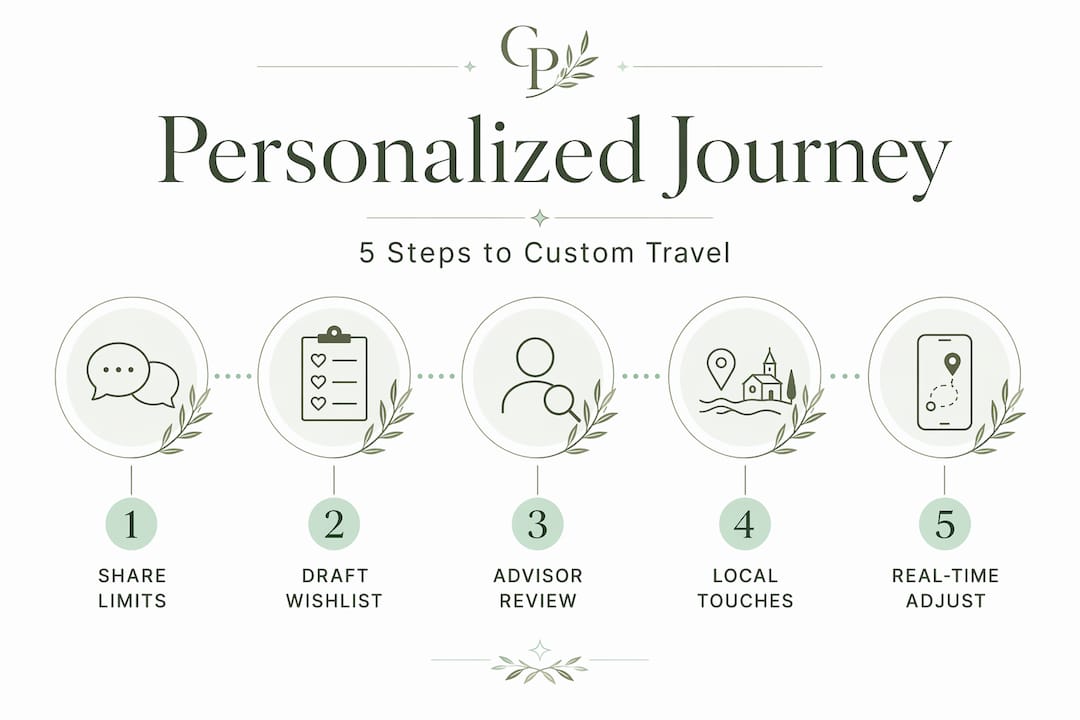
If you choose to work with a travel advisor or a specialist service, the collaboration process matters. Most tailored itineraries are refined over two to five rounds of feedback, with more complex multi-destination trips taking up to ten days to finalize. That back-and-forth is not inefficiency. It is how precision gets built.
Before and during travel, confirm these details:
- Transfer pickup times and driver contact details
- Flexibility policies if plans shift due to weather or preference
- Local guide credentials and language fluency
- Accommodation check-in flexibility for late arrivals
- Emergency contact protocols from your travel provider
Pro Tip: When working with a travel advisor, share detailed travel limits rather than just highlights. Crowd sensitivity, mobility considerations, dietary needs, and even jet lag patterns give advisors the raw material to build a trip that holds up on day five as well as day one.
Benefits that extend well beyond the trip itself
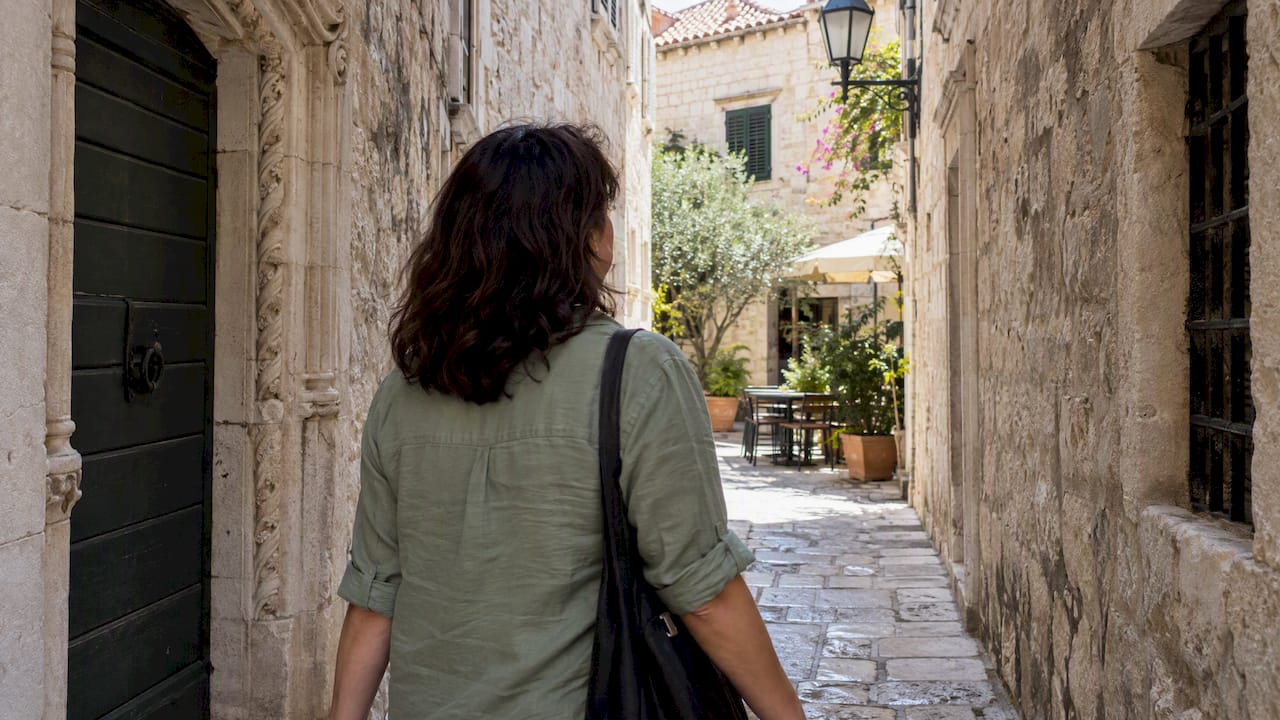
The value of a personalized trip does not end when you board the flight home. Travelers who experience a genuinely customized itinerary report something qualitatively different from those who followed a standard package. Not just satisfaction, but a sense of having truly been somewhere rather than passed through it.
Personalized experiences consistently lead to stronger client satisfaction, more positive reviews, and meaningful referrals. That is partly because the trip matched reality instead of a brochure, and partly because the absence of friction allowed travelers to be fully present rather than managing logistics.
There is also an emerging dimension to this. Predictive personalization is moving beyond reactive preferences toward anticipatory recommendations based on life stage and behavioral signals. A traveler who recently became a parent, for example, may start receiving family-centric suggestions before they have consciously recalibrated their own travel identity.
“Anticipatory personalization surfaces the right experience at the right moment in a traveler’s life, not just the right destination.” — Antoine Souma
Perhaps most significantly, personalized travel builds a different kind of relationship with place. When you spend a morning with a local guide who genuinely understands what you find meaningful, or when your private transfer driver takes an unexpected scenic detour because you mentioned loving coastal views, those unscripted moments become the stories you actually tell when you return home.
My honest take on personalization and where most travelers go wrong
I have observed enough travel experiences to know that the biggest missed opportunity is not using the wrong tool or booking the wrong hotel. It is travelers who arrive underprepared to communicate what they actually need.
Most people present a wish list when they should be presenting a dossier. They say “I want culture and food” when what they mean is “I want to feel the texture of a place, not just photograph it, and I can not eat gluten.” That specificity changes everything. The advisor or service on the other end can only work with what you give them.
I also think the travel industry leans too heavily on AI at the planning stage and too lightly on human judgment. AI generates efficient options quickly, and I appreciate that. But I have seen too many algorithmically generated itineraries that perfectly match a traveler’s stated history while completely ignoring who they are becoming. The couple who always books beach resorts but is quietly curious about wine country. The solo traveler who books city hotels but would thrive in a private coastal villa. Breaking those patterns requires a conversation, not a dataset.
My genuine advice: treat the planning stage as seriously as the trip itself. The 20 minutes you spend drafting an honest travel brief, including your limits, your aspirations, and the two or three things that would make the trip feel transformative rather than pleasant, will return more value than any booking upgrade.
— Croatia
Experience truly tailored travel in Croatia with Croatia-private-transfers
Croatia-private-transfers has spent years crafting bespoke travel in Croatia that starts with a conversation, not a catalog. Whether you are arriving at Split airport and need a private transfer timed to your flight, or you want a full multi-day itinerary covering Plitvice Lakes, the Dalmatian coast, and the walled city of Dubrovnik at your own pace, the service is designed to fit around you.
Every private transfer and tour is operated by licensed, English-speaking drivers in modern, air-conditioned vehicles. Families, couples, and small groups all receive itineraries adjusted to their interests, whether that means a slow morning in a coastal village, a wine tasting session in the Pelješac peninsula, or a private boat departure at sunrise. Flexible scheduling, door-to-door logistics, and local knowledge that no algorithm can replicate make Croatia-private-transfers the partner discerning travelers return to year after year.
FAQ
What does personalized travel actually mean?
Personalized travel means designing a trip around your specific preferences, pace, interests, and constraints rather than following a fixed group itinerary. It covers everything from transport and accommodation to daily activities and meal choices.
How is personalized travel different from a standard package tour?
A package tour follows a predetermined schedule shared by all guests, while personalized travel is built from your individual brief. Timing, routing, activities, and logistics all reflect your needs rather than average group preferences.
Can AI tools create truly personalized travel itineraries?
AI tools generate useful baseline itineraries by analyzing your past behavior, but they risk reinforcing existing preferences rather than expanding them. Combining AI output with local expert input produces far richer results.
What information should I share with a travel advisor for a better itinerary?
Share your travel limits, not just your wish list. Crowd sensitivity, dietary needs, mobility considerations, and your preferred daily pace give advisors the detail they need to build an itinerary that performs well across the entire trip.
How long does it take to plan a personalized itinerary?
Most tailored itineraries are finalized within two to five rounds of feedback, with complex multi-destination trips taking up to ten days to complete. The revision process is how precision gets built into the final plan.